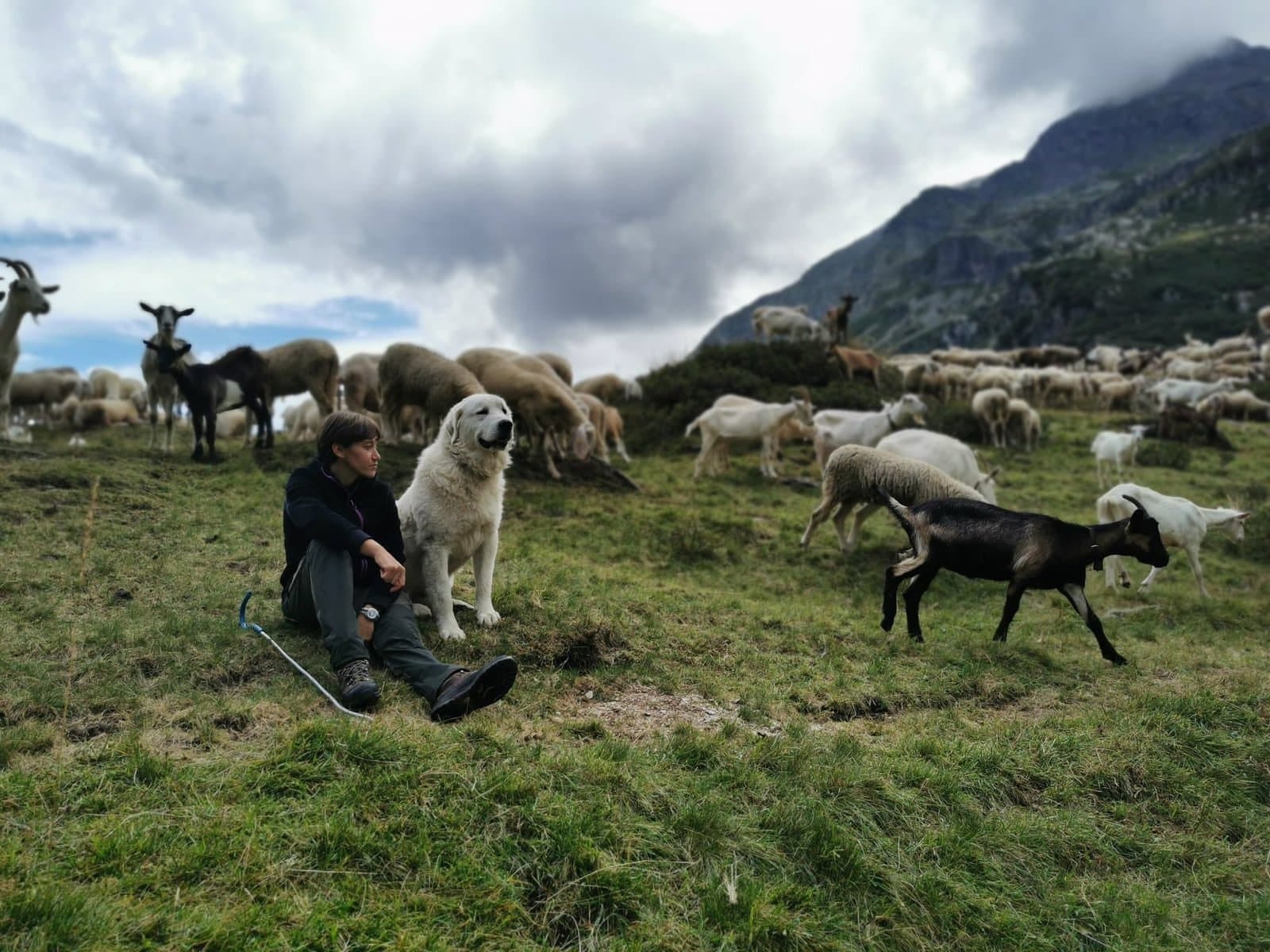
Before Vanlife, There Were Sheep
Why following real shepherds might be the most uncomfortable — and necessary — form of nomad life left
Long before laptops, camper vans, co-living manifestos and remote-work visas, nomadism already existed. It just didn’t call itself that. It didn’t have a pitch deck, a hashtag, or a Wi-Fi plan.
It had sheep.
And mud. And weather. And silence that lasts for days.
Today, “nomad life” has become shorthand for movement without friction: mobility with infrastructure, freedom supported by platforms, risk absorbed by technology. It’s portable, optimised, and — let’s be honest — often very comfortable.
But there’s another kind of nomadism that never went away. It simply stopped being visible. A form of movement that still exists across Italy’s mountains, plateaus and internal areas, where people move because animals must eat, seasons change, and land imposes its own rules.
Shepherds don’t relocate. They follow.
And that difference matters.
Nomadism without choice (and why that’s interesting again)
Modern nomadism is elective. You choose where to go, when to stop, how long to stay. If it doesn’t work, you move on. The cost of a mistake is mostly emotional — sometimes financial — but rarely existential.
Pastoral nomadism is the opposite. It’s constraint-driven. Movement is dictated by grass, altitude, climate, water and animal health. Routes are shaped by centuries of trial and error. Decisions aren’t made for personal fulfilment, but for continuity.
This is why spending even a short time alongside shepherds feels so destabilising to people coming from urban or digital lives. There’s no optimisation. No life hack. No “best practice” other than paying attention.
And yet, more people are quietly looking for exactly this kind of friction.
Not because they want to become shepherds — most don’t — but because they’re tired of abstraction. Tired of work that produces nothing tangible. Tired of movement that doesn’t leave marks on the body.
Can you actually do this today?
Yes. But only if you drop the idea that this is an “experience” designed for you.
Across Italy, there are still ways to live — temporarily — close to pastoral life. They’re informal, seasonal, often poorly documented, and intentionally unpolished.
One of the most common entry points is WWOOF Italy
While many WWOOF hosts focus on horticulture or small-scale farming, some operate sheep and goat farms, including semi-nomadic or high-altitude setups. In these cases, volunteers don’t just “help out”: they walk, observe, assist, and adapt to rhythms that are not negotiable.
Another gateway is seasonal work in alpine pastures. During the summer months, alpeggi in regions like Piedmont, Lombardy, Trentino and Valle d’Aosta need extra hands. Life there is repetitive, physical and isolated. Days are structured around animals, not schedules. Nights are quiet in a way that can feel unsettling if you’re not used to it.
For those curious about movement itself — not just stationary pastoral life — there are still transhumance-related initiatives that allow people to follow flocks during seasonal migrations. These are often cultural or educational projects rather than labour arrangements, but they offer something rare: time on foot, shared meals, shared fatigue, and long stretches without digital distraction.
A good starting point to understand the broader context is the “Transhumance Trails”.
What this life is not
Let’s be clear, because romanticism is easy and misleading.
This is not slow tourism.
This is not mindfulness with animals.
This is not “finding yourself”.
It’s work. It’s repetition. It’s discomfort. It’s being cold, then hot, then bored, then suddenly very alert because something has gone wrong.
Most people who try it realise, quickly, that they don’t actually want this life. And that’s fine. The value isn’t in staying — it’s in recalibrating.
A few days of walking where your phone stays in your pocket. A few mornings where your body wakes before your thoughts. A few meals eaten because you’re hungry, not because it’s lunchtime.
That alone changes something.
Why this resonates now
There’s a reason interest in these worlds is growing again, quietly, at the margins of louder nomad narratives.
Remote work promised freedom, but often delivered continuous partial attention. Travel became easier, but meaning didn’t automatically follow. Many people now move constantly without ever fully arriving anywhere.
Pastoral life offers no freedom in the modern sense — and that’s exactly why it feels liberating.
It replaces choice with responsibility. It swaps optionality for necessity. It reminds you that some forms of movement exist not to expand the self, but to sustain something else.
Animals don’t care about your career. Land doesn’t care about your plans. Weather doesn’t negotiate.
And in a strange way, being subject to these forces can feel like relief.
The quiet lesson shepherds teach
Most shepherds who accept outsiders do so cautiously. They’re not interested in being studied, photographed, or narrated. They care about animals, routes, and continuity. Respect is earned by working, listening, and not asking too many questions too quickly.
People who come from digital lives often expect stories. What they get instead is process.
And when they leave, many don’t post about it. They don’t brand it. They don’t turn it into a pivot.
They simply carry it with them.
A final thought
In a world obsessed with movement, optimisation and self-reinvention, pastoral nomadism offers a different provocation.
Not: Where can I go next?
But: What am I responsible for while I’m moving?
Following shepherds — even briefly — doesn’t give you answers. It gives you limits. And limits, it turns out, are very good teachers.
Nomag closing note:
Before inventing the next version of nomad life, it may be worth walking alongside the oldest one still standing — and noticing how little it cares about being seen.


Exceptional piece that flips the whole digital nomad narrative. The distinction between constraint-driven and elective nomadism cuts right thru the romanticized version we see everywher. Spent time on a farm once where the rhythm wasn't mine to choose and honestly that lack of control taught me more than any optimized travel setup ever could.