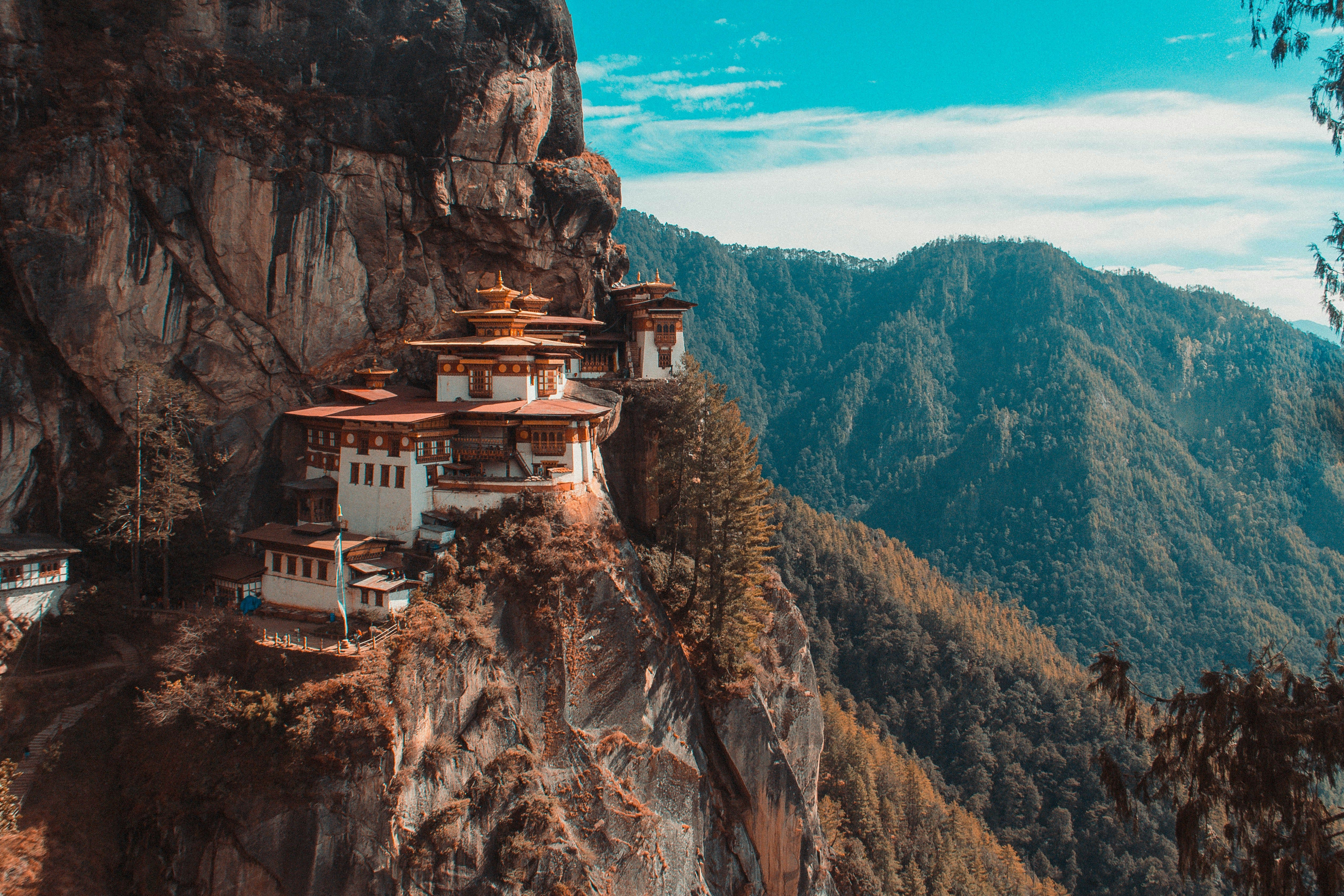
Bhutan Wants Digital Nomads. But Not the Usual Ones.
Let’s be honest.
When you read “Bhutan launches digital nomad residence programme”, your brain probably does one of two things:
Romantic Himalayas, monasteries, inner peace, laptop on a wooden balcony.
“Ah, another country chasing the remote work trend.”
The truth, as usual, is more interesting — and more nuanced.
Because Bhutan isn’t trying to become the next Bali.
It’s trying to engineer something very different.
First: What’s Actually Been Announced?
Bhutan has officially introduced a Digital Nomad Residence Programme under the umbrella of Gelephu Mindfulness City (GMC) — a royal-backed urban initiative in southern Bhutan near the Indian border.
This isn’t a tourism visa with Wi-Fi.
It’s part of a broader experiment: building a new city grounded in sustainability, green technology, long-term thinking and — yes — mindfulness.
The residence permit runs for 12 months and can be renewed up to 24 months total. Successful applicants can live and travel anywhere in Bhutan, not just inside Gelephu.
There’s no fixed income threshold published as a hard gatekeeper. Instead, applications are reviewed case by case, with an emphasis on professional background and alignment with the broader vision.
The financial entry point is structured differently from typical nomad visas:
USD 2,800 annual programme fee
USD 10,000 minimum balance held in TER (a gold-backed digital asset used within the GMC financial system), via a local bank
And importantly: income earned outside Bhutan remains outside Bhutan’s tax net (though, as always, your own tax residency situation matters more than any press release).
On paper, it’s not cheap — but it’s not outrageous either.
The interesting part is the philosophy behind it.
Bhutan Is Filtering for Intent, Not Just Income
Most digital nomad visas operate on a simple formula:
Earn X per month.
Pay Y fee.
Stay Z months.
Bhutan is doing something else.
It’s signalling that they don’t just want remote workers. They want remote workers who fit.
That’s unusual in a world where many destinations are aggressively chasing numbers: more applications, more short-term rentals, more Instagram tags.
Bhutan has always taken a different stance toward tourism — controlled flow, high-value approach, cultural preservation. Extending that logic to remote work is consistent with its long-standing national positioning around Gross National Happiness and sustainability.
The Gelephu Mindfulness City project itself is being framed as a long-term innovation and green-tech zone. So the nomad programme isn’t just a visa category.
It’s talent curation.
But Let’s Talk Honestly: Is This for “Nomads” as We Know Them?
If by digital nomad you mean:
Location-independent
Fast-moving
Arbitraging cost of living
Optimising tax and sunshine
Cycling through countries every 3–6 months
Then Bhutan probably isn’t your playground.
Bhutan is landlocked.
High-altitude.
Culturally conservative.
Not party-central.
It’s not Lisbon with prayer flags.
But if you’re:
A climate-tech founder
A long-horizon builder
A remote executive tired of noise
A writer who actually wants silence
A founder who values policy stability over beach clubs
Then suddenly, this becomes more compelling.
This isn’t lifestyle arbitrage.
It’s strategic repositioning.
The TER Question (Yes, Let’s Address It)
Requiring a USD 10,000 minimum balance in a gold-backed digital asset is unusual in the nomad visa world.
On one hand, it acts as:
A commitment filter
A liquidity buffer
A way to integrate residents into the local financial ecosystem
On the other hand, it introduces friction:
Asset exposure
Custody trust
Currency and system risk
For sophisticated remote professionals, that won’t necessarily be a dealbreaker — but it’s not frictionless.
This is not Estonia’s e-Residency model.
This is a curated sandbox with financial alignment built in.
Whether that’s genius or over-engineering will depend on execution.
What Does This Mean for the Broader Nomad Landscape?
Zoom out.
Over the last five years, we’ve seen three waves of digital nomad visas:
Wave 1: Sun + Wi-Fi (Caribbean, Southern Europe).
Wave 2: Tax play + lifestyle arbitrage (UAE, certain Balkan states).
Wave 3: Ecosystem positioning (innovation hubs, green tech clusters, special economic zones).
Bhutan is clearly placing itself in Wave 3.
It’s not competing with Thailand on cost.
It’s not competing with Dubai on infrastructure.
It’s not competing with Portugal on EU access.
It’s competing on narrative coherence.
And coherence is underrated.
Could This Work?
That depends on three things:
Connectivity.
Remote workers need stable internet and predictable travel routes. Bhutan’s infrastructure will be tested here.Policy consistency.
The programme must avoid frequent rule changes. Nomads tolerate complexity; they don’t tolerate unpredictability.Community density.
The first 100 residents matter more than the first 10,000.
If those 100 are builders, thinkers, founders and creators, momentum builds organically.
If instead it becomes a loosely filtered residency category with no ecosystem glue, it risks feeling symbolic.
Is It Interesting for You?
If your nomad strategy is pure optimisation — lowest tax, lowest rent, maximum nightlife — this is probably not your next stop.
If your strategy is depth over velocity, alignment over arbitrage, and long-term positioning over Instagram mobility, Bhutan just entered the chat.
It’s not trying to win the digital nomad popularity contest.
It’s trying to build a different tribe.
And in a world where every country is offering a visa, differentiation might be the only real competitive advantage left.
The Himalayas don’t shout.
They filter.
The real question isn’t whether Bhutan wants digital nomads.
It’s which digital nomads will want Bhutan.


