

Did we fail at summer by going to Sweden?

This article was developed in editorial collaboration with the travel app Polarsteps.
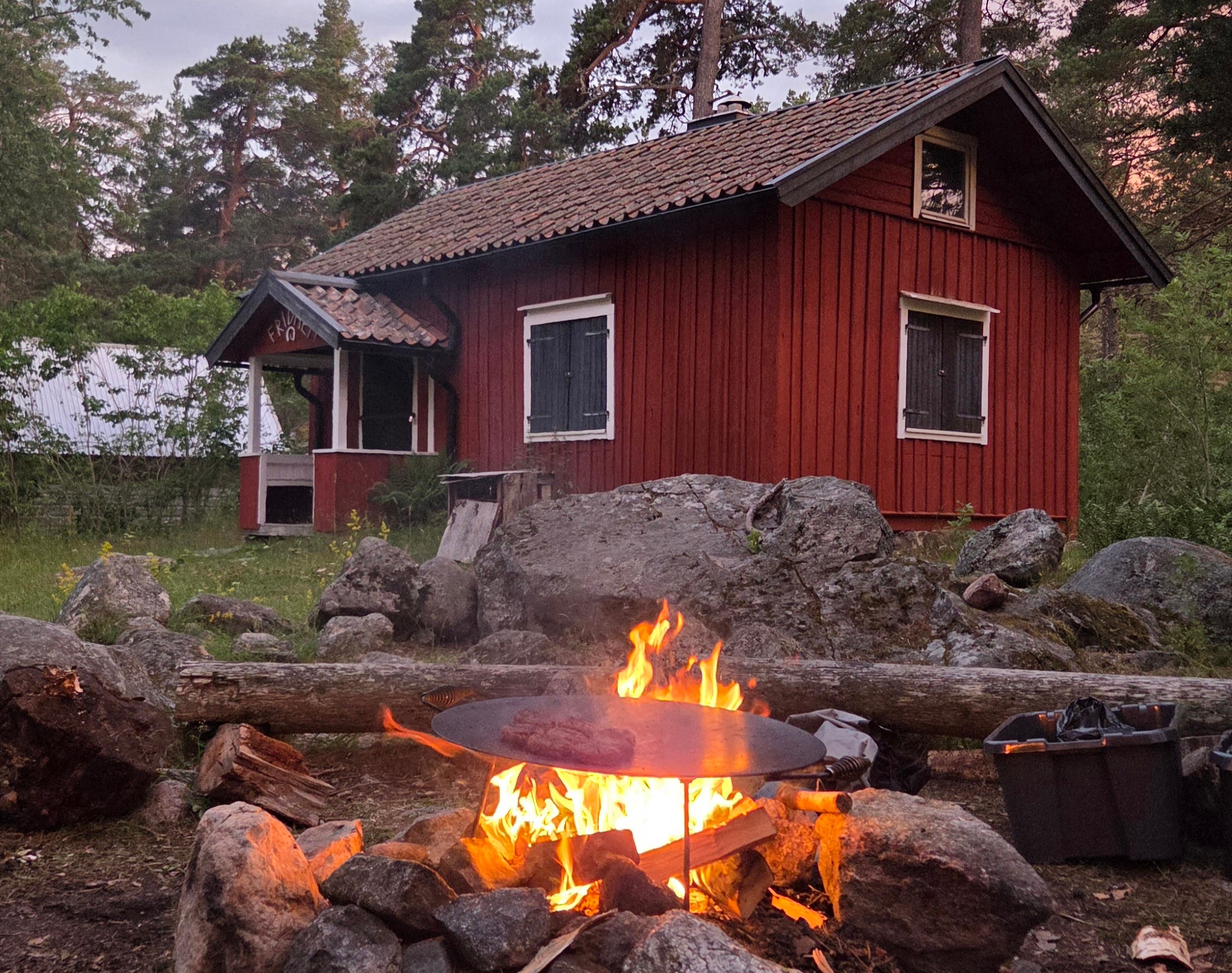
This summer, we didn’t drink Spritz by the sea. We didn’t try to squeeze our beach towels onto a crowded Mediterranean beach. Instead, we spent June and July working and driving around Sweden in our campervan. Spoiler alert: nothing special happened.
Daytime temperatures hovered around 25°C (77°F) and we were mostly alone, surrounded by forests, lakes, and moose. A summer body wasn’t required; aperitivo was replaced with pickled herring and potatoes, and it turned out to be the best decision we could have made.
A choice that almost felt prophetic
Growing up in France, summer had a very specific feeling: salty sea breeze, sunscreen, pine trees, melons, and smoky charcoal… But as I’m writing these words, France is experiencing its fourth historic heatwave of the year. We’ve been watching wildfires and climate-related disasters unfold from afar, heartbroken for the people and wildlife affected. And our childhood definition of summer seems to be disappearing with them.
Looking back, it almost feels as though our choice to skip Western and Southern Europe this summer was prophetic. But it wasn’t. We were hardly alone in looking north. In one recent survey by Polarsteps, 39% of travelers said they were considering a destination with a cooler climate than their home country this summer, rising to 57% in the US. The main reason was to escape extreme heat at home. It was only one survey, but the finding felt familiar.
So here we are in Sweden, wearing jeans and always keeping a rain jacket within arm’s reach.
We didn’t just escape the heat
When people asked why we were heading north (because, yes, it sounded like a punk decision to most of our relatives!), our first answer was always: “to escape the heat”. And that’s partly true. We don’t have air conditioning in our campervan, and once temperatures climb above 25°C, we (and our cats!) struggle to work, sleep, cook, or simply exist.
But once we settled into a Scandinavian summer, we realized we hadn’t just escaped the heat. We’d escaped the crowds, the FOMO, the endless checklist of things you have to see, and the pressure to make every day count.
Sweden didn’t leave us much choice but to slow down. Some days, absolutely nothing happened. Maybe a walk through the forest, or a late-night barbecue. That’s it. Some people would call that boring, but boredom was our greatest luxury.
Summer has become a performance
European summer isn’t just a season. Somewhere between paid holidays becoming the norm and Instagram taking over our lives, it became a status symbol. Then it became content. And without really noticing, we stopped experiencing summer and started performing it.
You need the right body, the right swimsuit, the perfect beach, and the perfect angle to make it look like you had the whole coastline to yourself. Did summer even happen if you didn’t post at least one Spritz a day on your Stories? For decades, Southern Europe sold us the dream of the perfect summer.
This summer, Sweden gave us permission to opt out. To stop performing. To come back with nothing special to say when someone asked about our holiday. To embrace a different kind of luxury: sleeping without air conditioning, eating lunch outside without melting, walking at 4pm without desperately searching for shade, or hearing birds (and moose!) louder than tourists. It reminded us that doing less isn’t failing at summer. It is just enjoying it the way we like it. Cool and calm. Isn’t that the whole point of this country anyway? Balance? It even has a name in Swedish: lagom. Well, something tells me ‘lagom summers’ might be about to have their moment.
Maybe summer is being rewritten
We believe this shift will go far beyond summer vacations, as more people rethink where they want to live and work in a warming world. Climate change is quietly redrawing the map of travel, remote work, and life in general. And maybe that’s also an opportunity to rewrite what we expect from it.

 | A guest post by
|