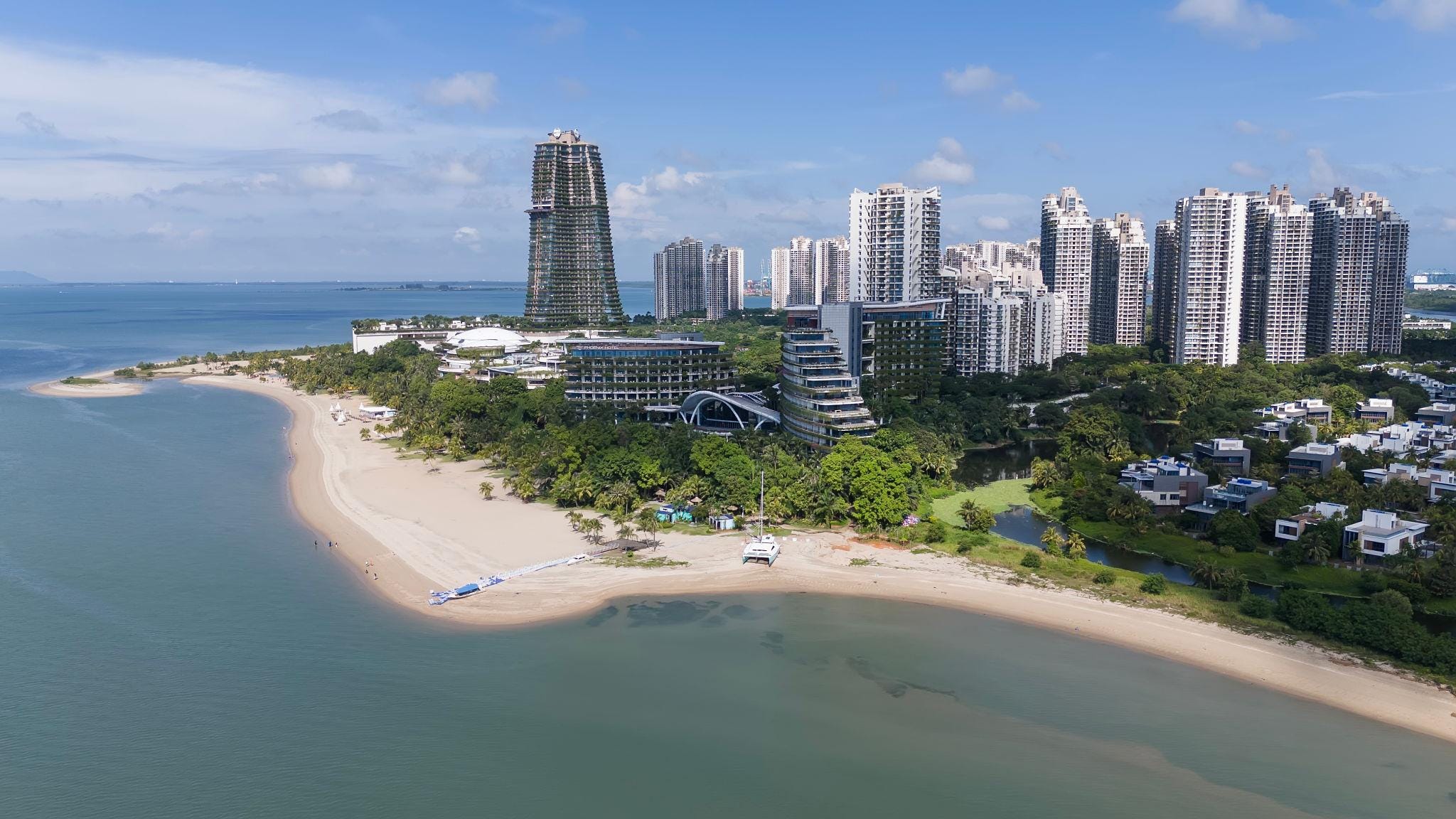
Forest City: From Ghost City to Digital Nomad Playground?
There’s a certain genre of real estate story we’ve all seen before.
Big vision. Bigger renderings. Shiny towers rising from reclaimed land. A masterplan for 700,000 residents. A future city, designed from scratch.
And then… silence.
Forest City, the mega-development in Johor, just across the water from Singapore, has long carried the unfortunate nickname of “ghost city.” As recently discussed in regional media, that label - fair or not - has become its biggest problem. Not the buildings. Not the location. The narrative.
And if you work remotely, invest cross-border, or think in ecosystems rather than square meters, this is a fascinating case study.
Let’s unpack it.
What Is Forest City (Really)?
Forest City is a massive, partially built urban development on artificial islands near the Malaysia–Singapore border. The pitch was bold: luxury waterfront living, integrated business districts, eco-urban design, golf courses, international schools, tech firms.
Instead, what stuck in people’s minds were photos of empty balconies and quiet streets.
Now, voices in the region are arguing that the problem was never just occupancy - it was positioning.
Forest City was sold as property.
What it never fully became was a place.
And that distinction matters.
The Core Issues (Beyond the “Ghost” Meme)
The challenges mentioned publicly are less about architecture and more about trust:
Past visa uncertainties and shifting political signals.
Concerns around long-term residency rights for foreigners.
Currency risk (ringgit exposure).
Border friction with Singapore - physically close, bureaucratically complex.
A lack of organic street life: small businesses, culture, messy vitality.
In other words: it looks like a city, but it doesn’t feel like one.
And cities are emotional investments before they are financial ones.
The Proposed Pivot: From Condos to Ecosystem
The suggested rethink is interesting - and far more relevant to our world.
Instead of pushing units, the idea is to reposition Forest City as:
A green tech and digital innovation hub
A silver economy / retirement destination
An education cluster
A Special Administrative or Economic Zone
A lifestyle ecosystem with arts, marine ecology, events and creative communities
That’s not just urban planning. That’s narrative engineering.
And that’s where digital nomads come in.
Why Should Digital Nomads Care?
Let’s be honest: nomads don’t move because of marble lobbies.
They move because of:
Visa simplicity
Tax clarity
Connectivity
Cost-to-quality ratio
Community density
Airport and rail access
And increasingly: creative ecosystems
Forest City sits in a unique triangle:
Minutes from Singapore (one of the most powerful business hubs in Asia)
In Malaysia (lower cost base, different tax environment)
Potentially positioned as a Special Zone with tailored rules
If - and it’s a big if - Malaysia were to lock in long-term, stable, investor-friendly residency frameworks, this location becomes strategically interesting.
Not as “cheap Singapore.”
But as “Southeast Asia’s sandbox.”
Visa & Residency: What Would You Need?
Currently, Malaysia offers several relevant pathways:
🇲🇾 Malaysia My Second Home (MM2H)
A long-term residency programme aimed at foreigners with financial requirements (which have been revised multiple times in recent years). It’s not frictionless, but it exists.
🇲🇾 DE Rantau Nomad Pass
Malaysia launched a digital nomad visa under its “DE Rantau” programme, allowing remote workers in tech and digital sectors to stay for extended periods.
This is important.
If Forest City were integrated into a Special Access or Special Economic Zone with simplified entry, longer visa stability, or fast-track processing, it could become extremely attractive for:
Founders needing Singapore proximity but lower burn
Remote tech workers priced out of Singapore
Family offices exploring ASEAN exposure
Creative nomads looking for coastal, affordable living
But consistency is everything. Nomads don’t fear complexity. They fear unpredictability.
The Border Question
Forest City’s paradox is geographic:
It’s close to Singapore, but not seamlessly connected.
Without:
High-frequency ferry links
Direct rapid transit integration
Frictionless border crossings
…it feels “in-between” rather than “connected.”
For nomads, friction equals fatigue.
If you promise regional access, the transport layer must behave like infrastructure, not like an obstacle course.
Could It Become a Nomad & Creative Hub?
The proposal to subsidise studios for artists and attract Southeast Asian creatives is clever.
Creative gravity precedes tech gravity.
We’ve seen this pattern in:
Chiang Mai
Lisbon
Bali
Tbilisi
First come the freelancers and artists.
Then the small studios.
Then the early-stage founders.
Then the capital.
But this only works if:
Cafés feel real.
Streets feel inhabited.
Events happen.
Not everything feels master-planned.
You cannot spreadsheet “vibrancy.”
It must emerge.
The Bigger Lesson for Nomads
Forest City isn’t just a place. It’s a mirror.
It shows what happens when:
Urban development runs ahead of social infrastructure.
And that’s relevant globally.
From Southern Europe to the Balkans, from Gulf free zones to Mediterranean islands, many regions are trying to “design” the next remote work hub.
But a city is not Wi-Fi + tax incentives.
It’s rhythm.
If Malaysia stabilises policy, simplifies long-term visas, improves connectivity and actively curates community rather than just inventory, Forest City could evolve into a controlled experiment in 21st-century border living.
If not, it risks staying a beautiful rendering with weak gravity.
So… Would You Go?
If you are:
A founder needing Singapore access without Singapore rent
A remote tech worker eligible for Malaysia’s nomad visa
A family exploring long-term ASEAN exposure
An investor who prefers ecosystem over speculation
Forest City is worth watching.
Not because of what it is.
But because of what it could become.
And in the nomad world, optionality is currency.
Right now, Forest City is optionality waiting for coherence.
We’ll see if it gets it.