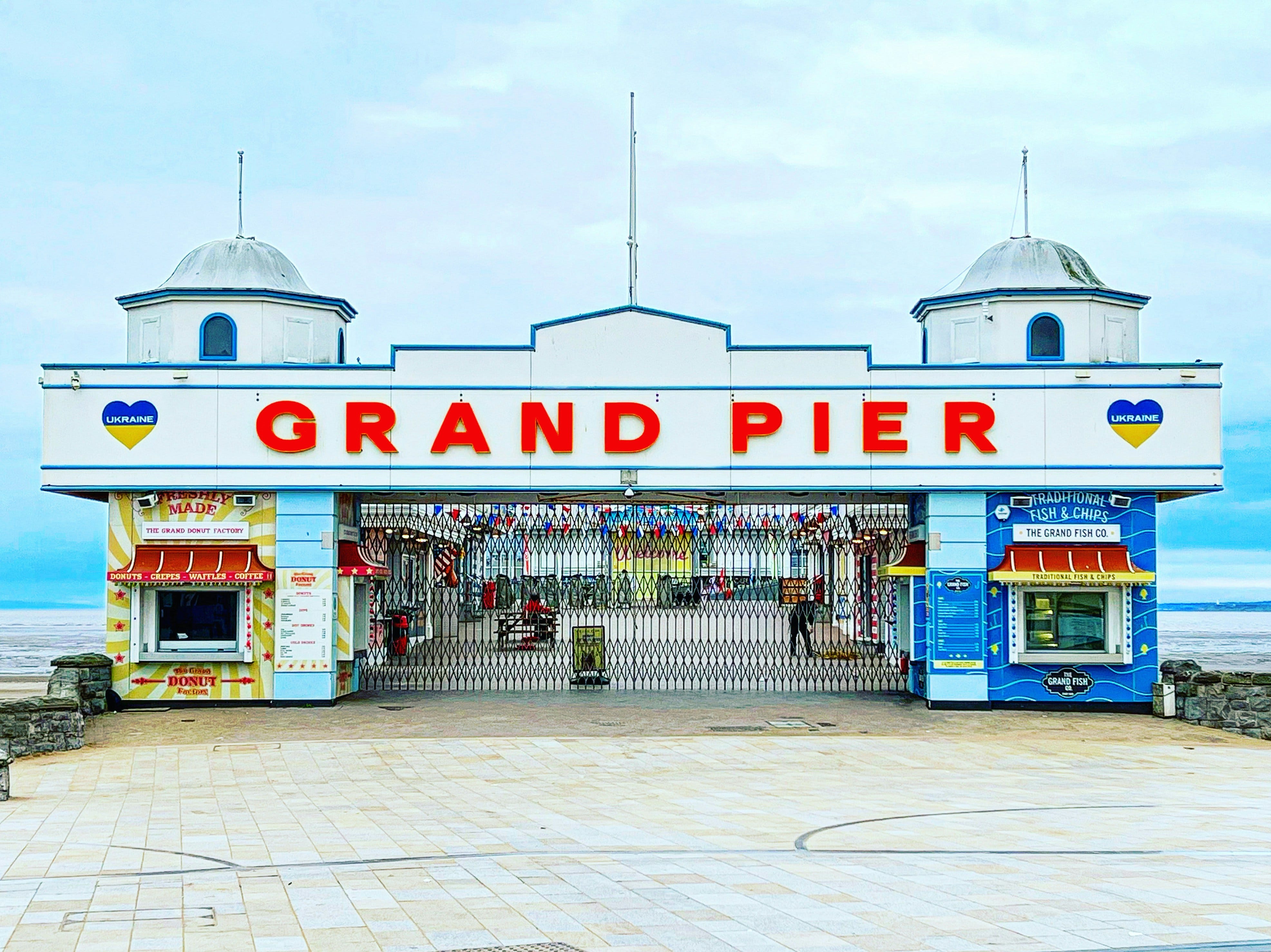
From Fish & Chips to Firewalls: When Tech Startups Land on the British Seaside
A quiet coastal town once known for declining tourism and rehab centres is discovering something unexpected: digital founders, cybersecurity events on the pier, and the slow return of energy
For decades, Weston-super-Mare - a seaside town near Bristol (UK) - carried a reputation that wasn’t exactly flattering. Think faded hotels, struggling tourism, and at one point an unusually high concentration of rehabilitation clinics. Hardly the kind of place you’d expect to find founders discussing cybersecurity strategy over oat milk cappuccinos.
And yet… here we are.
According to a recent piece published in The House (March 2026), something quietly interesting is happening along Britain’s coast. A small but visible wave of digital entrepreneurs and remote workers has started settling in towns like Weston, bringing with them startups, consulting firms, and the kind of laptop-based businesses that don’t particularly care whether their office view is a skyline or the Bristol Channel.
Angela Hicks, who runs The Hive, a local business hub supporting startups and micro-businesses, has watched the transformation from the front row. When a recent startup roundtable gathered more than two dozen founders, the scene outside the building looked… different from the old postcard image of Weston.
Range Rovers and Porsches in the parking lot.
Young founders talking firmware and conversational AI.
Cybersecurity consultants discussing clients in London and beyond.
Not exactly the classic seaside retirement community.
Part of this shift is simple economics. Housing in coastal towns remains far cheaper than in nearby cities like Bristol or London. But the bigger catalyst was the pandemic. When millions of workers discovered in 2020 that their job could be done from a laptop anywhere, the map of where people could live and build companies suddenly expanded.
Across the UK, coastal towns began attracting attention. At one point in 2021, property platform Rightmove reported that Cornwall had overtaken London as the most searched location in the country.
Weston is now riding a smaller version of that same wave.
One local founder, Mike Turner, originally launched an IT support business that evolved into software development. His niche? Software for addiction treatment centres - a strangely logical innovation in a town historically filled with them. Sometimes geography writes your product roadmap.
Another entrepreneur, Hazel McPherson, went a step further. Instead of travelling to London or Bristol for industry conferences, she created CSIDES, a cybersecurity event designed specifically for coastal communities.
And yes - parts of it took place on the pier.
Still, this isn’t a Silicon Valley fairy tale. The revival is uneven and fragile. Research cited in the article suggests southern coastal towns are seeing faster growth than northern ones like Blackpool or Scarborough. Infrastructure remains weak. Talent can be scarce. And many new residents still commute economically — living by the sea while spending their money elsewhere.
In other words, the transformation is real… but incomplete.
Yet the broader trend is difficult to ignore. In towns from Margate to Eastbourne to the Isle of Wight, small digital businesses are quietly filling empty retail spaces, coworking hubs, and converted offices.
No massive tech campuses.
No billion-dollar valuations.
Just small teams, laptops, and founders who realized they didn’t need to live in London to build something interesting.
For places that spent decades watching tourism decline, that may be the most important shift of all.
Because sometimes regeneration doesn’t arrive with a government program or a masterplan.
Sometimes it shows up with a Wi-Fi connection and a founder who decides the seaside might be a perfectly reasonable place to start a company.
Source: “Digital Nomads: Tech startups revitalise the coast”, The House, 9 March 2026.