

From Loneliness to Freedom
Covadonga Villar Argüero and the Art of Living as a Nomad

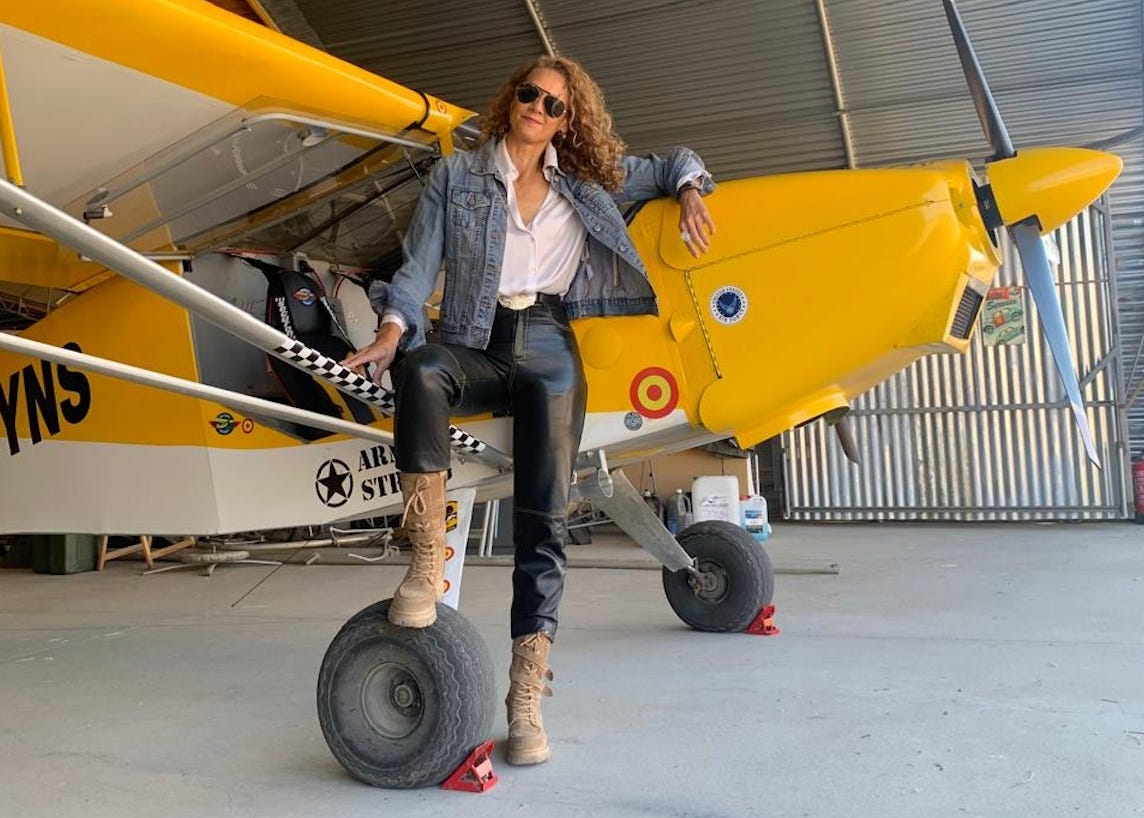
To close the year with intention—and to step into the next one with clarity—we sat down with an inspiring woman whose voice has guided thousands across continents, stages, and inner landscapes. We met with Covadonga “Cova” Villar Argüero, a renowned therapist and conference speaker working in Mexico and Spain. Speaker at the Woman Economic Forum. She is a woman who is herself a world nomad, both in movement and in spirit. What followed was less an interview and more an invitation: to pause, to reflect, and to reconsider how we are choosing to live.
Cova is not a speaker who arrives with formulas. She arrives with presence. A logotherapist by training and a seeker by conviction, she has built her work around one essential question: what gives life meaning? Her professional path spans family therapy, cognitive behavioural approaches, systemic work, adolescence specialization, and masters in family sciences between Mexico and Spain. Currently she is engaged in studies in the field of neuroscience. She is the author of Historia de un adiós con sentido, a deeply personal book born from grief, love, and transformation after the loss of her husband—an experience that reshaped not only her life, but her philosophy.
Yet to list her credentials alone would miss the point. Cova insists that who we are now matters more than who we have been on paper. She describes herself simply and powerfully: intense, free, grateful, passionate by choice, and happy by conviction. And perhaps that is why her message resonates so strongly with digital nomads—people who have already rejected one version of life in favor of something more honest, more fluid, more alive.
The Nomad Beyond Geography
For Cova, nomadism is not only about crossing borders or changing cities. It is a way of inhabiting oneself.
“Many people think nomads are lonely,” she reflects. “But loneliness is not the enemy. In silence and solitude, we can find power. We are not here just to exist—we are here to live.”
This distinction feels especially familiar to those living on the move. Digital nomads know the paradox well: the freedom of constant motion paired with moments of deep solitude. Cova doesn’t romanticize this tension, nor does she pathologize it. Instead, she reframes it. Loneliness, she suggests, can be a gateway—not a void, but a threshold.
In a world that pushes constant stimulation, she invites nomads to go further than external travel. To not only explore countries and cultures, but to travel inward with the same curiosity. “You are not only moving through the world,” she says. “You are a world.”
Presence as a Daily Practice
One of the most striking aspects of Cova’s thinking is how radically practical it is. There is nothing abstract about her call to awareness. It begins in the smallest moments—especially the ones we usually rush through.
She asks a deceptively simple question: How do you begin your day?
Not after the coffee. Not after the phone. But before anything else—before the mind fills with noise. For her, the practice is about reclaiming the first instant of consciousness. Feeling the body.
Breathing. Recognizing, even briefly: I am here. I am alive.
“One day is one life,” she says. “And you create the day. The day does not create you.”
For nomads, whose days often blur across time zones and itineraries, this idea lands with force. The freedom to design one’s life can quietly turn into autopilot. Cova’s reminder is firm but compassionate: freedom without awareness is just movement. Awareness is what turns movement into meaning.
The Most Important Decision
Cova challenges another deeply rooted assumption—the idea that life-changing decisions are rare, dramatic moments. For her, the most important decision is always much closer than we think.
“It’s the next decision,” she explains. “The immediate one.”
Not yesterday’s choices. Not some imagined future. The next choice—how you respond, what you nourish, whether you listen to your body, your intuition, your values. Even something as simple as drinking water when you’re thirsty becomes, in her framing, an act of self-respect.
This perspective is especially powerful for people living outside traditional structures. Without fixed routines or external anchors, nomads are constantly deciding—where to go, when to stay, what to prioritize. Cova’s insight reframes this not as pressure, but as opportunity. Each decision is a chance to align more closely with who you are becoming.
Community, Place, and the Inner Ocean
While much of her work centers on the individual, Cova is clear that the journey is not meant to be solitary. Nomads may be independent, but they are rarely seeking isolation. They are seeking resonance—people who understand a similar rhythm of life.
Community, she believes, amplifies awareness. And place matters too. Not because one location holds all the answers, but because nature—especially the sea—has a way of returning us to scale.
Standing in front of the ocean, she often says, we remember something essential: the immensity outside mirrors the immensity within. We are fluid. We come and go. We change form without losing essence.
For nomads who live between worlds, this metaphor feels less poetic and more literal.
Ending the Year, Beginning Again
As the year comes to a close, Cova’s message is not about resolutions or reinvention. It is quieter, and perhaps more radical: don’t postpone your life.
Not until the next destination. Not until the next project. Not until the next version of yourself.
“Now is the time,” she insists. “To learn. To enjoy yourself. To empower yourself. Because if you can do that with you, you can do it with the world.”
For the readers of Nomag—those building lives across borders, redefining success, and navigating freedom in real time—Cova Villar Argüero’s reflections land like a compass rather than a map. She does not tell you where to go. She reminds you to be present wherever you are.
And perhaps that is the art of living as a nomad: not just moving freely through the world, but choosing—again and again—to live fully inside it.
 | A guest post by
|