

Goodbye Passport Stamps. Europe Just Turned Borders into a Database
From April 10, the EU’s Entry/Exit System goes fully live. Less ink, more data—and possibly longer queues.

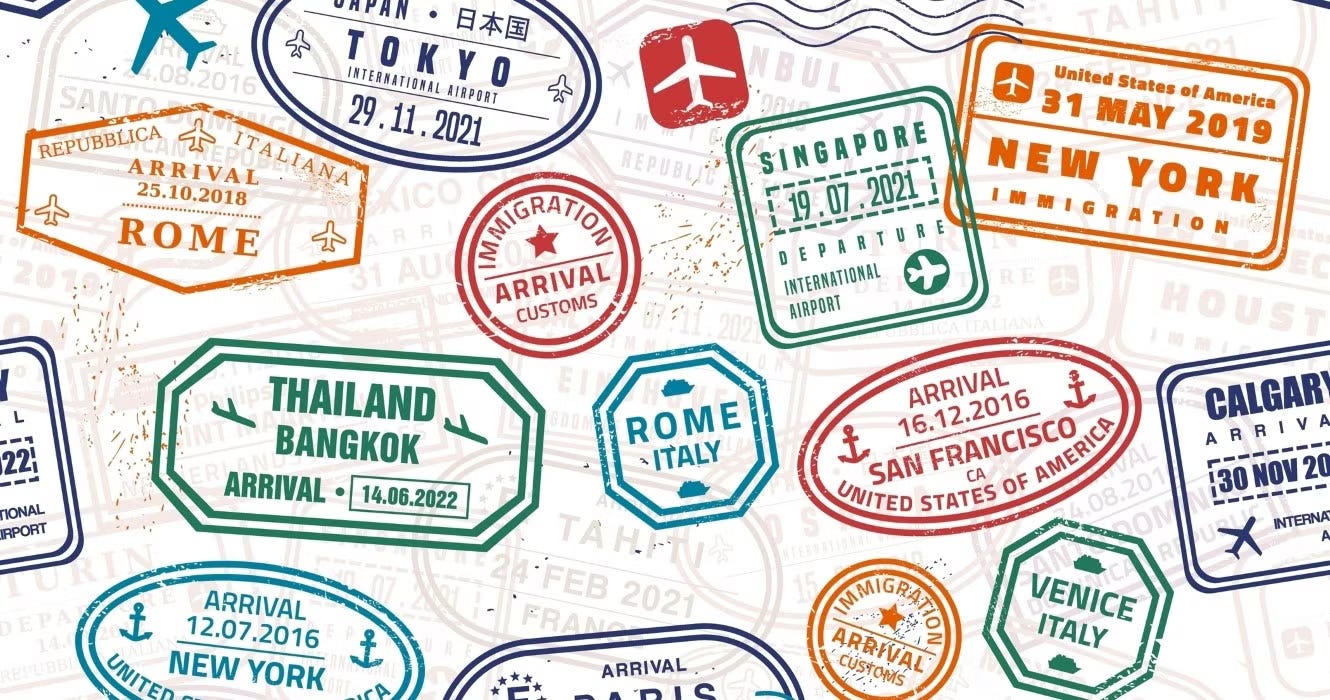
Europe replaces passport stamps with biometric tracking for non-EU travellers. A digital shift that promises security—but may complicate short trips.
If you’ve ever felt a strange sense of satisfaction from collecting passport stamps, Europe has just ended that ritual.
As of April 10, the European Union’s Entry/Exit System (EES) is now fully operational across 29 countries. No more stamps. No more ink. Just data.
Lots of it.
The system replaces traditional passport stamping with a fully digital process that records entry and exit movements, alongside fingerprints and facial images of non-EU travellers entering the Schengen area for short stays.
On paper, it sounds like a logical upgrade. In reality, it marks a deeper shift: borders are no longer just physical checkpoints—they’re becoming data infrastructures.
From paper to pixels
For decades, border control was simple: stamp in, stamp out. A physical trace of your movement.
Now, the EES turns that process into a biometric logbook, automatically tracking how long you stay, when you enter, and when you leave.
The official goals are predictable:
strengthen security
reduce fraud
detect overstays
modernise outdated systems
All reasonable. All expected.
But also: all very European in their execution—efficient in theory, layered in practice.
The immediate reality: queues
Let’s be honest: the rollout won’t be frictionless.
Authorities themselves are warning about longer waiting times at airports, especially in the early stages. Why? Because every non-EU traveller now needs to go through biometric registration, not just a passport check.
That means:
fingerprint scans
facial recognition capture
data verification
All of which take longer than a simple stamp.
So yes, the system is digital—but don’t confuse digital with faster. At least not yet.
Who it affects (and who it doesn’t)
The EES applies to non-EU nationals travelling for short stays (up to 90 days within a 180-day period).
EU citizens? Not affected.
Long-term residents? Also mostly outside the system.
But for the growing population of:
digital nomads
remote workers
frequent short-term travellers
this is a structural change.
Your movements are now tracked automatically. No ambiguity. No forgotten stamps. No room for “creative interpretation” of your stay.
A quiet shift in how we travel
What’s interesting isn’t just the technology—it’s what it represents.
For years, travel in Europe (especially within Schengen) felt fluid, almost informal. Borders existed, but they didn’t feel like systems.
Now they do.
The EES formalises movement. It removes friction in some ways—but introduces a different kind of control.
Not visible. Not physical. But constant.
The Nomag take
This isn’t dystopian. And it’s not surprising either.
It’s simply Europe catching up with a world where mobility, identity, and data are increasingly inseparable.
The question isn’t whether this will work—it probably will.
The real question is how it will feel.
Because for a generation used to moving freely, lightly, and often spontaneously, this marks the beginning of a more structured kind of freedom.
Still open. Still accessible.
Just… more monitored.