

Influencers are transforming travel. Are we sure? Bookings would like a word.
The Financial Times has the views, the search spikes and the marketing budgets. Evidence of a travel revolution is slightly harder to find.

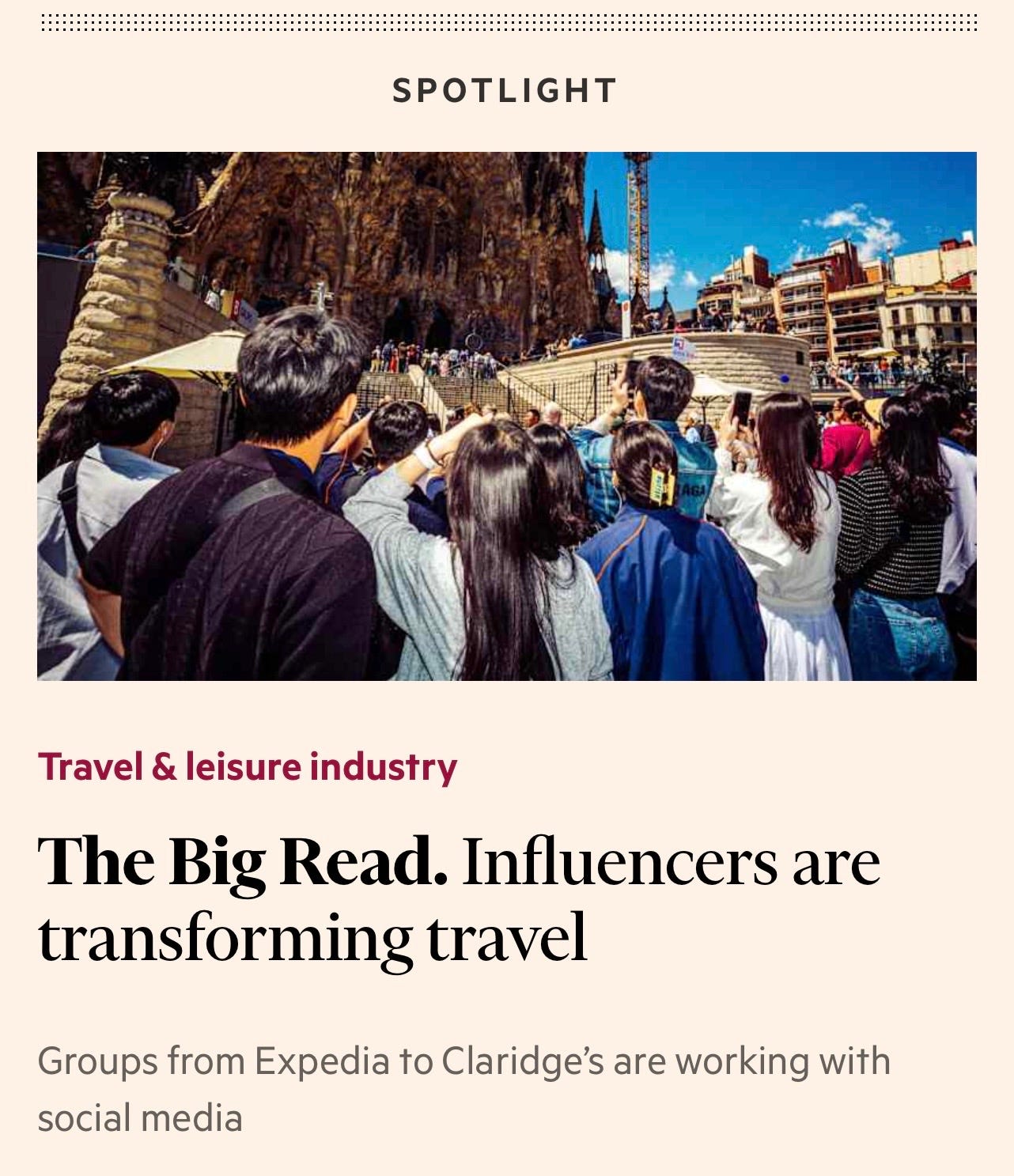
“Influencers are transforming travel,” announces the Financial Times.
It certainly sounds more exciting than “travel companies are spending more money on social media”, which is what most of the evidence actually demonstrates.
Take Expedia’s partnership with IShowSpeed. After a Caribbean livestream, Expedia reported search demand rising by 70 per cent for Sint Maarten, 50 per cent for Guadeloupe and 35 per cent for Dominica. Impressive numbers. But searches are not bookings, bookings are not completed trips, and completed trips are not necessarily profitable customers.
In fact, the next stage of Expedia’s campaign introduced a shoppable video and links to booking pages specifically to turn all that awareness into actual transactions. In other words, the first campaign proved that millions of people had looked. The company was still working on getting them to buy.
Virgin Voyages offers another suitably enormous example. It invited more than 1,000 TikTok creators onto a complimentary cruise. The company called it one of the largest creator activations in its history. According to results reported by Skift, it produced more than 17,000 pieces of content, 108mn views and 3.8mn engagements in a matter of days. Traffic arriving from social platforms more than doubled.
Bookings? They may have been “accelerated”. No number was disclosed.
So what was transformed? Marketing, unquestionably. Travel behaviour, possibly. Commercial performance, classified information.
To its credit, the FT acknowledges that measuring real-world impact remains difficult. That caveat matters more than the headline. Views, likes, searches, website visits and bookings describe different moments in a funnel. Reporting them as interchangeable versions of “influence” is how a marketing campaign becomes a cultural revolution before anyone has packed a suitcase.
This distinction matters even more in the digital nomad world. Influencers and digital nomads may both travel with phones and laptops. That is approximately where the similarity ends.
An influencer can make a destination visible overnight. A digital nomad must discover whether it remains liveable on Tuesday morning: housing, connectivity, transport, healthcare, visas, taxation, community and the price of staying beyond the photogenic weekend.
A viral campaign can produce a spike. Location-independent living creates slower, less glamorous questions about seasonality, infrastructure and whether a place works as a temporary home rather than a backdrop.
Creators are becoming important media channels. Affiliate links, bookable videos and creator storefronts may eventually make their value easier to measure. But until companies disclose additional bookings, repeat customers, length of stay and attributable revenue, we should call the phenomenon what the available evidence supports.
Influencers are transforming travel marketing.
The travel revolution itself may be real. For now, its best-documented destination is the marketing department.
