Is the countryside the new Bali?
This article was written as part of an editorial collaboration with the travel app Polarsteps.
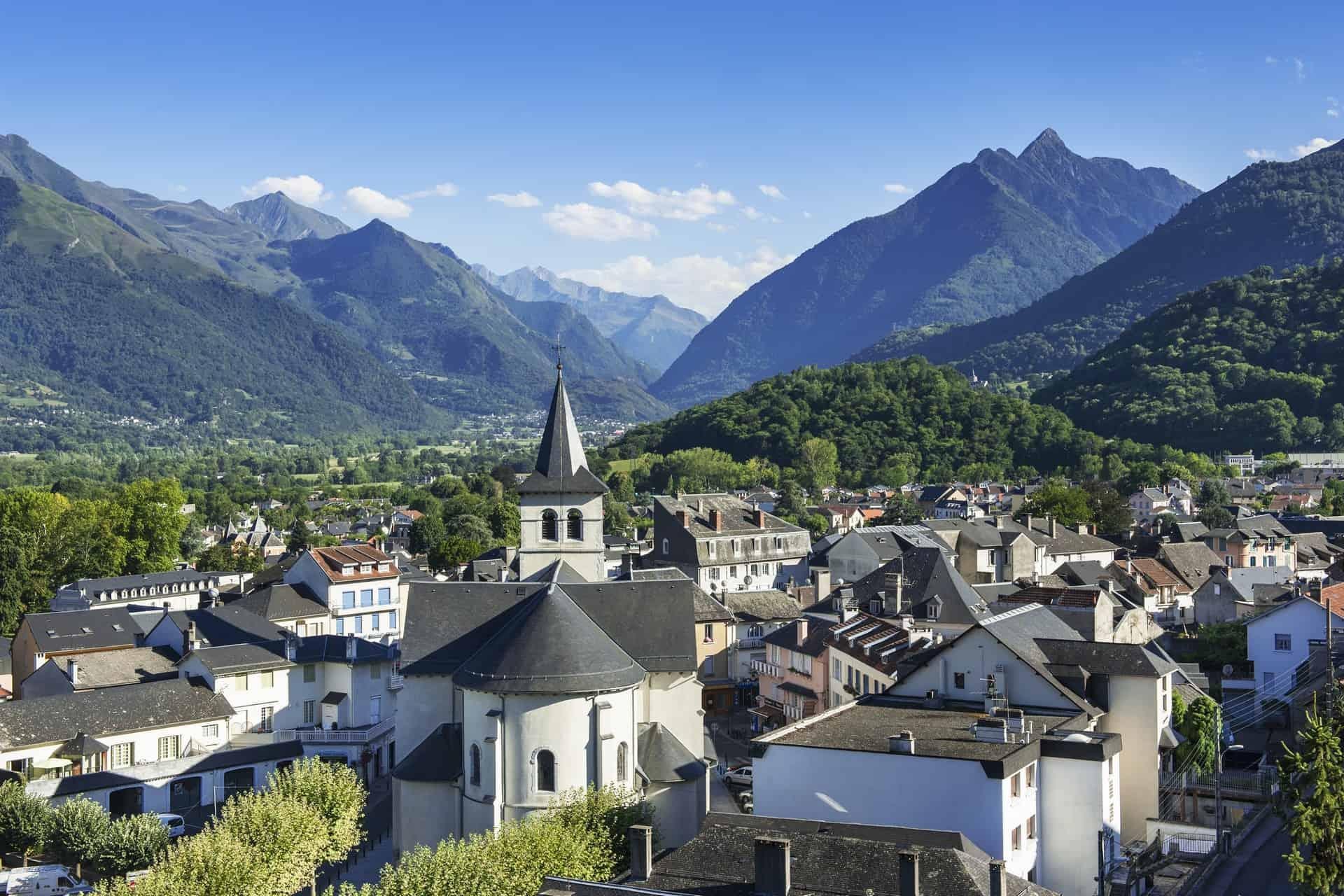
It was barely 2°C (35°F) when we parked in a supermarket lot in Argelès-Gazost, in the French Pyrenees. No turquoise water, no full moon party, no $10 smoothie bowls. Just a parking lot, raw mountains rising in front of us, a supermarket, a laundromat, and the surprising feeling of being exactly where we needed to be. Nothing quite Instagrammable, and that’s fine. We’d rather share our travels on less performative platforms like Polarsteps, which are better suited for our messy, slightly dodgy campervan lifestyle anyway.
Like many people, we spent a long time fantasizing about the “right” places when we first started out as digital nomads. The cities you’re supposed to be in, the spots where everything is supposedly easy, beautiful, and ready-made for you. Bali. Chiang Mai. Barcelona. On paper, it’s perfect: sun, ocean, Wi-Fi, cool cafés. But we didn’t really stay in those destinations for a long time because something felt off. It felt like a slightly exotic version of the life we had left behind. A comfortable version of somewhere else, without really having to engage with it.
When you keep chasing the “right” places, you sometimes end up living the same life, just under different latitudes. The same cafés, the same kind of people, the same conversations. Swipe left for the next beach, the next Pilates class, the next ube latte (don’t get me wrong, I’m sometimes the yoga-latte digital nomad you think I am). But aren’t these digital nomad hubs exactly what we thought we were escaping when we chose this non-traditional life?
That’s the paradox. Many people choose this lifestyle in search of a change from the usual 9-to-5 corporate life. And yet they often settle in places designed so they never feel too out of place: a quiet, effortless luxury.
Van life has slowly shifted that perspective for us. It has made us realize that the “right place” doesn’t really exist, or at least, it doesn’t look the way we think it does. A few days ago, I thought I’d find peace by heading to the ocean along the French Atlantic coast. But the place where I actually felt best was on the way back, in the countryside along the Loire River. There was a small riverside bar, clean bathrooms (never underestimate the power of clean bathrooms when you live in a campervan), people biking past, trees, frogs, birds. Nothing exceptional, but everything I needed.
Over time, I’ve realized that feeling good while traveling has less to do with beauty alone and more to do with an invisible balance between what makes your life easier, what makes you content, and what actually means something. And more often than not, I find that balance more easily in the countryside than in the usual hotspots.
Being a digital nomad isn’t just about choosing where you live; it’s also about choosing where your money goes, and therefore, what and who you give value to. With networks like France Passion, you can stay overnight with farmers and local producers, people who are often isolated, whose work is essential and yet undervalued. Most of their income comes from direct sales: cheese, butter, eggs. By stopping there, even briefly, you’re saying something a lot of remote work hotspots are starting to forget: “I see you. I care about you.”
I think about the people in Varen, a small village in the southwest of France, who keep serving coffee on the sidewalk just to keep their community bar alive. I think about the two women at the Owaka Community Library who offered us a book, a hot shower, and a perfectly cooked burger that warmed us up as much emotionally as it did physically.
But of course, this isn’t about romanticizing the countryside. As people who grew up there, we know it’s not always beautiful, not always easy, not always welcoming. Sometimes there’s no signal. Sometimes it’s boring. Sometimes it smells like goats and slurry (which, to be fair, fits pretty well with our imperfect van life). And yes, sometimes the ocean, the sun, and pure convenience are just what you need to feel good and grounded in a life that’s always changing.
So maybe the real question isn’t where. Not where it’s best, where it’s most beautiful, or where we can work in peace. Maybe the question is: what and who. What do we want to contribute to? What kind of economy do we want to support? Who actually benefits from our brief stay in a place?
Because being on the move isn’t just about changing scenery. It’s about deciding, at every stop and every destination, what kind of impact you want to have on this little blue planet.