Italy’s Hidden Gems Are Not So Hidden Anymore. Airbnb Hosts May Be the Reason Travellers Can Finally Stay There.
A new TEHA–Airbnb study suggests that home-sharing is helping small Italian towns move from postcard potential to bookable reality. The next challenge is making these places not just visitable, but genuinely stayable for longer, slower and more meaningful travel.
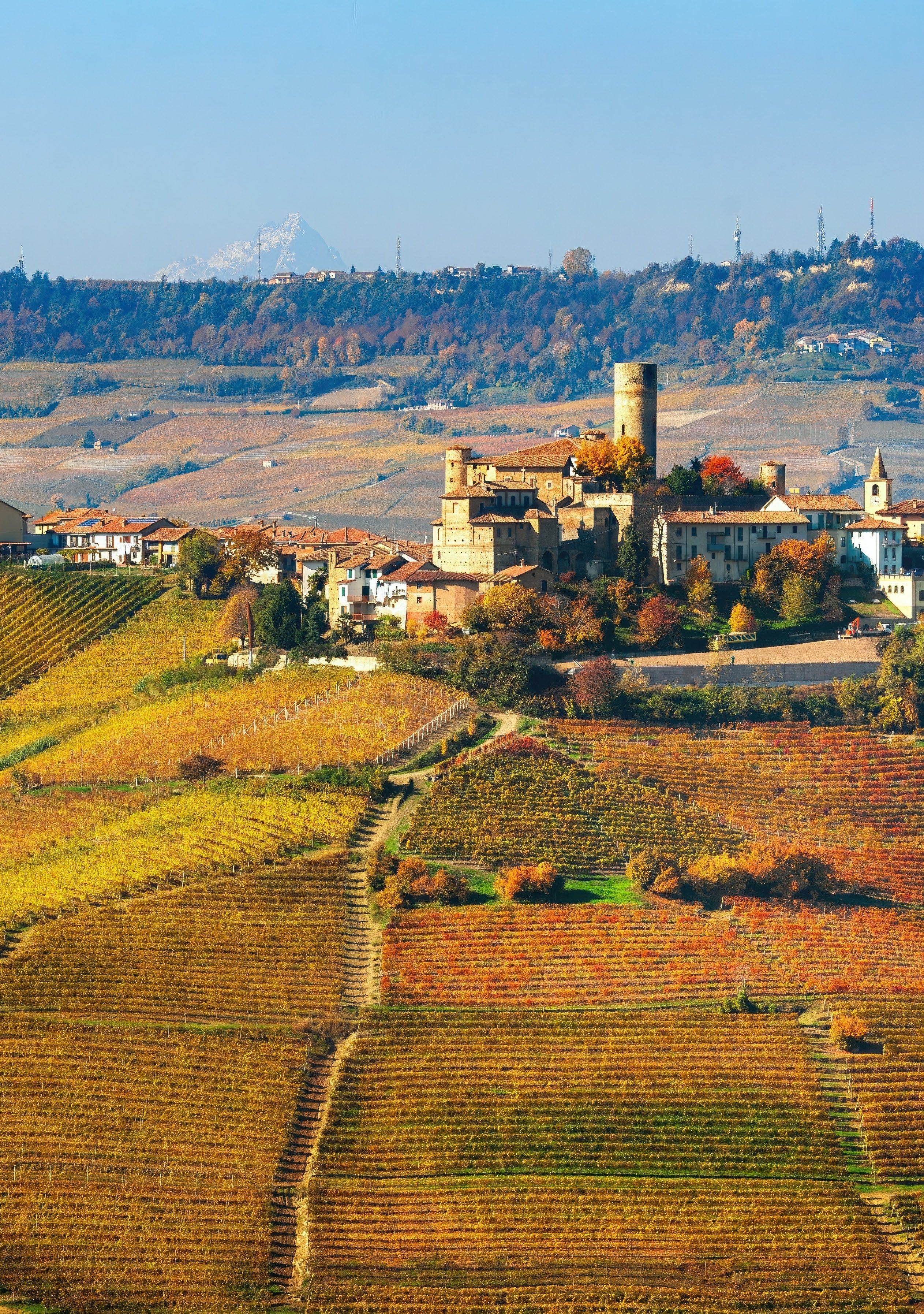
Italy has become extremely good at selling the idea of itself, which is both its greatest commercial asset and, occasionally, its most theatrical problem. The country is endlessly photographed, permanently romanticised and very often reduced to a short list of predictable destinations where everyone queues for the same view, orders the same aperitivo, complains about crowds and then posts a caption about authenticity from a square where half the people are doing exactly the same thing. Rome, Florence, Venice, Milan, Naples, the Amalfi Coast and a handful of other celebrity destinations have become the global shorthand for Italy, while thousands of towns, villages, rural areas, inland communities and smaller coastal places remain treated as charming extras in the national production.
A new study by TEHA Group, in collaboration with Airbnb, essentially confirms what many people working in tourism, relocation, remote work and territorial development already know: Italy is not short of places worth visiting; it is short of well-distributed, properly accessible, commercially structured tourism. The Osservatorio sul Turismo Diffuso in Italia, presented in June 2026, estimates that Airbnb-related tourism in small Italian municipalities generated around €836 million in total economic impact in 2025, supporting roughly 4,600 full-time equivalent jobs, while also making accommodation available in communities where traditional hotel supply is weak or entirely absent. According to Airbnb’s own publication of the study, the platform is present in around 75% of small Italian municipalities, and in approximately one third of them it represents the only available form of accommodation.
That last point matters more than the headline number, because tourism does not happen simply because a place is beautiful. This is one of the great delusions of Italian local development: the belief that a medieval arch, a panoramic belvedere, a grandmother making pasta, and a sign saying “borgo autentico” will somehow create a functioning visitor economy by magic. They will not. A destination needs beds, transport, food, services, information, Wi-Fi, maintenance, consistency, booking systems, local operators, and at least some evidence that the visitor will not be abandoned after sunset with a church façade, a closed bar and a bus timetable last updated during the Monti government.
The TEHA–Airbnb study frames diffused tourism as a way to redistribute flows away from overburdened hotspots and towards smaller communities, and the argument is broadly persuasive. Italy attracts enormous tourism volumes, yet the benefits are unevenly spread. The study reports that the top twenty Italian municipalities alone attract roughly 32% of visitors, while a very large share of the country’s cultural, natural and gastronomic assets sits outside the most obvious routes. Airbnb’s summary of the report says that municipalities with fewer than 30,000 inhabitants account for a major share of Italy’s cultural and tourism assets, including 80% of municipalities connected to UNESCO sites, 64% of museums, 67% of archaeological parks and 73% of Michelin-starred restaurants.
So far, so sensible. But for NOMAG, the more interesting question is not whether small-town Italy has potential. Of course it does. The question is whether that potential is being packaged for the right kind of traveller, or whether hosts, local councils and tourism promoters are still trying to sell every destination as a short-break fantasy at daily rates designed for people who arrive on Friday, leave on Sunday and spend most of the weekend photographing tiles.
This is where digital nomads, remote workers and slow travellers enter the conversation, and not as the usual cliché of laptop-on-beach nonsense, which should frankly be banned on aesthetic grounds alone. The real digital nomad market is not made of people who want to “discover hidden gems” for two nights before flying to Lisbon to record a podcast about freedom. It is increasingly made of people looking for places where they can live for three weeks, six weeks, two months or a season; where the cost of living is reasonable; where the apartment is functional; where the internet actually works; where there is a kitchen that contains more than one heroic saucepan; where they can work, walk, eat, shop locally and become temporarily useful to the place rather than merely passing through it like a lightly moisturised locust.
Airbnb itself has been leaning into this shift for years. Its monthly rentals pages explicitly target digital nomads, travelling professionals and people looking for furnished, longer-term accommodation, highlighting features such as Wi-Fi, kitchens, work-friendly spaces, flexible dates and monthly pricing. More broadly, Airbnb’s CEO Brian Chesky said in 2024 that stays of 28 days or more had grown to around 17–18% of Airbnb’s business, compared with approximately 13–14% before the pandemic, and described stays of 30 to 90 days as a major growth opportunity. This is not some niche fantasy invented by people who own too many linen shirts. It is a real behavioural shift, and one that smaller Italian destinations should understand before everyone else does.
The problem is that many hosts, especially in smaller territories, still price and present their homes as if every guest were a short-stay tourist. That may work in August, when demand is emotional, irrational and often sunburnt, but it is a weak strategy for the rest of the year. If a property in a small town is listed at a daily rate that makes a one-month stay look like the GDP of a minor principality, remote workers will simply go somewhere else. They are not usually asking for charity; they are asking for pricing that reflects the reality of longer stays. A guest staying thirty or forty-five nights is not the same operational burden as fifteen separate weekend bookings. There are fewer check-ins, fewer changeovers, fewer gaps, fewer messages asking where the corkscrew is, and often a more stable occupancy pattern in periods when the property might otherwise sit empty.
This is the commercial point that many Italian hosts still miss. Long stays are not “discounted tourism” in the humiliating sense. They are a different product. A monthly guest may pay less per night, but can deliver better occupancy, lower operational friction, more predictable income and more local spending. They buy groceries, use cafés, discover restaurants outside the TripAdvisor top three, return to the same bakery, ask where to fix a bicycle, take Italian lessons, visit nearby towns midweek, and sometimes bring exactly the type of slow, distributed demand that local economies claim to want every time they attend a conference about sustainable tourism.
For small Italian municipalities, this is where diffused tourism could become genuinely strategic rather than just picturesque. The study shows that many smaller places have assets but insufficient hospitality infrastructure; Airbnb and similar platforms can help close part of that gap, but the next step is not simply adding more listings. The next step is better listings, better local coordination and better offers for people who are not travelling like it is 2007. A village that wants remote workers should not just advertise “peace and authenticity”. It should be able to answer very unromantic questions: How fast is the Wi-Fi? Is there heating in November? Is there a desk? Is the chair usable by someone with a spine? Can I stay for five weeks without being charged like a honeymooner? Is there a supermarket within walking distance? Is there a bus, a train, a car-share option, a local taxi number that answers after 8 p.m.? Can I meet other people, or will I spend six weeks becoming emotionally dependent on the local cat?
This is also where the work we see from friends and partners such as ITS Italy becomes relevant. The real opportunity is not to sell small-town Italy as a postcard, but to build bridges between places, people and practical needs. A territory becomes attractive to long-stay travellers when it is not only beautiful, but legible. That means clear information, curated local services, realistic accommodation, trusted local contacts, experiences that are not tourist traps, and a sense that the visitor can temporarily belong without pretending to be a local after three cappuccinos and a market visit.
There is also a more delicate point, which the tourism industry sometimes prefers to whisper rather than say out loud: longer stays can be more respectful than hyper-compressed tourism. The weekend visitor often consumes a place at high speed, especially in destinations that have trained themselves to extract maximum value from minimum time. The slow visitor behaves differently, or at least has the chance to. They spread their spending, learn local rhythms, travel outside peak times, and may choose places that would never compete with Florence on a Saturday but can be deeply appealing for someone who wants a base for a month. This does not automatically solve housing pressure, overtourism or community resentment, and nobody serious should pretend it does. But it gives smaller destinations a more nuanced model than simply chasing more arrivals.
This is why the TEHA–Airbnb study should be read not only as a celebration of home-sharing, but as a prompt for product design. If Airbnb can be an access infrastructure for small Italian towns, then hosts and destinations must stop treating access as the finish line. A listing is not a strategy. A balcony is not a positioning statement. A discount hidden somewhere in the platform settings is not a long-stay policy. If a town wants digital nomads, remote workers, writers, founders, consultants, semi-retired professionals, academics, creatives or the large and growing tribe of people who can work from anywhere but do not particularly want to work from a bunk bed in a “community villa” with a broken espresso machine, it needs to make them an offer that makes sense.
That offer does not have to be luxurious. In fact, the most interesting opportunity may be in places that are not trying to imitate luxury at all. A good long-stay property in a small Italian town needs reliable internet, a proper bed, a decent table, heating and cooling that work, transparent bills, a washing machine, a kitchen designed for actual cooking rather than decorative olive oil photography, honest photos, fair monthly pricing, and a host who understands that someone staying for six weeks is not asking for a towel sculpture but may need to know where to buy printer paper. If that sounds basic, it is because basic is often what separates a romantic idea from a bookable reality.
And yes, hosts should use the tools already available to them. Monthly discounts are not a radical technological frontier. Airbnb itself actively promotes monthly stays and long-term furnished rentals, and its platform allows hosts to set longer-stay pricing. The question is not whether the tool exists; the question is whether enough hosts in smaller Italian territories understand the guest segment well enough to use it intelligently. A 5% discount on a wildly inflated daily rate is not a monthly strategy. It is theatre. A serious long-stay offer should look at seasonal occupancy, local cost of living, utilities, cleaning frequency, guest expectations and the competitive alternatives available in Portugal, Spain, Greece, Croatia, Albania, Mexico, Thailand and every other place that has already realised remote workers can read a spreadsheet.
The cheerful irony is that Italy should be unbeatable in this market. It has food, climate variety, culture, trains in many areas, regional diversity, safety, beauty, healthcare access, strong lifestyle appeal and an international brand that most countries would happily steal if they could get away with it. But Italy also has a special talent for making obvious opportunities administratively confusing, commercially fragmented and locally improvised. That is why diffused tourism cannot simply be left to chance. It needs hosts, municipalities, platforms, local businesses and territorial organisations to think together about longer stays as a category, not just as a lucky booking.
The TEHA–Airbnb study is useful because it gives numbers to a story many of us already recognise. Small-town Italy is not empty of value; it is often empty of structure. Tourism can help, but only if it is not reduced to another round of “discover our hidden gem” marketing, which by now should be taxed as a form of linguistic pollution. The better opportunity is to create a new layer of Italian hospitality for people who want to stay longer, spend more evenly, live more locally and pay prices that make sense beyond the weekend economy.
For digital nomads and slow travellers, this could be the beginning of a more mature relationship with Italy. Not the fantasy of moving to a village and becoming the main character in a rustic self-discovery film. Not the extractive version of cheap living dressed up as lifestyle. Something more practical, more balanced and frankly more interesting: smaller places offering proper, affordable, longer stays; guests bringing work, income and curiosity; local economies receiving visitors who have time to become customers, not just spectators.
Italy needs more hosts who understand the difference between a guest and a resident-for-a-while. It needs more towns that stop asking to be discovered and start asking what kind of visitor would actually help them thrive. And it needs to remember that the future of tourism may not be only in the next fully booked August weekend, but in the person who wants to arrive in October, stay until December, work every morning, eat locally every evening, and pay a monthly price that does not require selling a kidney on the way to check-in.