Lake Como Is Not Becoming a Digital Nomad Hub, Thank God

There are two ways of looking at the future of digital mobility, and one of them usually involves a person in linen trousers pretending to work from a beach bar while actually waiting for their laptop to overheat, their Wi-Fi to collapse and their accountant to explain why spending three months in Portugal did not automatically make them a global citizen. The other way is rather more interesting, and it has much less to do with cheap rent, listicles about “best places to work remotely in 2026” and the heroic discovery of espresso by people who have just arrived in Europe, and much more to do with how hospitality, real estate, lifestyle infrastructure, private membership, wellness, branded residences and global capital are beginning to merge into a new operating system for people whose lives, money and work no longer sit neatly in one place.
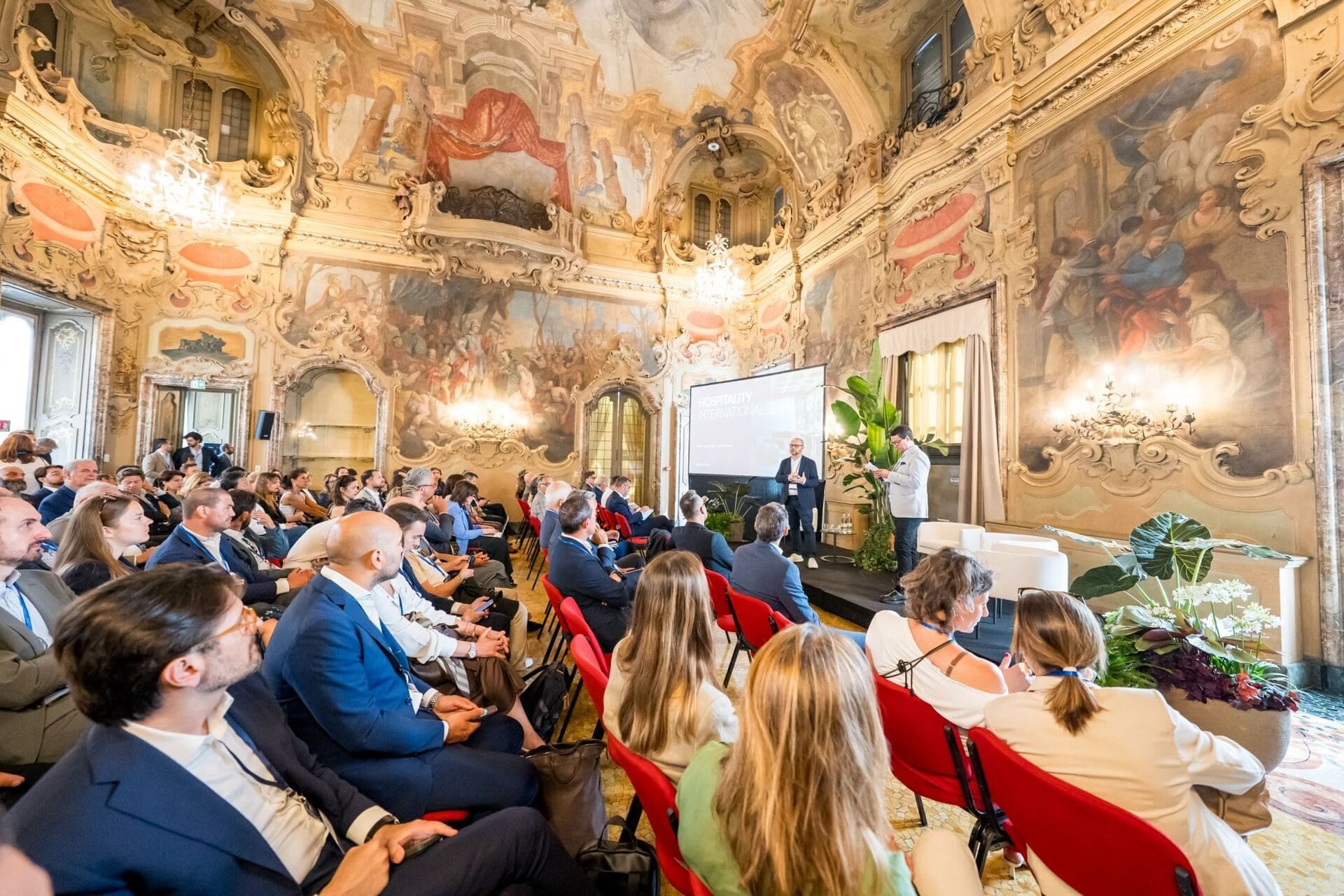
That second conversation was very much present at the inaugural Hospitality Club International Summit by Medelhan, which concluded successfully between Milan and Lake Como, bringing together more than 400 senior professionals and over 30 international speakers from hospitality, real estate, design, investment and hotel operations. Officially, the summit was about “Hospitality & Lifestyle Developments in the Mediterranean: The Lake Como Case and Beyond”; unofficially, or at least through a NOMAG lens, it was also about something slightly sharper: the fact that the future of mobility is splitting in two, with one version still chasing the cheapest destination with tolerable Wi-Fi, while the other is quietly building an ecosystem of places where global professionals, founders, investors, executives and high-spending travellers can live, work, recover, entertain, belong and invest without needing to cosplay as backpackers with better luggage.
This distinction matters because the words “digital nomad” have become so overused, so flattened and so brutally mistreated by tourism marketing departments that they now describe everyone from a junior freelancer answering emails from a hostel bunk bed to a private equity partner spending part of the year between Milan, London, Dubai and Lake Como while managing deals, family life, tax planning, wellness routines and a property portfolio with the kind of logistical intensity that would make a normal person require medical supervision. These are obviously not the same market, they do not need the same infrastructure, they do not spend in the same way, and, crucially, they do not transform destinations in the same way. One segment wants a plug socket and a reasonably photogenic cappuccino; the other wants privacy, service, cultural capital, operational reliability, design coherence, access, health, discretion and a sense that every part of the experience has been deliberately curated rather than improvised by someone who discovered hospitality through a mood board.
This is where the Lake Como case becomes interesting, because it does not fit comfortably into the usual digital nomad fantasy. Lake Como is not cheap, not frictionless, not trying to become the next cheerful co-working village, and not especially interested in competing on the basis of affordability or volume, which is precisely why it offers a more sophisticated lesson for the future of premium mobility. As discussed at the summit, destinations like Lake Como cannot expand endlessly, cannot simply add supply at scale and cannot dilute their identity without destroying the very thing that makes them valuable. Their economic logic is based on scarcity, heritage, landscape, reputation, architectural sensitivity and extremely selective development, which is a completely different game from the increasingly tired model of cities rebranding themselves as “remote work hubs” because a few people with MacBooks once stayed there for six weeks and posted enthusiastically about the sunsets.
For the hotel industry, this shift is not cosmetic. The most important transformation discussed throughout the summit is that luxury hospitality is moving beyond the hotel as a standalone accommodation product and becoming something much closer to a lifestyle infrastructure. The hotel is no longer simply where someone sleeps between dinner and breakfast; it is becoming a club, a wellness platform, a social filter, a branded residential anchor, a cultural programme, a culinary destination, a meeting point for capital and creativity, and, in the most ambitious cases, a year-round operating environment for people who do not necessarily separate travel, work, leisure, investment and identity into tidy boxes. This is where the conversation touches the more mature end of the digital nomad world, because the people shaping the next phase of mobile living are often not looking for a desk in a shared office; they are looking for an ecosystem in which the boundaries between business, lifestyle, residence and hospitality have been intelligently blurred.
The rise of branded residences is perhaps the clearest expression of this new reality. For years, some people treated branded residences as a slightly glamorous side dish to the hotel business, useful for financing developments and reassuring buyers that someone competent would handle the towels, the concierge and the vague sense of belonging. That view now feels rather outdated. Branded residences increasingly sit at the centre of how high-net-worth mobility is being organised, because they offer precisely what the premium mobile class wants: ownership or long-stay access without operational hassle, service without the emotional awkwardness of managing everything personally, privacy without isolation, and brand-backed credibility in destinations where scarcity makes good assets difficult to find and even harder to manage well. In plain English, it is the difference between “I found a charming place online and I hope the heating works” and “my residence is part of an internationally operated hospitality ecosystem where the spa, the chef, the maintenance, the concierge and the brand standards are not a matter of prayer”.
Wellness, too, is no longer the decorative spa menu at the end of the brochure, next to a stock image of someone looking spiritually reborn after a massage. At the summit, wellness emerged as a strategic driver of luxury hospitality investment, and rightly so, because the premium traveller of the next decade will increasingly measure destinations not only by beauty, service and status, but by their ability to support longevity, recovery, preventive health, movement, sleep, nutrition and mental clarity. This is again where the digital nomad conversation becomes more grown-up. The old remote-work fantasy was about being able to work from anywhere; the new premium mobility conversation is about whether “anywhere” can keep you functioning, healthy, productive, socially connected and professionally credible while you are living across multiple geographies. A destination that can answer that question well is no longer selling rooms; it is selling continuity.
Milan’s role in all this is equally important, because Milan is not simply a convenient urban stage for a conference about beautiful places; it is one of the few European cities where design culture, finance, fashion, real estate, hospitality, architecture and international business genuinely overlap without needing to be artificially glued together for a panel description. Holding the central moment of the summit at Palazzo Visconti reinforced this point rather well. Milan is where the capital conversation can meet the design conversation, where brand strategy can meet property development, and where hospitality can be discussed not merely as tourism, but as part of a much broader economy of lifestyle, asset value and international positioning. In a world where every destination wants to be “authentic” and every investor wants “experiential value”, Milan still has the advantage of knowing what those words might actually mean when they are not being abused by a marketing intern with access to Canva.
The international line-up reflected the seriousness of that conversation. With voices from groups and firms including Marriott International, Accor, Meliá Hotels International, Belmond, Arsenale Group, VOIhotels, Panoram Hotels, Pygmalion Capital and Six Senses, alongside leading architecture and design studios such as HBA, HKS, AvroKO, Conran and Partners, OBMI and Studio Moren, the summit brought together the different disciplines that now shape hospitality value: capital, operations, architecture, interiors, brand, wellness, destination strategy and real estate development. That mix matters because the future of luxury hospitality will not be won by the hotel group alone, the architect alone, the investor alone or the destination alone. It will be won by those who understand that the contemporary guest, resident, member or mobile professional experiences all of these elements as one continuous product, and that any weak link in the chain makes the entire promise feel less believable.
This is also why the “digital nomad” label needs serious renovation, ideally by someone with taste and a ruthless editor. The hospitality industry does not need to chase the cartoon version of the digital nomad, the one who appears in destination marketing presentations as a smiling person with a laptop, a coconut and no visible responsibilities. What it should be studying is the broader phenomenon of distributed lives: people who work internationally, invest internationally, educate their children internationally, build social and professional networks across borders, spend significant portions of the year away from their official base, and expect hospitality environments to provide not only accommodation but structure, access, identity and ease. Some of these people may never call themselves digital nomads, which is probably wise, but they are part of the same deep movement: the decoupling of work, residence, leisure and capital from one fixed geography.
Lake Como, in this sense, is not the future because everyone can go there; it is the future because not everyone can. That sounds brutal, and it is, but luxury has never been a democratic operating system, however many brands try to soften the message with words like “inclusive experience” while pricing the room at levels that require emotional preparation. The economic power of Lake Como lies in its constraints: limited supply, exceptional landscape, heritage assets, global recognition, and a level of desirability that cannot be manufactured quickly. For investors and hospitality groups, that means the opportunity is not to flood the market, but to elevate the existing fabric through restoration, adaptive reuse, ultra-luxury repositioning and carefully managed lifestyle developments that add value without flattening the destination into a generic luxury product.
This is where Mediterranean hospitality has a particular advantage, because its strongest destinations are not empty canvases waiting for a concept; they are layered, complicated, historically dense places where the value often lies in what already exists, provided it is handled with intelligence rather than arrogance. The best developments in this space will not be the ones that import a standardised luxury formula and drop it onto a lake, coast or hilltop like a five-star spaceship. They will be the ones that understand local architecture, climate, food culture, craft, landscape, privacy, seasonality and community, and then connect those elements to international standards of service and investment discipline. In other words, the future is not “make everywhere look like Dubai with older walls”; it is much harder, and much more interesting.
From a NOMAG perspective, the conclusion is pleasantly inconvenient for the usual remote-work clichés. The next great hospitality frontier is not simply about where people can open their laptops; it is about where they can build lives that move. The real opportunity is not in turning every pretty destination into a co-working postcard, but in designing hospitality ecosystems for a world in which wealth, work, family, wellness and identity are increasingly mobile. Some destinations will serve the budget nomad, some will serve the creative class, some will serve founders and executives, and some, like Lake Como, will operate at the very top of the pyramid, where the conversation is less about affordability and more about access, trust, scarcity and long-term value.
The Hospitality Club International Summit by Medelhan succeeded because it treated hospitality as the complex, multidisciplinary industry it has become. It understood that the future of the Mediterranean will not be shaped only by hotel rooms, nor only by investment flows, nor only by beautiful interiors, but by the ability to connect all of these things into coherent lifestyle propositions. That is the conversation worth having, and, thankfully, it is far more interesting than another ranking of “ten places where digital nomads can live cheaply while discovering that locals also need housing”.
So no, Lake Como is not becoming the next digital nomad hub, and that is probably excellent news for everyone involved. It is becoming something more relevant: a case study in how premium destinations can respond to the age of mobile wealth without surrendering to volume, gimmicks or algorithm-friendly clichés. For luxury hospitality, that is the real lesson. For digital nomads, at least the grown-up ones, it is a useful reminder that the future of mobility may not be found in the cheapest place with Wi-Fi, but in the places capable of making movement feel intelligent, beautiful, healthy, productive and, when necessary, properly expensive.