

Remote Workers for Remote Villages (Ep. 8) - Tortoreto, Abruzzo
When Coming Back Becomes a Project

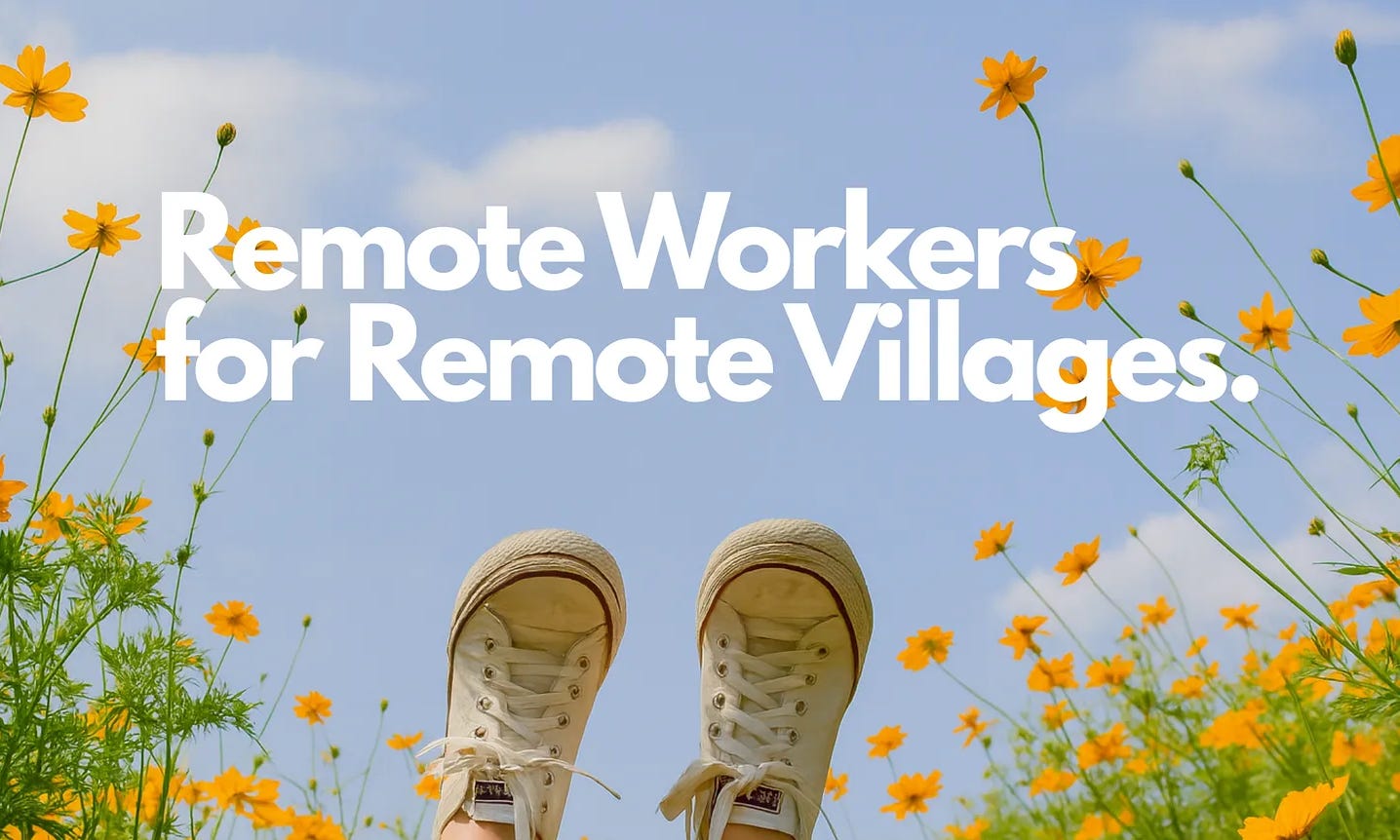
When returning home isn’t nostalgia but strategy — and a territory discovers that remote work can be much more than a successful summer.
With Matteo Di Donato, in episode 8 of Remote Workers for Remote Villages, we explore a land that blends sea, hills, and mountains — and a vision that speaks to anyone thinking about returning, staying, or starting over.
There are places that don’t need storytelling: they open up before you, move through you, and remind you that Italy is not what we see during those crowded August weekends. Abruzzo is one of those places. In less than an hour you move from the Adriatic coast to the peaks of Gran Sasso; in a single day you can swim, cycle between vineyards, enjoy fresh fish for lunch and end your evening in a medieval village drinking a Montepulciano that tastes like history. It’s a region of authenticity — not globalised, not polished, simply real.
Into this landscape comes the story of Matteo Di Donato, guest of episode 8 of Remote Workers for Remote Villages. After 18 years abroad — between Germany, Spain, France, Portugal, and South America — and a career in international marketing enriched by wine tourism, Matteo decides to return to Tortoreto, the town where he grew up. Not out of nostalgia, but as an investment. A way to give back to the territory part of what he had gathered elsewhere.
This is how Discover Tortoreto was born: a project that blends renovated apartments with a hospitality model built on personalised experiences. The goal is simple and radical: to experience Tortoreto not as a summer-only destination but as a year-round living option — a place where you can work remotely while enjoying a real, not imagined, quality of life.
The interview touches on crucial issues: the still-shy demand for long stays, the bureaucracy that slows things down, infrastructural gaps in the hinterland, and an entrepreneurial culture that still struggles to recognise the opportunities that come with young people returning home. Yet as these limits emerge, so does the territory’s strength: a welcoming community, a recognisable identity, a rhythm of life that wins over those who arrive from September to May, when everything is more authentic and more true.
Matteo presents an Abruzzo that does not sell glossy promises, but offers possibilities. An Abruzzo where food is culture, landscape is movement, and remote work is not an exception but a concrete perspective — provided it is supported by vision, services, and a narrative that lasts longer than a single summer.
This episode is not just a story: it is an invitation.
An invitation to watch the full interview and understand what a “return” really looks like.
And then to ask yourself a simple question: what are you waiting for to see Tortoreto and Abruzzo with your own eyes?
Maybe a few weeks are enough to realise you could stay longer.
Maybe a single trip is enough to imagine a new beginning.
And maybe — as Matteo shows — territories change when someone decides to truly come back.