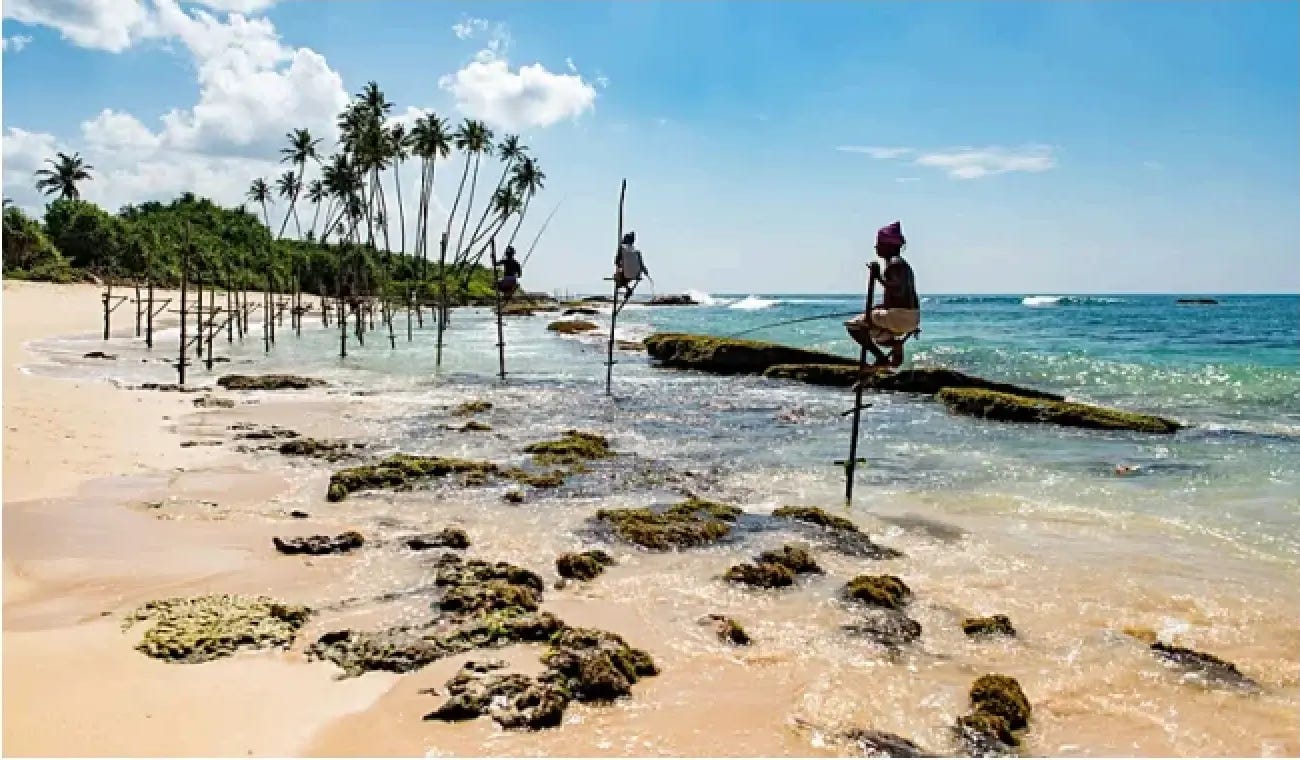
đ´ Sri Lanka launches its Digital Nomad Visa.
But is it really the remote paradise you think?
Thereâs a specific type of headline that keeps coming back in the remote-work era:
âNew digital nomad visa. Dream beaches. Low cost of living. Paradise unlocked.â
This time, itâs Sri Lanka.
After first being discussed back in 2021, the country officially launched its Digital Nomad Visa in February 2026. And yes â the visuals are exactly what youâd expect: Mirissa sunsets, the iconic train slicing through tea plantations from Ella to Kandy, colonial vibes in Galle Fort, elephants wandering national parks, and ancient rock fortresses like Sigiriya rising from the jungle.
It looks cinematic.
But letâs slow down.
The basics (before you pack your laptop)
Sri Lankaâs Digital Nomad Visa comes with relatively accessible requirements:
Minimum monthly income: around âŹ1,700 (US$2,000)
Higher threshold if you have more than two children
You must work exclusively for companies or clients outside Sri Lanka
No political or âdisruptiveâ activities
Fee: roughly âŹ425 per year, renewable
Validity: 12 months
Applications are submitted online via the Department of Immigration.
Compared to other countries charging âŹ3,000ââŹ5,000 for similar programs, this is not an elite-only scheme. Itâs positioned as approachable.
Why Sri Lanka is suddenly on the radar
Because itâs objectively compelling.
Nicknamed the âPearl of the Indian Ocean,â Sri Lanka attracts around 2.3 million international visitors annually. Within a relatively compact territory, you get:
Surf mornings on the south coast
Tea highlands in the afternoon
UNESCO heritage cities
Wildlife that feels straight out of a nature documentary
For remote workers tired of saturated European hubs or overcrowded Southeast Asian hotspots, Sri Lanka feels like the next frontier.
But hereâs where Nomag pauses.
The detail most press releases gloss over
According to the Speedtest Global Index, Sri Lanka ranks well outside the global top tier for fixed broadband speeds.
Translation:
If youâre a designer sending PDFs and asynchronous updates, youâll likely manage.
If youâre running multiple HD Zoom calls across time zones every day, infrastructure might matter more than palm trees.
And thatâs the real conversation.
Visa â ecosystem
Every time a country launches a digital nomad visa, the assumption is that itâs automatically âremote-ready.â
It isnât.
A visa is paperwork.
An ecosystem is something else entirely.
You need:
Reliable connectivity
Functional coworking spaces
Housing that doesnât inflate overnight
A stable regulatory framework
A real community â not just Instagram geotags
Sri Lanka is still recovering from significant economic turbulence in recent years. The visa is part of a broader strategy to attract foreign income and long-stay professionals.
Will it work?
That depends less on the marketing â and more on the experience on the ground.
The real question
Not âIs it beautiful?â
But:
Can you actually function there?
Digital nomadism isnât about escaping grey skies.
Itâs about choosing environments where your work â and your life â operate better.
Sri Lanka joins a growing list of countries competing for mobile talent. Thatâs not surprising anymore. Governments understand that remote workers bring foreign currency, long-term spending, and soft economic impact.
The difference, as always, wonât be in the announcement.
It will be in the reality.