

"Stiamo diventando tutti Nomadi Digitali" - Has Digital Nomadism Changed? Or Are We Just Playing Fast and Loose With the Word?
The Nomag Pulse #39

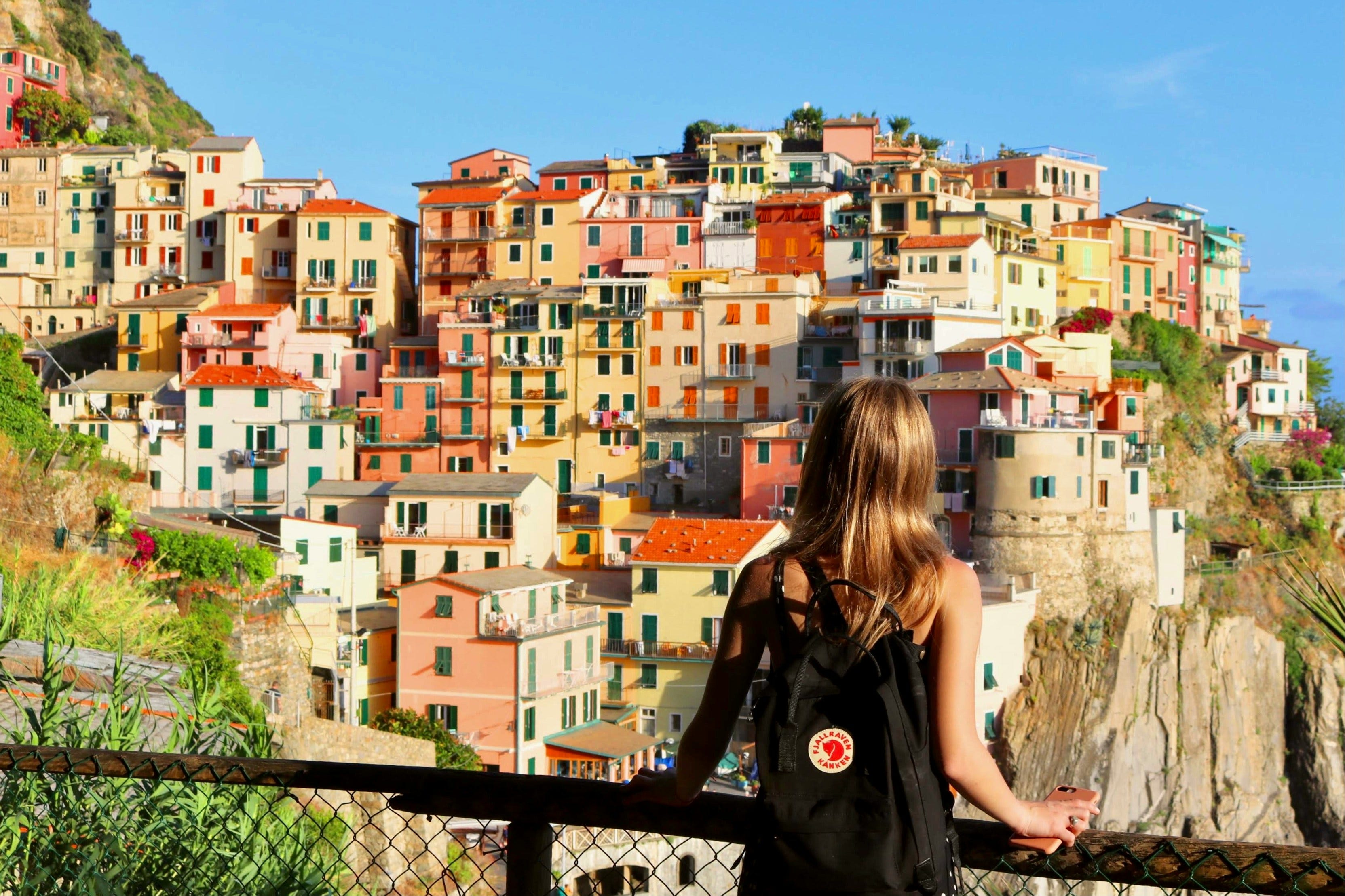
Before our non-Italian readers roll their eyes and mutter, “Here we go again, another local debate”… give us a minute.
Yes, this story starts in Italy.
Yes, it’s about an Italian survey.
But if digital nomadism is a global phenomenon — and we all agree it is — then how different countries interpret it, stretch it, politicise it, market it, and occasionally romanticise it is part of the bigger picture.
So we thought: let’s bring this to NOMAG. And let’s open the debate properly.
The survey that stirred the espresso
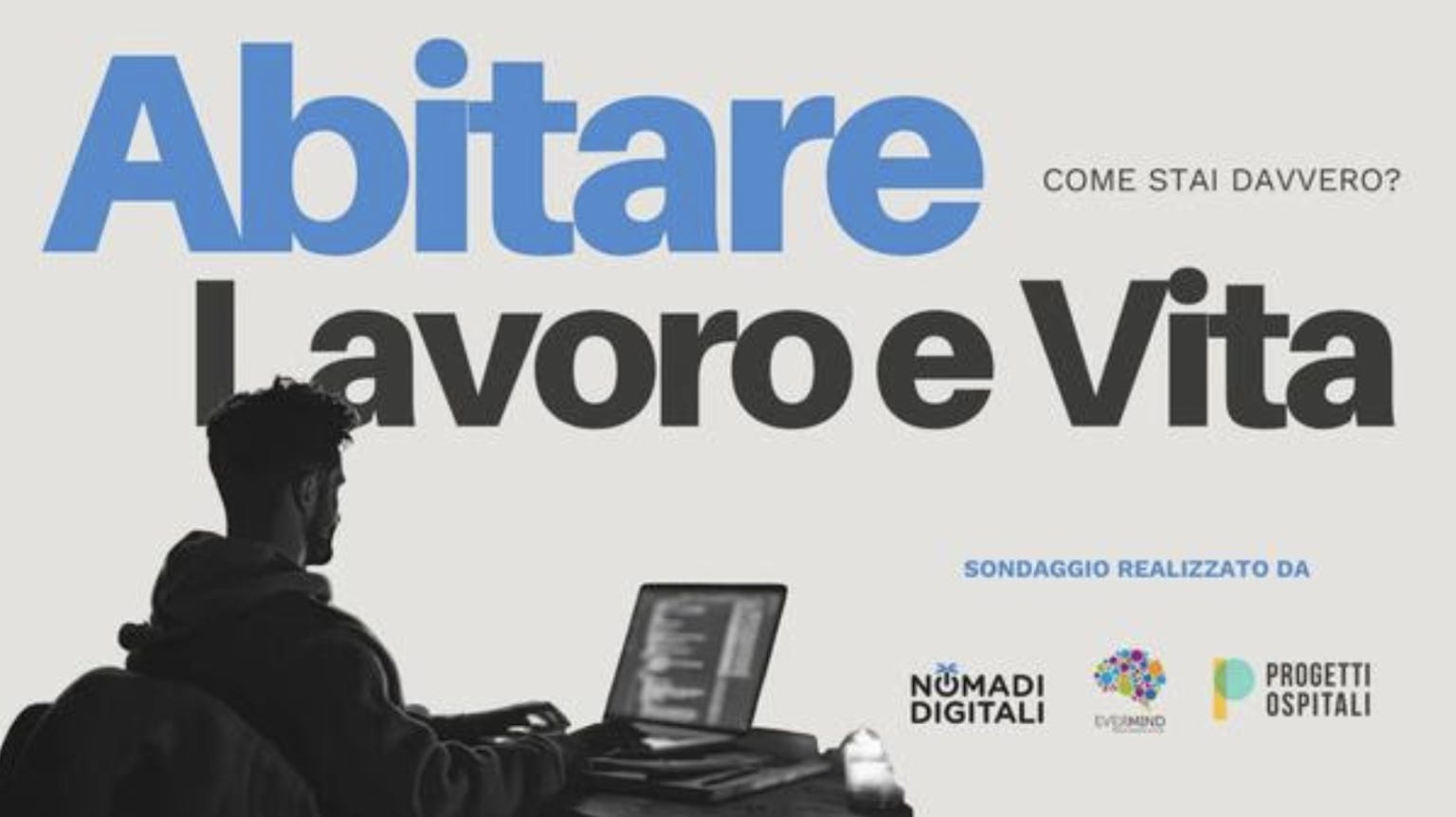
An Italian association, NomadiDigitali.it, recently published a new survey (you can read their article here: “Il Nomade Digitale per Come lo Conosciamo Non Esiste Più”).
More than 160 respondents.
A more reflective angle than their traditional annual report.
Less “where do you work?” and more “how are you actually living?”
The thesis? Bold and beautifully provocative:
The digital nomad as we knew them no longer exists.
Or perhaps we are all becoming digital nomads.
Now that’s the kind of headline that deserves a long coffee.
The data they shared publicly paints an interesting picture:
32% of respondents are between 55 and 64.
25% between 45 and 54.
39% live with family and/or children.
53% live in small towns or internal areas in Italy.
36% are employees (on-site or hybrid).
Only 22% fully identify with the traditional image of the digital nomad.
The conclusion drawn is that the old archetype — young freelancer, backpack, laptop, beach-coworking hybrid — is too narrow. The phenomenon has matured. It’s broader. More inclusive. More rooted.
To be clear: the association deserves credit. They have been tracking this ecosystem for over a decade in Italy. Consistency in analysis is rare. Producing annual reports when the hype cycle comes and goes is serious work.
But as we read it, we couldn’t help asking ourselves: are we witnessing the evolution of nomadism — or the evolution of semantics?
Enter Matteo Cerri’s column: Esco Quando Voglio
We’re republishing (with permission) a piece by Matteo Cerri from his column Esco Quando Voglio, where he gently — and analytically — pushes back.
Not against the research.
Not against the idea of evolution.
But against the risk of conflating categories.
Because here’s the uncomfortable nuance.
If over half of respondents live in small Italian towns, many are employees, many are over 45, many have families… are we observing digital nomads? Or are we observing a mixed ecosystem of remote workers, hybrid employees, lifestyle relocators and people in transition?
These are not the same thing.
And if they’re not the same thing, redefining the word “nomad” to include all of them might feel inclusive — but it may also dilute the category until it stops being analytically useful.
Let’s untangle this (without being boring about it)
At NOMAG, we work across three worlds that often overlap but are absolutely not identical:
Digital nomads — people with structural location independence, often multi-country exposure, often self-directed or entrepreneurial, often operating beyond a single national ecosystem. There is even an “executive nomad” layer — senior consultants, founders, operators managing cross-border realities.
Remote workers / smart workers — professionals who can work from home, or from anywhere within a certain radius, but who are still anchored to a company, a city, a tax regime, a routine.
Territorial regeneration strategies — small towns fighting depopulation and looking at mobility as a solution.
Now, these three circles can intersect beautifully. We spend a good portion of our lives trying to make them intersect intelligently.
But merging them into one single label? That’s where things get slippery.
Not all remote workers are nomads.
Not all hybrid employees are remotely independent.
Not all villages are suitable for global mobility.
And not all mobility solves depopulation.
If we say “we’re all becoming digital nomads,” we risk flattening meaningful differences between:
The executive who spends six months in Europe and six in Latin America.
The Milan-based employee working three days a week from their childhood village.
The retiree experimenting with a slower lifestyle.
The founder running distributed teams across three continents.
All legitimate. All interesting. Not interchangeable.
The Italian angle (and why it matters globally)
Italy is fascinating in this debate because the country has hundreds of small towns actively trying to reinvent themselves. The narrative is seductive: digital nomads will repopulate the hills, revive the cafés, reopen the schools.
We love the ambition.
We also know the reality.
A nomad without community eventually loses their mind.
Isolation looks poetic for three weeks. After three months, you need peers. Professional ecosystem. Infrastructure. Airports. Trains. Cultural density. Other people who understand what you do for a living.
That’s exactly why, together with our partners at ITS ITALY (www.itsfor.it or even better, check ITS Journal on Substack), we are working on building a network of welcoming residences across Italy. Not isolated fantasy villages. But affordable, longer-stay options within reach of innovation hubs, airports, and real communities.
Because mobility without ecosystem is romantic but fragile.
And regeneration without clarity about who you are attracting becomes wishful thinking.
So… has nomadism changed?
Probably. It would be strange if it hadn’t.
The first wave of laptop-on-the-beach imagery was always a simplification. The current wave may be swinging toward something more rooted, more intergenerational, more reflective.
But before we declare that “the digital nomad no longer exists,” perhaps we should clarify who is answering the survey.
If the population observed is a hybrid mix of remote employees, small-town residents and reflective professionals rethinking life choices, then the result — a broader, less recognisable identity — is not surprising.
That doesn’t mean the original phenomenon disappeared. It may simply mean we are observing adjacent realities.
And here’s the real provocation:
Sometimes the problem isn’t that the definition is too narrow.
Sometimes the sample is too wide.
Over to you
We genuinely think this is a healthy debate. The Italian survey is valuable precisely because it forces the question.
Has digital nomadism evolved into something more mature and rooted?
Are we all becoming slightly nomadic in mindset?
Or are we confusing flexibility with mobility, and mobility with identity?
As always at NOMAG, we’re less interested in slogans and more interested in structure.
Because if we’re building ecosystems — in Italy or anywhere else — clarity is not optional. It’s foundational.
Let’s keep the conversation open.