

Stop Treating Us Like Tourists: The Housing Market’s Blind Spot
How the housing market keeps mistaking mobile professionals for tourists and why that misunderstanding is hurting everyone (starting from the locals).


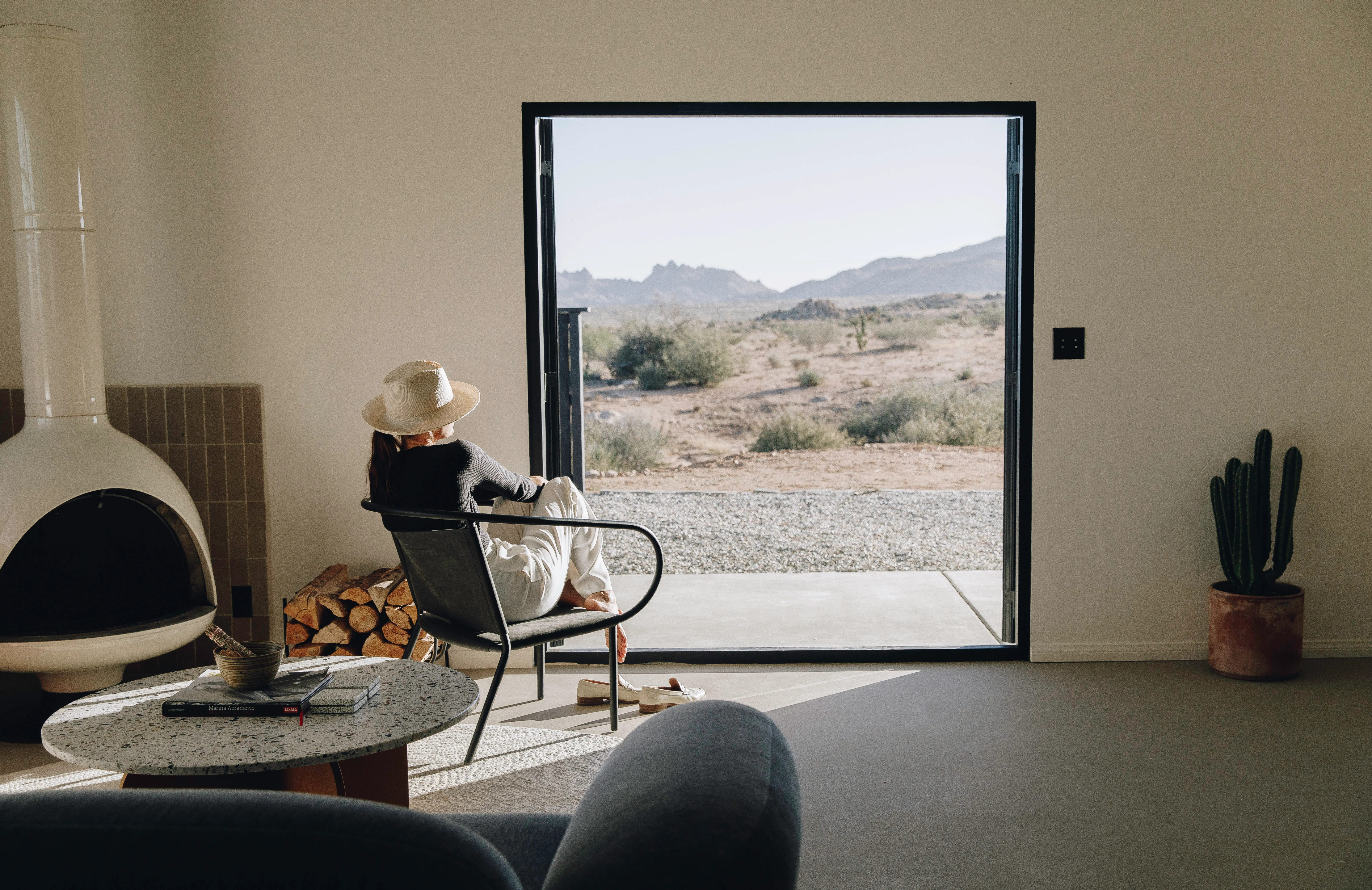
Mobile professionals keep being pushed into short-term rentals (often taken away from the local stock) while the real solution lies in flexibility, not polarization.
There is a quiet misunderstanding that follows many of us wherever we go. It happens the moment we start looking for a place to live for three or four months in a town that is not “ours,” but where we intend to build a temporary life. We open property portals, message owners, ask local agents. We explain, carefully, that we are not on holiday. We work remotely, we need stability, we would like a proper home for a defined period. And yet, almost inevitably, the answer arrives in the form of a nightly rate multiplied by thirty.
The market has decided who we are before we even introduce ourselves.
We are tourists, just slightly more digital. We are short-term guests, even if we are staying for a quarter of the year. We are treated as transient demand rather than as temporary residents. And so we are offered Airbnb listings with seasonal pricing, charming but impractical studios, or “special discounts” that still assume peak-summer logic in the middle of November.
The irony is that what most of us want is remarkably ordinary. Not bunk beds in curated coliving spaces with social programming and curated community dinners (which, incidentally, are rarely as affordable as their marketing suggests). Not hotel rooms with minimalist decor and industrial lighting. What we are looking for is something much more boring and much more sustainable: a normal house, a reasonable agreement for ninety or one hundred and twenty days, a price that reflects seasonality and local standards rather than global platform algorithms, and enough flexibility to avoid a four-year lease we cannot commit to.
Yet in many destinations, that category simply does not exist.
The housing system in a surprising number of places still functions as a rigid binary. You are either a tourist staying a few days, or you are a long-term tenant signing contracts measured in years. The intermediate layer — the three- to six-month temporary resident — remains structurally invisible. And when something is invisible to regulation and tradition, it is quickly absorbed into whatever framework seems most profitable at the moment, which in recent years has been short-term rentals.
This shift toward nightly rentals is understandable if one looks only at spreadsheets. In theory, the yield per night appears attractive. In practice, especially in smaller towns or seasonal regions, the numbers are far less impressive. Many of these properties experience only thirty to sixty truly strong days per year. Outside that window, they sit empty, waiting for a demand that never quite materializes. Yet owners, understandably influenced by peak-season returns, hesitate to lower expectations for longer, medium-term stays. The psychological anchor remains high, even when occupancy is low.
And so a peculiar inefficiency emerges. Nomads and other mobile professionals are present in the off-season. We would gladly rent for three or four months in February, March, or November at a fair and realistic price. But the structure does not encourage that flexibility. Instead, it attempts to preserve high-season logic year-round, which often results in properties remaining vacant while potential residents move on.
The consequences extend beyond our personal frustration. When housing supply tilts heavily toward short-term rentals, the medium-term layer shrinks. When medium-term options shrink, long-term availability contracts. And when long-term contracts become scarce, local workers — teachers, healthcare staff, young entrepreneurs — struggle to find stable housing in their own communities. In that context, it becomes easy to blame mobile professionals for distorting markets. In some high-profile destinations, that criticism is not entirely unfounded. But in many other places, the deeper issue is not the presence of nomads; it is the absence of intelligent segmentation.
A healthy housing ecosystem does not have to choose between tourism and residency. It can accommodate multiple layers simultaneously, provided there is intentional design behind it. Some countries and regions are beginning to recognize this. Flexible rental contracts, temporary residency models, hybrid social housing structures and regeneration initiatives are slowly emerging across parts of Europe. These experiments acknowledge a demographic reality: mobility is no longer exceptional. It is structural.
In regions facing depopulation, especially in parts of Southern Europe, the stakes are even higher. Empty homes are not just underutilized assets; they are symptoms of economic and demographic imbalance. Short-term rental platforms offered a partial solution for a time, but in many smaller towns they have proven too volatile and too seasonal to provide stability. Meanwhile, purely long-term leases may feel too rigid or too risky for owners who have already experienced difficult tenancies in the past.
This is precisely where the intermediate model becomes not only interesting but necessary.
Over the past years, as we have reported (and been working on with our partners at ITS ITALY) on rural regeneration and emerging remote work hubs across Tuscany, Marche, Puglia and Sicily — and potentially soon Sardinia — one pattern has become increasingly clear. Owners who experimented with short-term rentals often express fatigue with constant turnover and platform dependency. Nomads express fatigue with inflated rates and lack of flexibility. Communities express fatigue with polarization between “tourism” and “empty streets.”
What if the conversation shifted from competition to integration?
Imagine a building or a small cluster of homes designed to host different categories simultaneously. Local residents occupy units at stable, affordable rates. Temporary residents commit to three- or six-month stays at a fair premium that reflects flexibility and additional services, but not algorithm-driven surge pricing. Short-term guests occupy specific units during genuine high-demand periods without displacing longer-term layers. Instead of displacing one another, these groups coexist within a deliberately balanced system.
Such a model does not eliminate tourism. Nor does it undermine long-term tenancy. It simply acknowledges that modern mobility requires an additional category — one that is financially sustainable for owners, socially balanced for communities and economically realistic for those of us who move.
There is another dimension that deserves attention. Many mobile professionals already allocate significant monthly budgets to housing — often between six hundred and eight hundred euros in smaller towns, and considerably more (4 or 5 times) in larger cities. In the current system, that money disappears as pure consumption. Yet if structured differently, part of that payment could contribute to tangible value creation connected to the property itself, without imposing the operational burden of ownership. The idea is not to turn every nomad into a landlord, but to explore mechanisms through which living somewhere can also mean participating in its long-term resilience.
These are not abstract conversations. They are initiatives we are actively shaping with partners who have been repopulating underutilized towns for years. The objective is not to expand the short-term rental market. On the contrary, it is to rebalance it by introducing flexible, hybrid frameworks that activate empty homes without stripping local communities of housing supply.
The underlying shift required is conceptual. We are not tourists extending our vacations. Nor are we permanent settlers uprooting ourselves entirely. We are temporary citizens, contributing economically and socially for defined periods. We buy groceries, pay for services, enroll in language courses, use local infrastructure and often return repeatedly to the same places. The system’s failure to recognize this category creates inefficiencies for everyone involved.
Treating every mobile professional as a high-season tourist may feel safe from a pricing perspective, but it ignores the demographic and economic opportunity embedded in sustained, medium-term presence. Conversely, insisting that housing must be exclusively long-term in order to protect communities risks overlooking new models of coexistence.
The real solution lies in flexibility, segmentation and integration rather than in ideological positions. Housing markets that learn to differentiate intelligently between short stays, medium-term residency and permanent tenancy will likely prove more resilient than those clinging to outdated binaries.
If you are a property owner disillusioned with the volatility of short-term platforms, a municipality rethinking how to balance regeneration with accessibility, or a mobile professional who believes housing can be more imaginative than nightly pricing times thirty, the conversation is open. We are building models that attempt to reconcile mobility with stability, and profitability with fairness.
For those interested in exploring or supporting these initiatives, you can reach us at info@nomag.media or at info@itsfor.it.
Because the choice does not have to be between “hotel” and “forever.” There is a third space — and it is time we designed it properly.
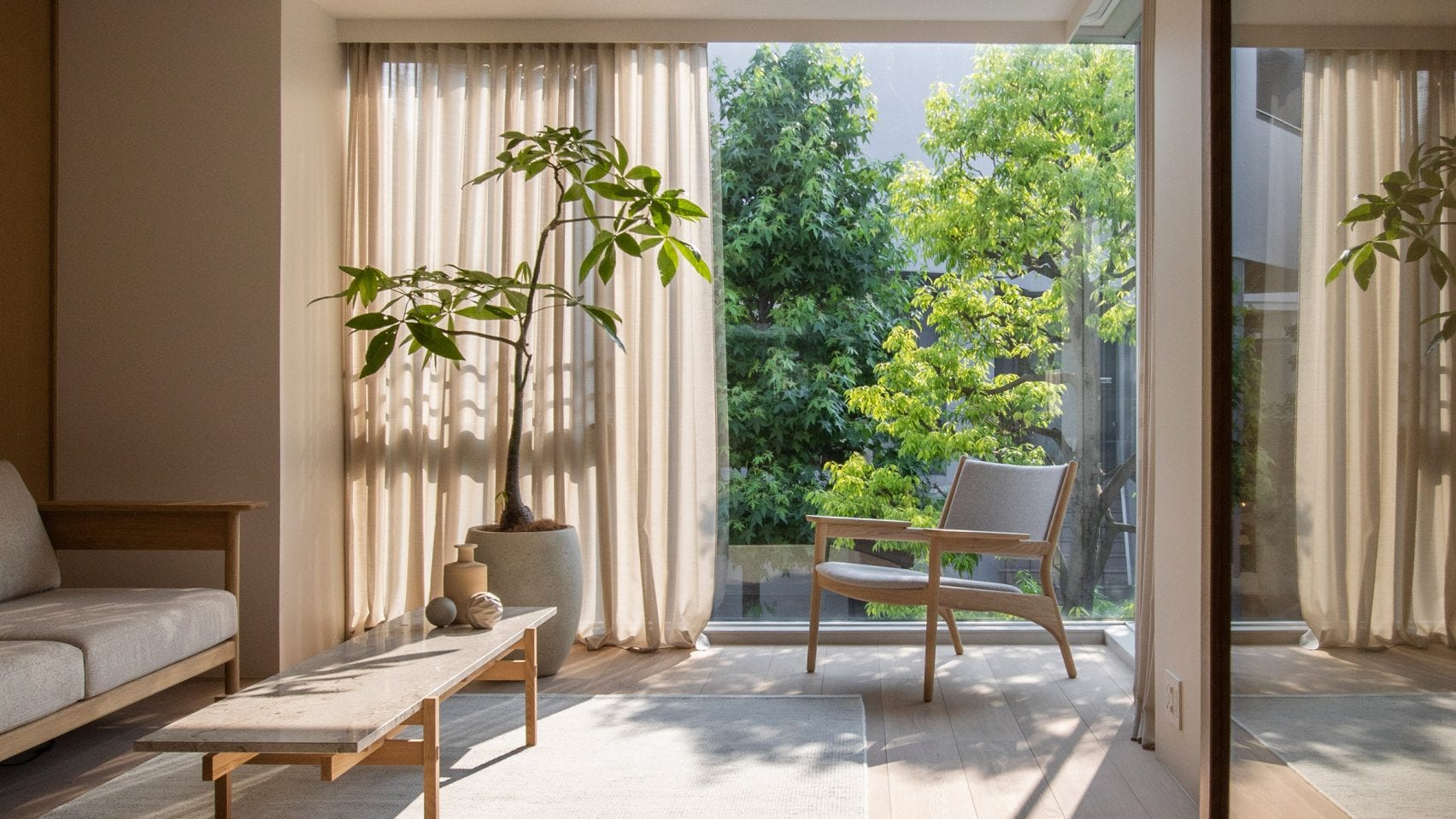
So maybe this is a new story for a startup? After all, in many countries, renting out accommodation on Airbnb is difficult and prohibited. But a new neighbor for six months sounds much more reliable.
Part of the reason Bansko became such a nomad hub is the high availability of monthly rentals, with agencies set up to deliver that. A town filled with apartments that normally sat empty for 9 months is now buzzing all year with remote workers.