The Swiss Town That Quietly Gets Everything Right
Why a growing number of international residents arrive for work, study or a short stay… and end up building a life.
There is a strange paradox in the relocation world.
Every few years, a new relocation hotspot captures global attention. Rankings appear, influencers arrive and articles declare that a new model for living has finally been discovered.
Yet the places people talk about most are not always the places where they stay.
For a while, the excitement feels justified.
Then rents rise, crowds appear, local communities begin to strain under the pressure of success, and the very qualities that made the place attractive slowly start to disappear.
Yet scattered across Europe are places that rarely dominate headlines, rarely trend on social media and seldom appear on lists of the world’s hottest relocation destinations. Somehow, they continue doing something remarkably old-fashioned: offering a genuinely good life.
Mendrisio is one of those places.
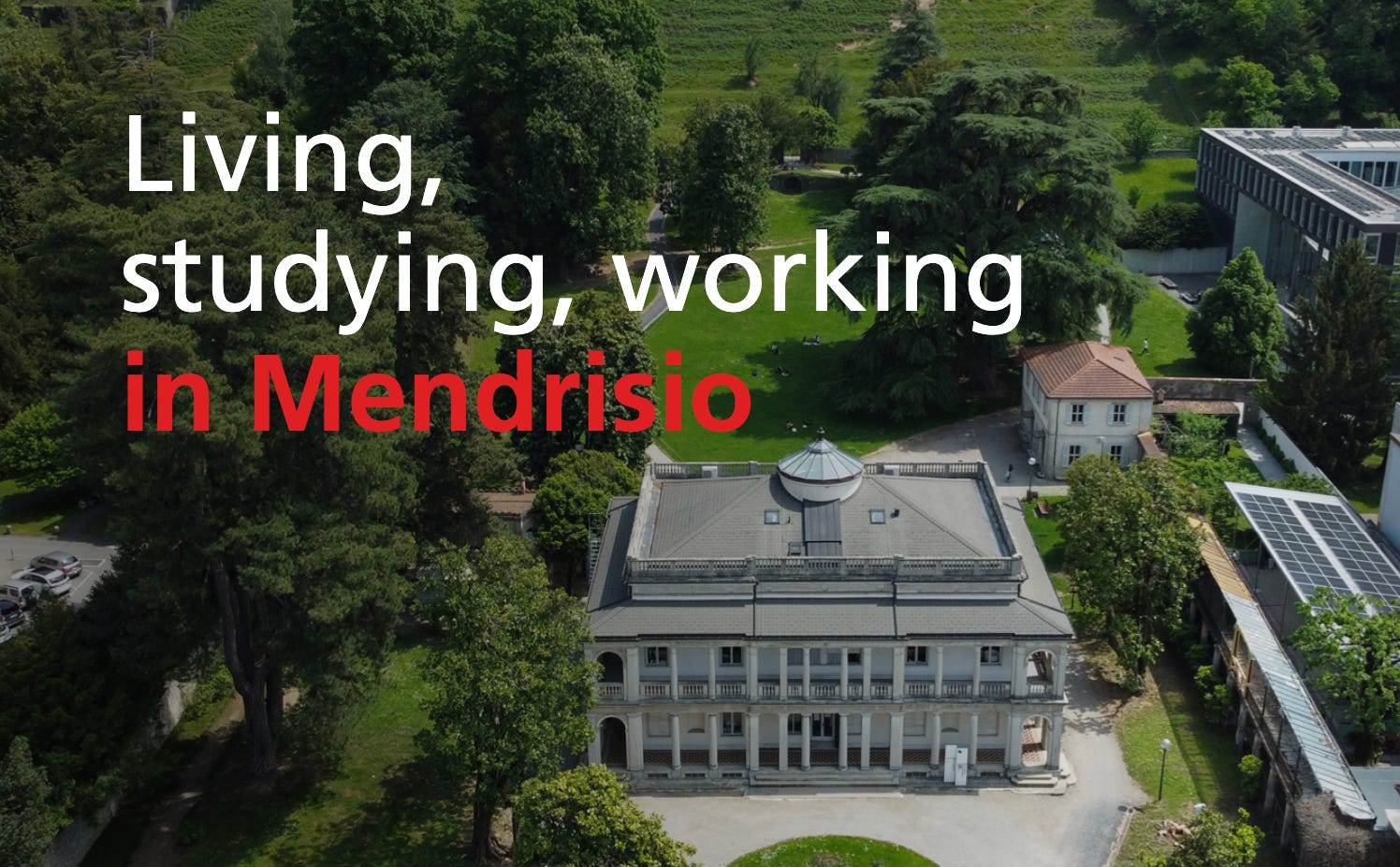
Nestled in the southernmost corner of Switzerland, a stone’s throw from Italy and surrounded by vineyards, mountains and historic villages, Mendrisio is not a city that spends much time trying to reinvent itself. It does not need to. Long before remote work, digital nomad visas and international relocation became fashionable topics, it had already developed something that many places are now desperately trying to create.
Balance. And balance may be becoming one of the most valuable luxuries of the twenty-first century.
One of the most interesting discoveries made by many internationally mobile professionals is that moving abroad and building a life abroad are not remotely the same thing. Relocation guides tend to focus on the measurable variables: taxation, visas, weather, healthcare, cost of living and connectivity. Those factors matter, of course. But they are rarely the reason people stay.
The people who remain are usually staying because of something much harder to quantify.
They found their community. They developed routines. They built friendships. They stopped feeling like visitors.
That process is often more difficult than people expect. Many modern cities offer endless opportunities for entertainment while making it surprisingly difficult to form meaningful connections. Life becomes efficient but fragmented. Social interactions become increasingly transactional. People live surrounded by millions of others yet frequently experience a profound sense of isolation.
Mendrisio seems to operate according to different rules.
Part of this comes from its scale. Large enough to offer opportunities, services, culture and international connections, yet small enough to remain fundamentally human, the city has managed to preserve many of the social dynamics that have disappeared elsewhere. People still meet repeatedly in shared spaces. They encounter one another through local events, schools, associations, sports clubs, neighbourhood activities and cultural initiatives. Relationships develop naturally because daily life creates opportunities for them to develop.
For newcomers, this often becomes one of the most surprising aspects of living here.
Friendships do not require endless networking events or carefully curated social calendars. They emerge through participation in the community itself.
This is particularly evident thanks to Mendrisio’s international character. Home to the internationally recognised Academy of Architecture of USI (Università della Svizzera Italiana), Mendrisio attracts students, researchers and creative professionals from across the globe. This constant exchange of ideas gives the town an intellectual energy that feels unusual for a place of its size. Alongside the Academy operates SUPSI, the University of Applied Sciences and Arts of Southern Switzerland, with its Department of Environment, Construction and Design, which attracts professionals and students to its true “factory of ideas.” The result is a community that feels simultaneously local and international, rooted and open-minded.
For internationally mobile residents, this combination can be surprisingly powerful.
The location itself adds another layer to the equation.
One of the peculiar advantages of Mendrisio is that it allows residents to enjoy many of Switzerland’s strengths while maintaining immediate access to northern Italy. Milan is close enough to feel like an extension of daily life. Lugano is practically next door. Malpensa Airport provides easy connections across Europe and beyond. Zurich and the rest of Switzerland remain comfortably accessible by train.
This creates a lifestyle that is difficult to replicate elsewhere. It is possible to participate in global business, international education and cross-border opportunities while living in a place that never feels overwhelmed by them.
The surrounding landscape plays an equally important role.
Many destinations advertise their proximity to nature. In Mendrisio, nature is not an attraction reserved for weekends; it forms part of daily life. Vineyards stretch across the hillsides. Forests and walking trails begin only minutes from the town centre. The UNESCO-listed Monte San Giorgio rises above the region, while Monte Generoso offers some of the most spectacular views in southern Switzerland.
What makes these places special is not simply their beauty but their accessibility. They are woven into everyday routines. A walk after work, a Sunday hike, a lunch overlooking the valleys or a spontaneous afternoon outdoors requires little planning and even less effort.
The same principle extends to food and culture.
The Mendrisiotto is one of Switzerland’s most important wine-producing regions, with local Merlot forming part of the area’s identity rather than merely its marketing strategy. Traditional grotti, family-run restaurants, seasonal festivals and local markets continue to play a central role in community life. Food remains something shared rather than performed.
At the same time, the city’s cultural heritage is everywhere. Historic churches, monasteries, museums and centuries-old architecture coexist with a lively calendar of events that reflect both local traditions and contemporary influences. The famous Grape Festival, the San Martino Fair and the UNESCO-recognised Holy Week Processions are not simply tourist attractions. They remain living traditions that continue to bring the community together.
There is also a practical dimension that should not be underestimated.
Healthcare is excellent. Public transport works. Schools are strong. Streets are safe. Public spaces are well maintained. Bureaucracy, by international standards, remains remarkably functional.
These may not be the details that dominate travel magazines or relocation influencers’ social media feeds, but they are often the factors that determine whether a place feels sustainable over the long term.
Quality of life is rarely built through extraordinary moments alone.
More often, it emerges from the small things that happen every day: a reliable train, a safe walk home, access to nature, time for family, the ability to meet friends without planning weeks in advance.
In other words, quality of life is often defined not by what a place adds to your day, but by the friction it removes from it.
Perhaps this is why Mendrisio continues to attract people who were never specifically looking for it.
Some arrive for university. Some arrive for work. Some arrive because of a partner. Some arrive because they wanted to experience Switzerland without giving up proximity to Italy.
Many assume they are only passing through.
Then something curious happens.
Life becomes comfortable. Relationships deepen. The city begins to feel familiar. The temporary starts becoming permanent. And the departure plans become increasingly vague.
In a world constantly searching for the next great destination, Mendrisio offers a useful reminder that the best places to live are not always the ones making the most noise.
Sometimes they are simply the ones quietly getting everything right.
For further information you can email welcome@mendrisio.ch or


