

The Travelling Circus of “Digital Nomad Destinations”

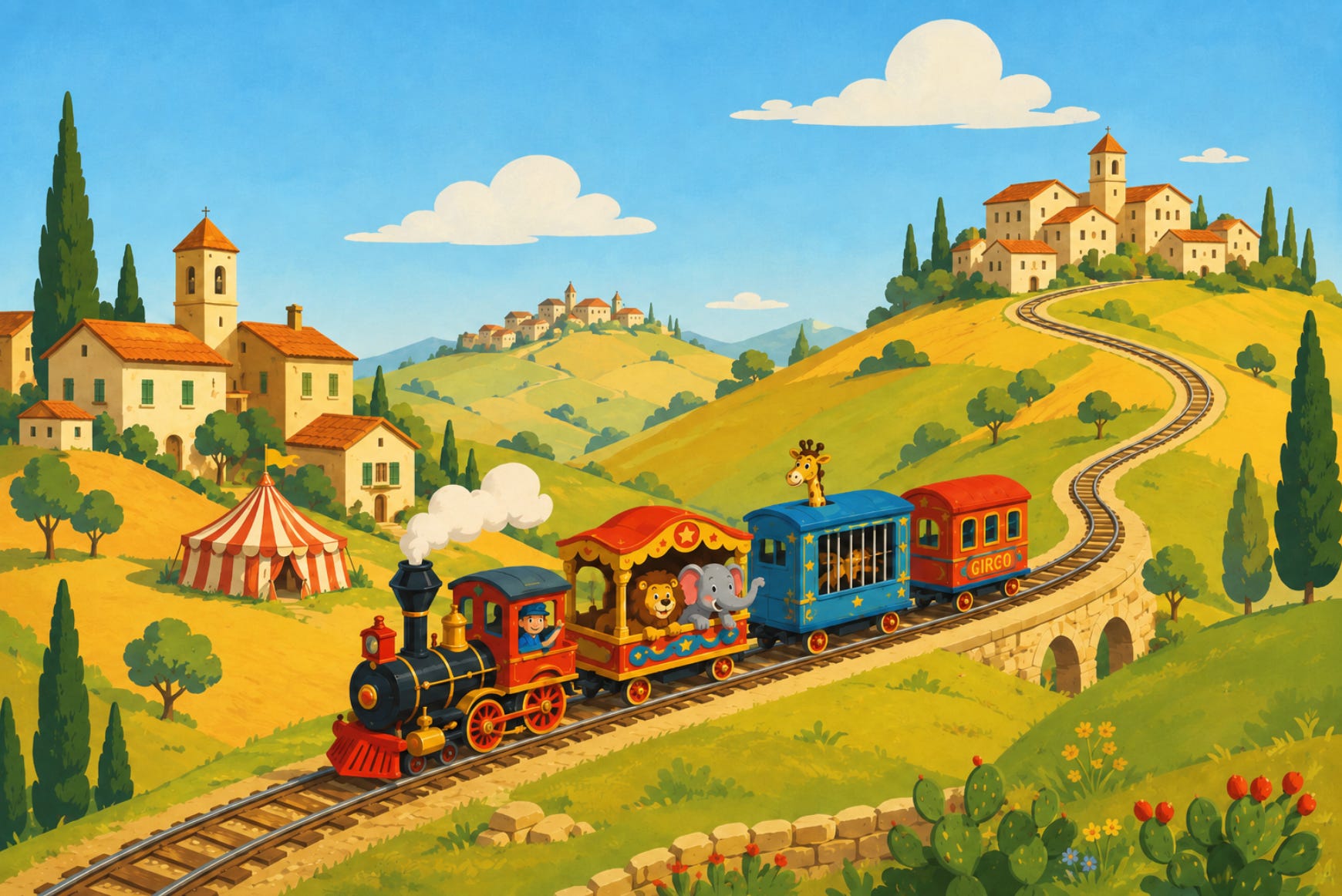
There is a travelling circus moving through Europe’s villages, rural areas and supposedly forgotten territories.
It arrives with a stage, a press office, a programme of panels and the usual collection of words: regeneration, innovation, community, future of work, creative economy, sustainability and, inevitably, digital nomadism.
For two or three days, a place that is difficult to reach, difficult to stay in and often almost impossible to inhabit without a car declares itself the next destination for digital nomads.
Then the circus moves on.
This is not about one particular event (and oh boy we got plenty in mind). It is about an increasingly common format: destinations attempting to reposition themselves for digital nomads without first becoming places where a digital nomad could realistically live.
The logic appears to be simple. The destination is losing residents, tourism is seasonal, property is relatively cheap and the surrounding landscape photographs well. Therefore, digital nomads will come.
But digital nomads do not relocate (the same definition ‘nomad’ says it all) because a village has discovered the correct vocabulary.
They come when they can arrive without undertaking an expedition, find appropriate accommodation for several weeks or months, work reliably, move around, meet people, access essential services and understand how daily life actually functions.
Too many aspiring digital nomad destinations begin at the opposite end. They start with the story.
A festival is announced. Speakers are invited. Journalists arrive. Tourism professionals discuss the future of remote work. Local institutions declare that the territory is ready to attract an international community.
Nobody appears particularly concerned with whether that community can actually get there.
In many of these destinations, public transport is scarce, badly coordinated or nonexistent. Reaching the village from the nearest airport may require several connections and a final taxi journey. Suitable accommodation may be scattered thirty minutes away by car. Long-stay housing has not been organised. Coworking spaces are temporary, symbolic or available only while the event is taking place. Local services are designed for residents who already own cars or tourists staying for two nights.
These are not minor details. They are THE destination.
A picturesque square is not infrastructure. A beautiful landscape is not a mobility system. A panel on co-living does not create available homes. A speech about community does not give a newcomer a place within one.
Without logistics and genuinely habitable places, what is being sold is not a digital nomad destination. It is a tourism discovery experience for people who will visit, take photographs and leave.
That may still have value.
It can promote an area, generate some local spending, fill restaurants for a weekend and persuade a few people to return for a Sunday excursion. A tourism board, a travel agency or an ambitious local association might legitimately organise exactly that.
But it should be described honestly.
It is tourism promotion, not territorial transformation.
The media rarely help to preserve this distinction.
Too many journalists gloriously confuse travelling with nomadism, temporary visibility with regeneration and the arrival of conference guests with the creation of a resident community. A person spending two nights in a village becomes evidence of a new population flow. A panel discussion becomes an ecosystem. A press trip becomes a territorial strategy.
Travel, digital nomadism and regeneration are not interchangeable concepts.
A traveller passes through. A digital nomad temporarily lives and works somewhere. Regeneration requires lasting changes in housing, services, mobility, economic activity and local opportunity.
Confusing the three makes for uplifting articles, but very poor policy.
The story is irresistible: an overlooked village discovers innovation, attracts global talent and prepares to reverse decades of decline. It allows journalists to write about rebirth without returning six months later to see whether anything has actually been born.
Politicians, naturally, rush towards the stage.
What follows is often an orgy of institutional self-congratulation and a parade of wannabe saviours: mayors, regional representatives, consultants, public bodies and project promoters congratulating one another for having placed the village “at the centre of an international conversation”.
The smaller and more vulnerable the place, the grander the announcement.
A weekend initiative becomes a model for Europe. A handful of speakers becomes an international community. A temporary event becomes a new economic trajectory. The village is told that it is about to be reborn through innovation, talent and the future of work.
And the village often believes it. Why would it not?
When residents are leaving, shops are closing and public services are shrinking, even a temporary spotlight can feel like a rescue. Promoters arrive with professional presentations, institutional endorsements, optimistic headlines and, occasionally, access to public funding. They promise international attention and a new population of skilled mobile workers.
The alternative is silence.
But attention is not accessibility, and publicity is not demand.
While the conference circuit celebrates the next emerging hub, genuine digital-nomad flows continue towards places that have already solved the ordinary problems: transport, affordable medium-term housing, reliable workspaces, international connections, local services, community access and a life that does not require heroic levels of organisation.
Real nomads go elsewhere.
Often, so do the residents.
That is the most uncomfortable contradiction. A territory may announce plans to attract globally mobile professionals while continuing to lose the people who were born there. It presents itself as a future home for outsiders without having created enough opportunity, mobility or services for its existing population to remain.
The new arrivals exist mainly in the presentation slides.
The departures continue to appear in the demographic statistics.
The events themselves are largely stages for static institutions and tourism professionals to discuss mobile lives.
Consultants, destination managers, public officials, journalists and speakers move from town to town explaining how digital nomads might revitalise places in which they themselves would rarely attempt to live for more than a few days.
They speak about mobility while seated beneath stage lights.
They describe the future of remote work in territories where taking a morning flight, finding a month-long rental or reaching a supermarket without a car may require an unreasonable amount of planning.
They talk about attracting people free to live almost anywhere while offering them some of the least practical places in which to live.
The fundamental questions are never glamorous enough for the programme:
How does someone arrive?
Where can they live for one or three months?
What does it cost?
Is the accommodation suitable for working, rather than merely sleeping?
Is the internet reliable?
Can they move around without a private car?
Who helps them become part of the local community?
What services remain available outside the tourist season?
What will still exist on Monday morning, after the speakers, politicians and journalists have gone home?
These questions require more than storytelling. They require housing inventories, transport solutions, local hosts, property agreements, operational budgets, reliable information and permanent management.
In other words, they require somebody to build the destination before marketing it.
Instead, the marketing often becomes the project.
The organiser receives visibility. The speaker receives another stage. The politician receives another photograph. The institution receives reassuring headlines. The consultant receives another case study. The journalist receives a convenient story about another village being reborn.
Everyone involved in describing the transformation receives something.
Whether the village is transformed is a secondary matter.
In the more fortunate cases, some public funding has been spent, a few local businesses have earned money during the event and the well-intentioned promoters have gained enough visibility to organise the next one.
Perhaps several visitors have been persuaded to return for a day trip.
Perhaps four or five occasional remote workers will stay for a week, cause no particular inconvenience and populate their Instagram feeds with the inevitable laptop at sunset and a spritz in the village square.
There is nothing wrong with any of this.
But four laptops, five spritzes and a collection of sunset photographs are not a new population flow.
They are content.
Nor is there anything wrong with trying. A modest initiative is better than complete inertia. A well-organised weekend may create relationships, bring some revenue and introduce outsiders to a place they had never considered visiting.
The problem begins when a small tourism event is inflated into evidence of regeneration, repopulation or the birth of a digital nomad destination.
The test should be mercilessly simple.
Six months later, how many remote workers arrived independently of the event?
How long did they stay?
Where did they live?
Could they arrive without a car?
Did any new service become permanent?
Did residents gain jobs, income, customers or meaningful international connections?
Did the village become easier to inhabit?
Did anything remain that did not depend on another conference being organised?
Without answers, the destination has not been transformed.
It has merely been narrated.
And the circus depends on this constant movement. It cannot remain long enough for results to be measured. It must travel to the next village, the next rural district and the next place prepared to declare itself an emerging digital nomad hub.
A new stage is assembled.
The same speakers return.
The same institutional promises are made.
The same media confusion follows.
Another territory is promised rebirth through people who have not been given either a practical reason or a practical way to live there.
Then the circus leaves.
The actual nomads continue towards destinations that work.
The residents continue to leave.
And the village is left with a press review, several photographs, some exhausted volunteers and the comforting memory of the weekend when everyone agreed that the future had finally arrived.