


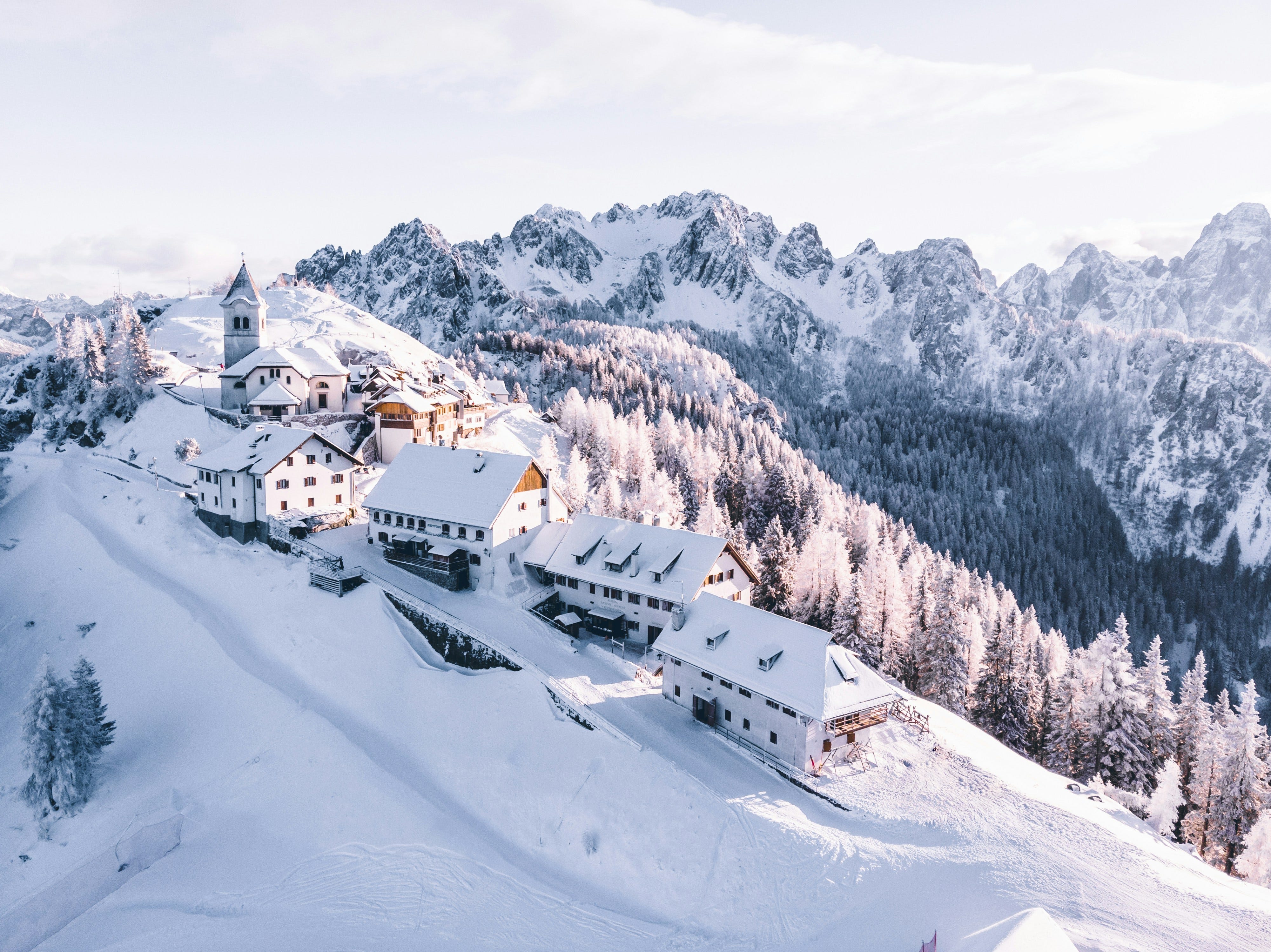
Why Americans had to invent micro-resorts and Europeans (sometimes) already live inside one
🇮🇹 Disclaimer per chi ci legge dall’Italia (e si fa sentire 😄)
Prima di iniziare, una nota per voi che ci leggete dall’Italia.
Sì, lo sappiamo. Siete tantissimi. Quasi il 40% della community. E sì, ce lo ricordate spesso che “perché non scrivete anche in italiano?”. Avete ragione.
Ma sappiate che non è pigrizia, è solo schizofrenia editoriale controllata.
Detto questo: oggi è (quasi) Natale. E quindi, alla fine di questa newsletter, trovate anche la versione in italiano dell’articolo. Un piccolo regalo natalizio, fatto con affetto, pazienza… e una discreta dose di copia-incolla responsabile 🎄
And now back to English.
Breathing, not escaping
There is a reason why, in the last few years, so many conversations about travel, remote work and “life design” have quietly shifted tone. Less aspiration, less fantasy, fewer “quit everything and move to Bali” narratives. More fatigue. More realism. More people admitting — sometimes reluctantly — that the problem is not how to escape life, but how to keep it going without burning out.
Most people don’t want to disappear. They want to breathe. Regularly. Without turning rest into a logistical operation or a financial sacrifice that needs months of justification.
How tiny cabins became a serious signal
This is where the story of tiny cabins in the American wilderness begins. And, perhaps unexpectedly, where the story of European villages quietly re-enters the picture.
In the United States, a country built on movement, scale and reinvention, something fundamental has always been missing: small, ordinary places you can return to often, without ceremony. There are cities, and there is vast nature, but very little in between. No villages in the European sense. No lived-in middle ground between hyper-urban intensity and full wilderness.
So when urban life became permanently loud — digitally, socially, cognitively — Americans did what they usually do when a structural gap becomes unbearable: they built a solution.
Inventing proximity
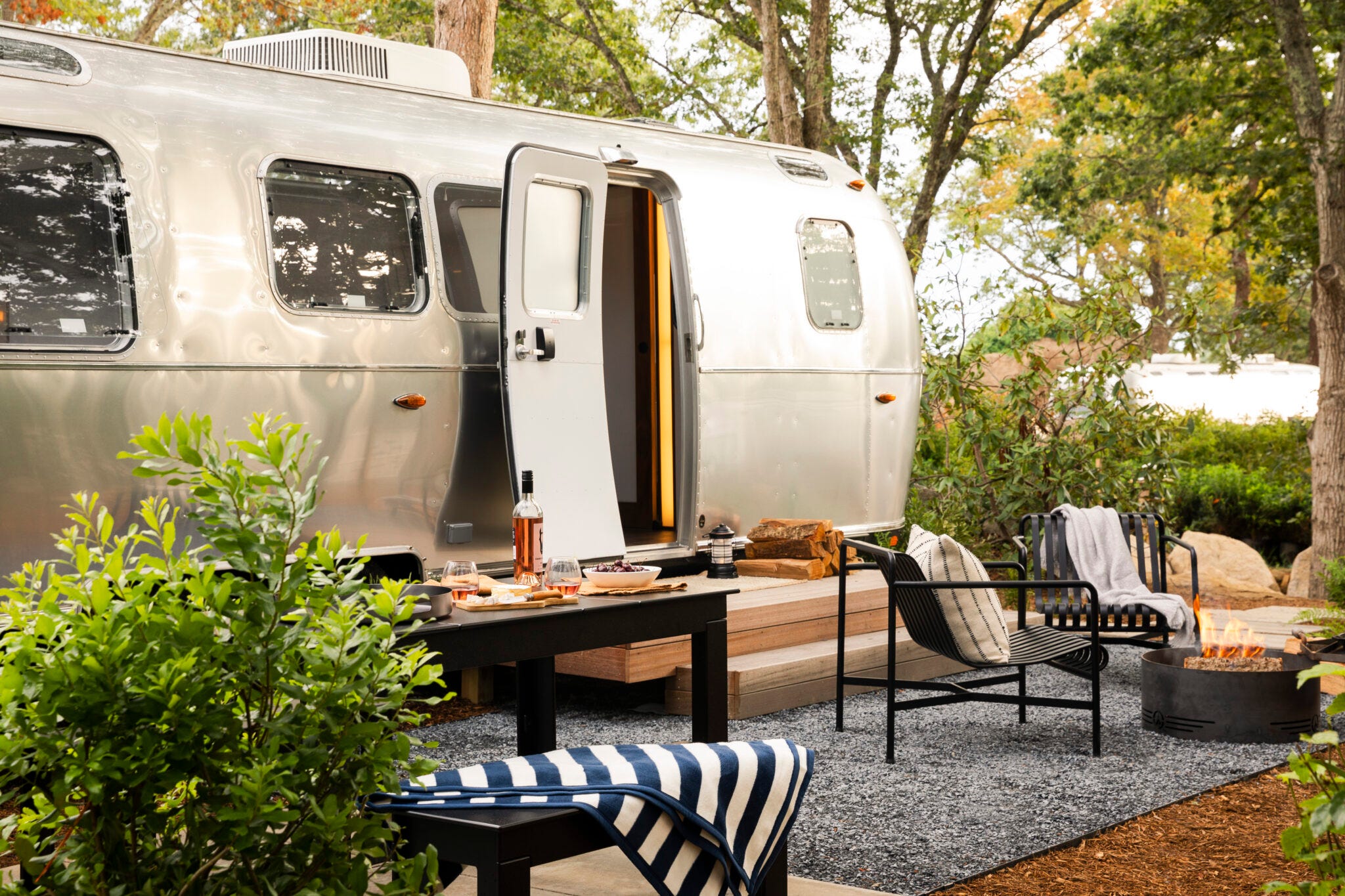
Brands like Postcard Cabins, AutoCamp and Under Canvas (just to mention some of them) didn’t appear because minimalism suddenly became fashionable. They appeared because people needed nearby silence. Silence within driving distance. Silence that didn’t require a sabbatical, a long-haul flight or a full reset of one’s identity.
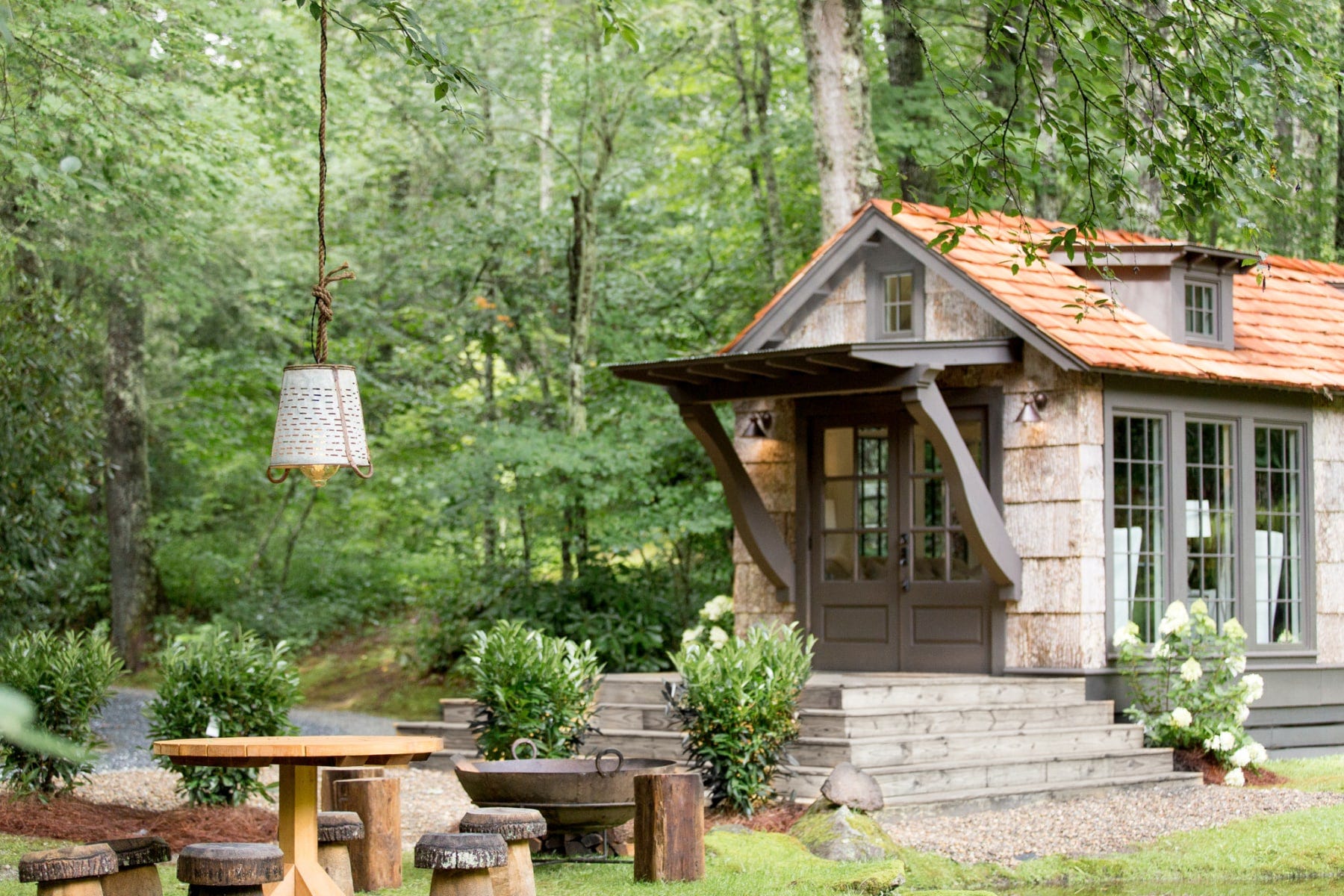
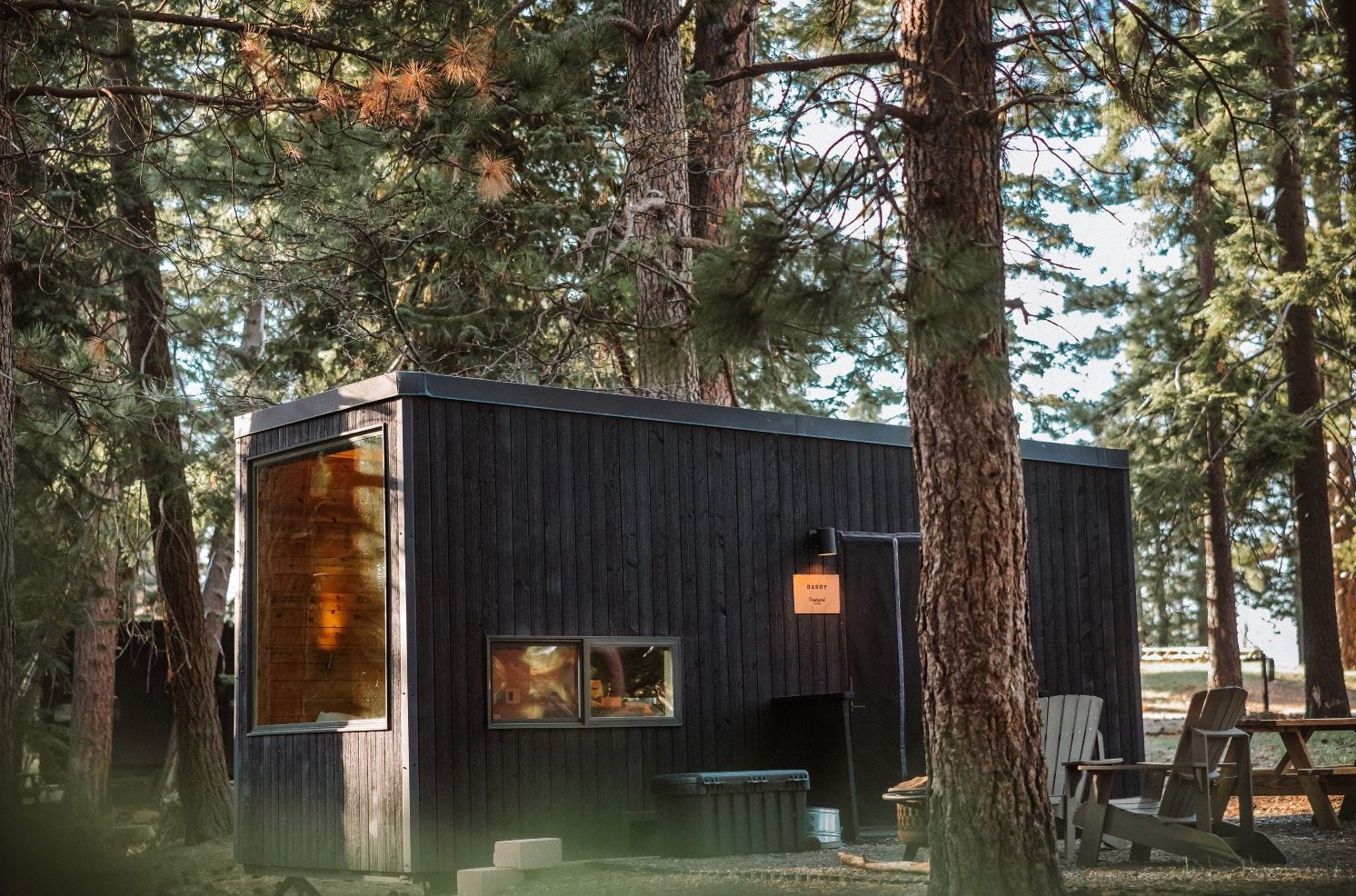
The cabins were small, essential, almost aggressively unglamorous. No Wi-Fi, or at least no excuses. No activities to tick off. No “experience” beyond being somewhere quiet enough to notice your own thoughts slowing down. The genius of the model was not aesthetic, but spatial: one to two hours from where people actually live. Close enough to be repeatable. Close enough to become routine.
What Marriott actually bought
When Marriott decided to acquire Postcard Cabins, it wasn’t making a bet on tiny houses or outdoor hospitality as a trend. Marriott saw something deeper. It recognised that modern life now requires infrastructure for decompression, not just destinations for escape. That what people were really buying wasn’t a stay, but a rhythm. City, silence, city again. Over and over.
What makes this story particularly interesting for a European audience is that, from our side of the Atlantic, it all looks strangely familiar.
Europe’s forgotten advantage
Because in Europe, we never had to invent this.
We already had villages.
For centuries, France, Spain, Italy, Portugal and much of Central Europe developed around small, human-scale settlements, often within a short distance from larger cities. Places designed before productivity metrics, before open-plan offices, before the idea that every square metre had to justify itself economically. Houses meant to be lived in slowly. Streets designed for walking, not optimisation. Silence as a default condition, not a premium feature.
In other words, Europe has always been a dense network of micro-retreats, hidden in plain sight.
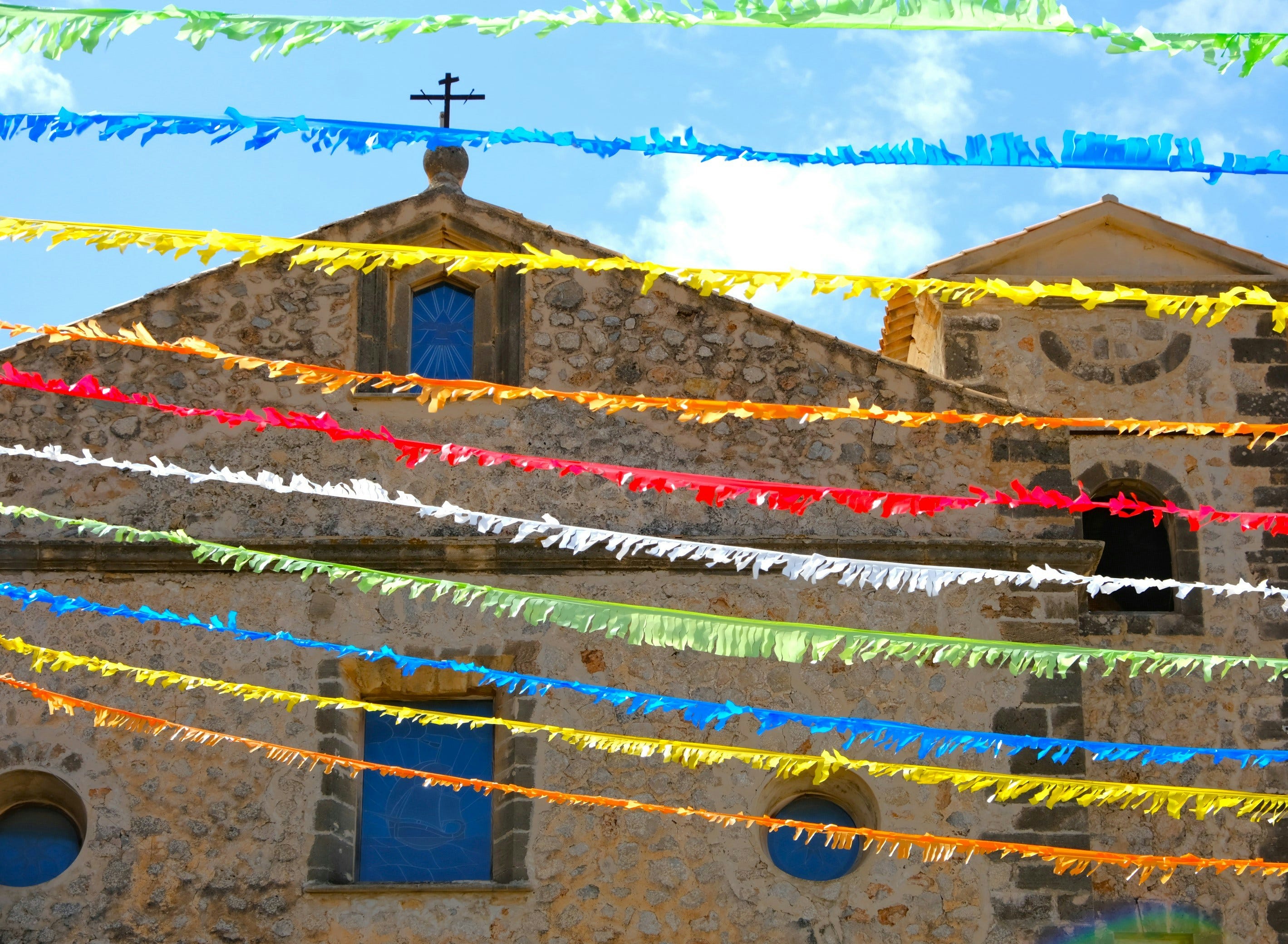
When villages forgot what they were for
And yet, somewhere along the way, we lost the ability to read them for what they are.
Villages were rebranded as destinations. As lifestyle products. As tourist experiences that had to be consumed intensely and briefly. We asked them to perform authenticity on demand, to justify their existence through novelty, to compete with cities instead of quietly complementing them.
The result is familiar. Short stays priced like luxury experiences. Beautiful places visited once and never returned to. Silence sold as exclusivity. Villages treated either as museums or as investment vehicles, but rarely as usable spaces for everyday life.
Artificial villages vs lived places
This is where the American tiny cabin story becomes useful, not as a model to copy (although some amazing ‘tiny-houses resorts’ are appearing in Europe), but as a mirror.
Strip away the marketing, and both systems solve the same problem. In the US, tiny cabins are artificial villages: standardised, controlled, repeatable environments designed to deliver one thing consistently — relief. In Europe, villages are organic versions of the same function: imperfect, layered, socially complex places where relief comes not from design, but from continuity.
Different forms, same need.
The real shift: time, not geography
The real shift, however, is not geographical. It’s temporal.
What has changed is not where people want to go, but how often they need to stop. The old model — one big vacation a year, two weeks to “reset” — no longer works. It doesn’t reset anything. It merely postpones exhaustion. What does work, increasingly, are short, frequent pauses. Weekends. Long weekends. Familiar places reached without friction. Places where you don’t perform being relaxed, because no one is watching.
Villages are exceptionally good at this, when they are allowed to be ordinary. When they are accessible. When returning doesn’t feel like a luxury purchase, but like a habit.
Europe doesn’t need to build — it needs to reactivate
This is also where Europe has a structural advantage over the American model. The US had to build cabins because there was nothing else (or very little). Europe doesn’t need to build new retreat infrastructure; it needs to reactivate existing one intelligently. That means housing that is lived in, not just flipped. Pricing that allows repetition, not one-off consumption. And narratives that stop demanding radical life changes as the only legitimate form of belonging.
A Christmas provocation 🎄
And this brings us, inevitably, to a slightly uncomfortable Christmas thought experiment.
What if your place to breathe wasn’t just an expense? What if, instead of burning money on short stays that leave no trace beyond your credit card statement, your partial residence — even if occasional, even if flexible — also allowed you to build something over time? Not speculation. Not flipping. Not “saving a village” theatre. Just accumulating a small piece of stability, while contributing to places that actually need continuity, not hype.
Where Nomag (and ITS Italy) enter the picture
This is precisely the space Nomag has been circling for a while now. Together with ITS ITALY, we’ve been quietly working on a model designed for people who live between places. Digital nomads, remote workers, long-term Italy-curious minds who don’t want a dramatic relocation story, but a gradual, reversible, intelligent way to engage with territory.
Starting from €5,000, the idea is not to sell a dream, but to open a door. Partial residence. Long-term thinking. Equity instead of pure cost. A way to live somewhere often enough for it to matter, without pretending you’ve figured everything out.
If even this provocation makes you pause for a second, you’ll probably want to be among the first to hear how it works. No urgency. No countdowns. Just reality, slowly explained. Just send them an email for more information.
Becoming part of the conversation
And since it’s Christmas, one last thing deserves to be said clearly.
Nomag was never meant to be just a newsletter (or a magazine). It’s a shared space for ideas that don’t fit neatly into pitch decks, relocation guides or Instagram captions. That’s why we’re opening Founding Memberships. Not as a status symbol (although… come on! won’t you brag about it?), but as an invitation. Founding Members don’t just read; they write, propose, challenge. They can bring (and promote) initiatives, questions and experiments directly to a community of over 60,000 Nomag readers across platforms.
Yes, they also get unlimited access to our sympathy. Which, in the coming year, might turn out to be more valuable than most subscriptions.
A Nomag way to end the year
So perhaps the real question to end this year is not “Where should I travel next?”, but something simpler and more radical: where could I return, often, without effort, and without pretending?
Cabin or village, hill or forest, what matters is not the aesthetic, but the function. If it lets you breathe — repeatedly, sustainably — it’s already doing more than most places ever will.
Merry Christmas from The Nomag Pulse.
See you just outside the city.

This Christmas, give us a real gift.
Beyond subscribing to Nomag (and maybe becoming a paid member, out of pure love and respect for our unpaid insomnia), why don’t you vote Nomag as Best Newsletter on Substack?
The competition is fierce — especially with our dear friends at ITS Journal — so help us win this thing.
E ora la traduzione in italiano
Tiny cabins, borghi senza tempo
Perché gli americani hanno dovuto inventarsi i micro-resort e gli europei (a volte) ci vivono già dentro
C’è una ragione se, negli ultimi anni, il modo in cui parliamo di viaggi, lavoro remoto e “life design” è cambiato. Meno entusiasmo da copertina, meno narrazioni tipo “mollo tutto e vado a Bali”, meno promesse di trasformazioni radicali. Al loro posto sono arrivate stanchezza, realismo e una verità piuttosto semplice, che sempre più persone ammettono anche a se stesse: il problema non è scappare dalla vita, ma riuscire a sostenerla senza consumarsi.
La maggior parte delle persone non sogna di sparire. Sogna di respirare. Con regolarità. Senza trasformare il riposo in un progetto logistico complesso o in una spesa che richiede mesi di giustificazione mentale.
È da qui che nasce la storia delle tiny cabins americane. E, forse in modo meno ovvio, è anche da qui che rientra in gioco la storia dei borghi europei.
Negli Stati Uniti, un Paese costruito sul movimento, sulla scala e sulla reinvenzione continua, è sempre mancato qualcosa di fondamentale: luoghi piccoli, normali, dove poter tornare spesso senza cerimonie. Ci sono le grandi città e c’è la natura sconfinata, ma poco o nulla in mezzo. Niente villaggi nel senso europeo del termine. Nessuna zona grigia abitabile tra l’iper-urbano e il wilderness totale.
Quando la vita urbana è diventata permanentemente rumorosa — digitalmente, socialmente, cognitivamente — gli americani hanno fatto quello che fanno sempre quando un vuoto strutturale diventa insostenibile: hanno costruito una soluzione.
Così sono nati modelli come Postcard Cabins, AutoCamp, Under Canvas. Non perché all’improvviso il minimalismo fosse diventato di moda, ma perché serviva silenzio vicino. Silenzio raggiungibile in macchina. Silenzio che non richiedesse un anno sabbatico, un volo intercontinentale o una crisi identitaria.
Le cabine erano piccole, essenziali, quasi volutamente anti-glamour. Niente Wi-Fi, o quantomeno niente alibi. Nessuna attività da spuntare. Nessuna “esperienza” da raccontare. Solo uno spazio abbastanza quieto da permettere al cervello di rallentare. Il colpo di genio non stava nell’architettura, ma nella distanza: una o due ore da dove le persone vivono davvero. Abbastanza vicino da poterci tornare. Abbastanza vicino da diventare un’abitudine.
Quando Marriott ha deciso di acquisire Postcard Cabins, non stava puntando sulle tiny houses né su una moda dell’outdoor hospitality. Ha visto qualcosa di più profondo. Ha capito che la vita contemporanea ha bisogno di infrastrutture per la decompressione, non solo di destinazioni per la fuga. Che le persone non stavano comprando un soggiorno, ma un ritmo. Città, silenzio, città. Ripetuto nel tempo.
Ed è qui che, per chi vive in Europa, la storia diventa stranamente familiare.
Perché da questa parte dell’Atlantico non abbiamo mai avuto bisogno di inventarci le cabine. Abbiamo sempre avuto i borghi.
Per secoli, Francia, Spagna, Italia, Portogallo e gran parte dell’Europa centrale si sono sviluppati intorno a piccoli centri a misura d’uomo, spesso a breve distanza dalle città più grandi. Luoghi pensati prima delle metriche di produttività, prima degli open space, prima dell’idea che ogni metro quadrato dovesse giustificarsi economicamente. Case fatte per essere vissute lentamente. Strade progettate per camminare, non per ottimizzare. Il silenzio come condizione normale, non come servizio premium.
In altre parole, l’Europa è sempre stata una rete fittissima di micro-ritiri, nascosti in piena vista. Eppure, a un certo punto, abbiamo smesso di saperli leggere per quello che sono.
I borghi sono diventati “destinazioni”. Prodotti lifestyle. Esperienze turistiche da consumare intensamente e velocemente. Gli abbiamo chiesto di performare autenticità su richiesta, di giustificare la loro esistenza con la novità, di competere con le città invece di sostenerle silenziosamente.
Il risultato lo conosciamo bene. Soggiorni brevi venduti a prezzi da vacanza lunga. Luoghi meravigliosi visitati una volta e mai più. Il silenzio trasformato in esclusività. Borghi trattati come musei o come asset finanziari, ma raramente come spazi usabili della vita quotidiana.
È qui che la storia americana delle tiny cabins diventa utile, non come modello da copiare, ma come specchio.
Tolto il marketing, i due sistemi rispondono allo stesso bisogno. Negli Stati Uniti le cabine sono villaggi artificiali: standardizzati, controllati, ripetibili, progettati per offrire sempre la stessa cosa — sollievo. In Europa i borghi sono la versione organica dello stesso meccanismo: imperfetti, stratificati, socialmente complessi, dove il sollievo non nasce dal design, ma dalla continuità.
Forme diverse. Stesso bisogno.
Il vero cambiamento, però, non è geografico. È temporale.
Non è cambiato dove le persone vogliono andare, ma quanto spesso hanno bisogno di fermarsi. Il vecchio modello — una grande vacanza all’anno, due settimane per “resettarsi” — non funziona più. Non resetta nulla. Rimanda solo l’esaurimento. Quello che funziona davvero, sempre di più, sono pause brevi e frequenti. Weekend. Weekend lunghi. Luoghi familiari raggiungibili senza attrito. Posti dove non devi recitare il ruolo di persona rilassata, perché nessuno ti guarda.
I borghi sono perfetti per questo, quando gli si permette di essere normali. Quando sono accessibili. Quando tornarci non sembra un acquisto di lusso, ma una buona abitudine.
Ed è qui che l’Europa ha un vantaggio strutturale enorme rispetto al modello americano. Gli Stati Uniti hanno dovuto costruire cabine perché non avevano alternative. L’Europa non ha bisogno di costruire nuove infrastrutture per il ritiro; ha bisogno di riattivare quelle esistenti in modo intelligente. Case vissute, non solo ristrutturate per la vendita. Prezzi che permettono il ritorno, non il consumo una tantum. Narrazioni che smettono di chiedere cambi di vita radicali come unica forma legittima di appartenenza.
Ed eccoci, inevitabilmente, a una piccola provocazione natalizia.
E se il tuo “luogo dove respirare” non fosse solo una spesa? Se invece di bruciare soldi in soggiorni brevi che non lasciano nulla dietro di sé, una residenza parziale — anche flessibile, anche non definitiva — ti permettesse di costruire qualcosa nel tempo? Niente speculazione. Niente flipping. Niente teatro del “salviamo il borgo”. Solo un modo intelligente di vivere un luogo spesso abbastanza da farlo contare, mentre accumuli un minimo di stabilità.
È esattamente questo spazio intermedio che Nomag sta esplorando da tempo. Insieme a ITS ITALY stiamo lavorando, senza rumore, a un modello pensato per chi vive tra più luoghi. Nomadi digitali, remote worker, persone curiose dell’Italia ma non interessate a una narrativa di trasferimento drammatica. Un approccio graduale, reversibile, realistico.
Si parte da 5.000 euro. Non per vendere un sogno, ma per aprire una porta. Residenza parziale. Visione di lungo periodo. Equity al posto del puro costo. Un modo per esserci abbastanza spesso da smettere di essere ospiti, senza fingere di avere già tutte le risposte.
Se anche solo questa domanda ti fa fermare un attimo, probabilmente vorrai essere tra i primi a capire come funziona. Senza urgenza. Senza countdown. Con calma.
E visto che è Natale, diciamolo chiaramente fino in fondo.
Nomag non è mai stato solo una newsletter. È uno spazio condiviso per idee che non stanno bene nei pitch deck, nelle guide al trasferimento o nei post motivazionali. Per questo stiamo aprendo le Founding Memberships. Non come status symbol, ma come invito. I founding member non leggono soltanto: scrivono, propongono, mettono in discussione. Possono portare iniziative, progetti, domande a una community di oltre 60.000 lettori Nomag, sparsi su più piattaforme.
Sì, hanno anche accesso illimitato alla nostra simpatia. Che, nel 2026, potrebbe rivelarsi una risorsa strategica.
E già che ci siamo, un ultimo regalo di Natale che potete farci davvero. Oltre a iscrivervi a The Nomag Pulse, e magari a diventare membri a pagamento per stima, affetto e riconoscimento del nostro lavoro notturno, perché non ci votate come migliore newsletter su Substack? La competizione è accesa, soprattutto con i nostri amici di ITS Journal, che stimiamo moltissimo… ma non abbastanza da perdere. Aiutateci a vincere questo contest.
Chiudiamo l’anno con una domanda semplice, ma piuttosto radicale: invece di chiederti “dove andrò in vacanza?”, prova a chiederti dove potrei tornare spesso, senza sforzo e senza fingere.
Cabina o borgo, collina o foresta, l’estetica conta meno della funzione. Se ti permette di respirare — con continuità — sta già facendo più di quanto facciano la maggior parte dei luoghi.
Buon Natale da The Nomag Pulse.
Ci vediamo appena fuori città.