Twelve places to live (and actually work) in 2026
A Nomag calendar for people who don’t confuse movement with meaning
There is a moment, usually between late December and early January, when digital nomadism briefly stops being an Instagram aesthetic and returns to being what it actually is: a life design problem. Where do I want to be productive, not just inspired? Where do I want friction to disappear, and where am I happy for it to exist because it makes life thicker, slower, more human? 2026 feels like a year where these questions matter again, because remote work is no longer a novelty and the world has quietly stopped bending over backwards for people with laptops and good intentions.
This is not a list of “cheap places with Wi-Fi” or a flex-heavy tour of the obvious hotspots. Think of it instead as a calendar you could actually live inside: twelve places, one per month, chosen for seasonality, rhythm, community density, and the underrated ability to let you do your job without constantly negotiating your own existence. It’s Europe-heavy because Europe works astonishingly well when you stop treating it like a museum, it includes three Italian stops because Italy is finally learning how to host remote workers without cosplay, and it stretches further afield when a change of scale or latitude genuinely adds value.
January — Palermo, Sicily (Italy)
January is not for optimisation, it’s for re-entry, and Palermo in winter gives you light, space, and life without the sensory overload of high season. The city has crossed an important threshold in the last few years: enough coworking, coliving, and informal remote-friendly spaces to make it viable, but not so many that it feels engineered. You work in the mornings, walk in the afternoons, eat absurdly well in the evenings, and slowly remember that cities are meant to be lived in, not consumed.
February — Lisbon, Portugal
February is when you need competence. Lisbon remains one of Europe’s easiest cities to “switch on” in, because everything from bureaucracy to coffee culture has already adapted to international remote workers. It’s not cheap anymore and it’s not undiscovered, but it is efficient, and efficiency is underrated when you’re trying to build momentum early in the year. Use Lisbon as a stabiliser, not as a dream.
March — Valencia, Spain
March is when you want balance, and Valencia does balance better than most. It’s big enough to disappear into, small enough to feel human, coastal without being resort-like, and Spanish in a way that still prioritises daily life over performance. Spain’s evolving digital-nomad framework has helped normalise longer stays, but even short-term Valencia works because it supports routines, not just weekends.
April — Tallinn, Estonia
April is for focus. Tallinn is compact, functional, and refreshingly uninterested in entertaining you. Estonia’s long-standing comfort with digital infrastructure shows up in daily life: things work, processes are clear, and the city rewards people who are there to build rather than drift. It’s an ideal month to reset habits, reduce noise, and do the kind of deep work that tends to get postponed elsewhere.
May — Prague, Czechia
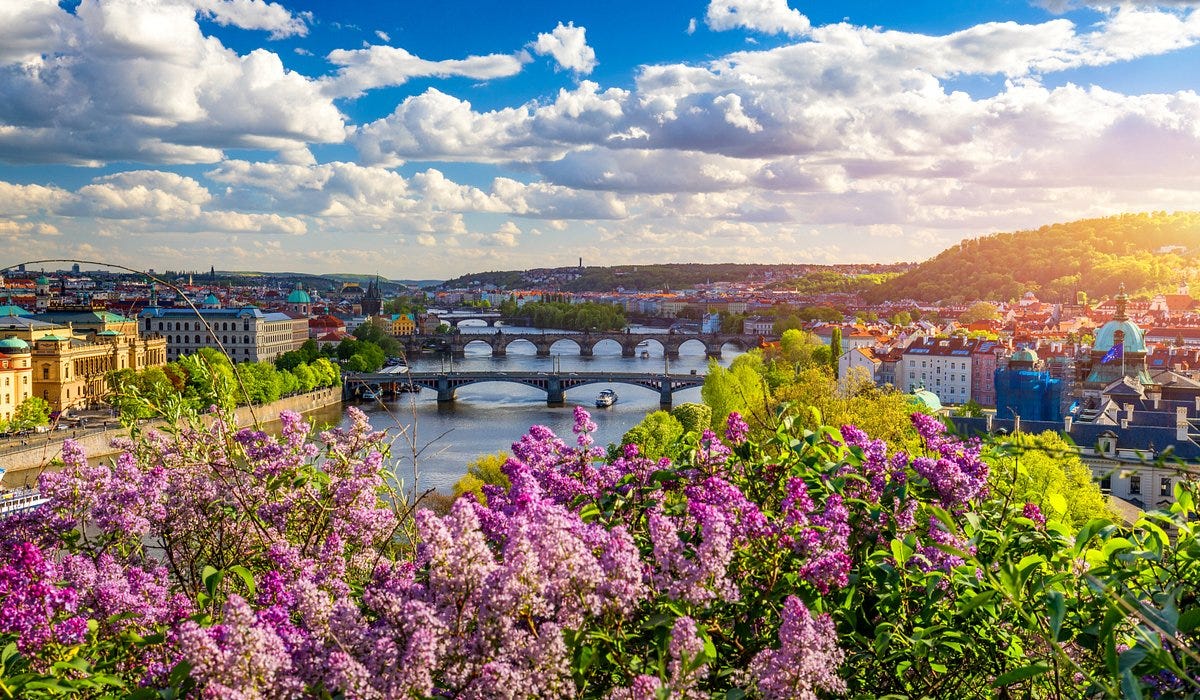
May is peak Europe, and Prague is a reminder that beauty doesn’t have to be disruptive. The city is well connected, culturally dense, and surprisingly liveable if you step slightly away from the postcard core. It’s also a perfect base for a rail-forward lifestyle, where weekends feel expansive without turning weekdays into recovery exercises.
June — Tbilisi, Georgia
June is when you can afford to be a little bold. Tbilisi offers an intensity that is cultural rather than logistical: long conversations, dramatic landscapes, and a sense that life happens in layers, not lanes. Entry and stay conditions have historically been generous for many nationalities (always double-check), and the payoff is a city that feels generous with time and possibility.
July — Turin, Piedmont (Italy)
July in Italy is tricky, unless you pick a city that actually works. Turin is elegant, productive, and quietly excellent for remote work, with real coworking infrastructure, a strong café culture, and immediate access to mountains when the heat becomes non-negotiable. It’s Italy without the performance anxiety, and that makes it one of the smartest summer bases in the country.
August — Salento, based around Lecce (Italy)
August is not a travel month, it’s a lifestyle test. Salento works if—and only if—you commit to living rather than touring. Early mornings, slow workdays behind thick stone walls, evenings earned by the sea. Lecce gives you architectural beauty, social life, and just enough structure to keep work possible while everyone else is pretending productivity doesn’t exist.
September — Nairobi, Kenya
September is the moment for a change of scale. Nairobi brings energy, ambition, and a fast-growing tech ecosystem that reminds you remote work is global, not Eurocentric. Kenya’s move toward clearer digital-nomad frameworks signals seriousness, and the city rewards curiosity and engagement rather than passive consumption.
October — Mexico City, Mexico
October is for density, and Mexico City is density done right. Neighbourhood life, cultural depth, endless routines, and the rare ability to feel both stimulated and grounded at the same time. It’s a city where you stop thinking about being a “nomad” and start thinking about being a resident, even temporarily, which is often when the best work happens.
November — Buenos Aires, Argentina
November is when you need warmth—social, cultural, emotional. Buenos Aires delivers it in conversations, cafés, bookstores, and nights that stretch without becoming empty. Southern-hemisphere seasonality gives you a psychological lift, and the city’s relationship with work and leisure feels human rather than transactional.
December — Cape Town, South Africa
December should close the year gently but meaningfully. Cape Town combines nature, design, food, and a maturing remote-work scene, with formal visa routes that make longer stays viable. It’s reflective without being sleepy, celebratory without being chaotic, and an excellent place to take stock without checking out.
How to pick your three months
If you’re not doing the full calendar, choose based on intent, not hype:
To save money and simplify life: Palermo, Tbilisi, Buenos Aires
To build structure and ship work: Lisbon, Tallinn, Turin
To maximise creative oxygen: Mexico City, Nairobi, Cape Town
To live Europe properly: Valencia, Prague, Lecce
If you only do three places in 2026
Palermo (January): to reset your nervous system and your expectations
Valencia (March): to find balance and rhythm without friction
Mexico City (October): to end the year feeling expanded rather than exhausted
2026 doesn’t need to be louder, faster, or more exotic than 2025. It needs to be more deliberate. The best places are not the ones that promise transformation, but the ones that let you show up every day, do good work, and still feel like you’re living somewhere that matters.
If you want, next we can turn this into a Nomag interactive edition (map + seasons + visa friction score), or a “Europe-only” and “outside Europe” split for readers who already know they’re staying put on one side of the world.


