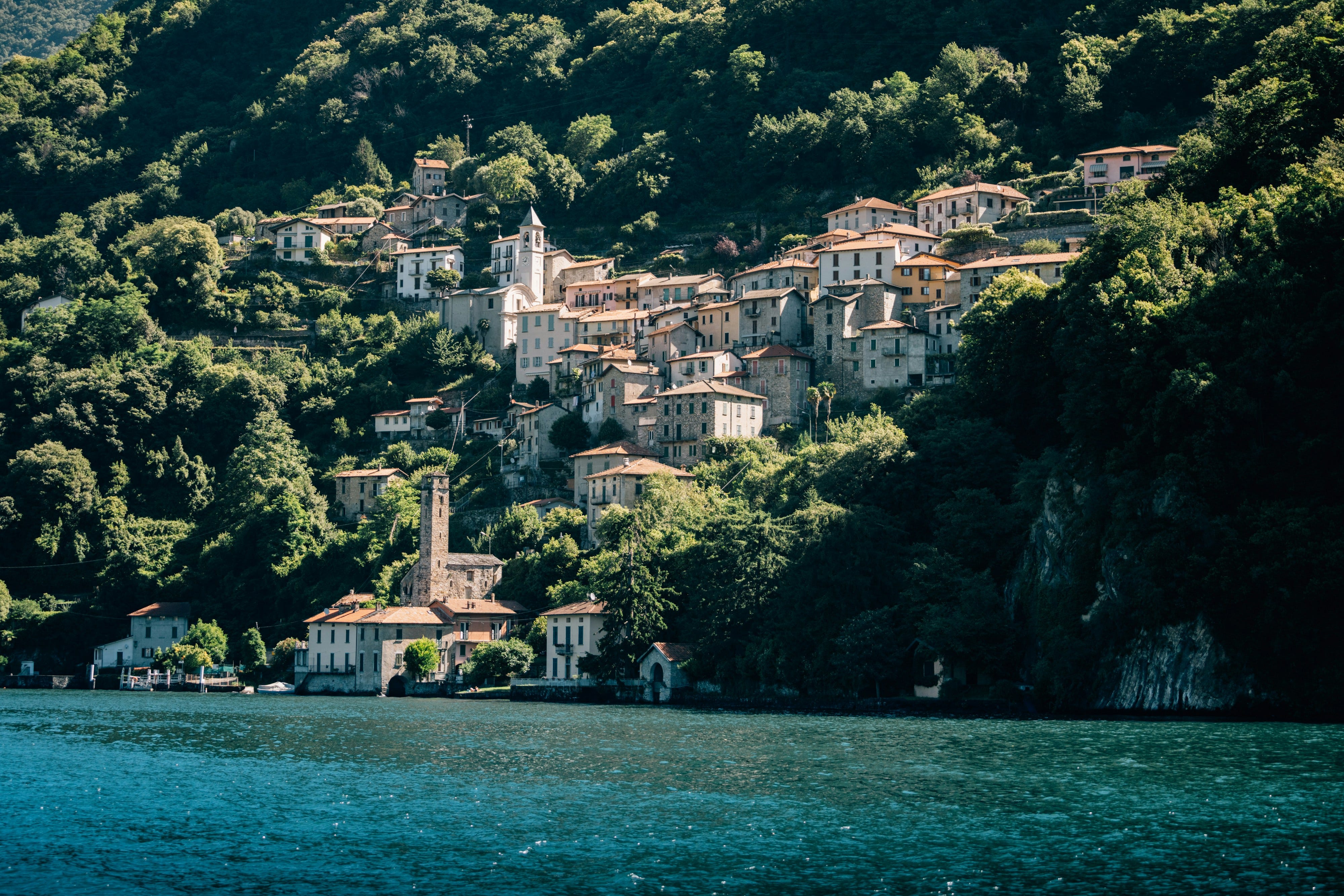
What Six Episodes of 'Remote Workers for Remote Villages' Have Really Taught Us
Recorded in Italian, decoded for the world: full English summaries now live on ITSJournal.com
After six episodes (seven with the pilot), Remote Workers for Remote Villages has become something we didn’t fully expect: a crash course in the Italian art of reinventing your life one small town at a time.
So far, we’re averaging 45k views per episode… not bad!
We started with the idea of exploring remote work in rural Europe; we ended up with a masterclass in Italian lifestyle engineering featuring Abruzzo, Sicily, Marche, Irpinia, and various strategic appearances of grandparents, dogs, and outdoor terraces with questionable Wi-Fi.
The show is recorded almost entirely in Italian — because that’s how people actually talk about real life — but every episode comes with an English summary on ITSJournal.com, for those following the series from abroad or pretending they don’t need subtitles.
So, what have we learned so far?
1. Italy is the unofficial world champion of “remote work with scenery.”
Every guest gave us a variation of the same confession:
“I didn’t choose the village for productivity. I chose it because espresso + mountains + grandparents = inner peace.”
And funnily enough — productivity improved.
Italy: 1
Notion templates: 0
2. Small Italian towns are not “quiet escapes.” They’re functioning ecosystems.
This was a recurring theme:
People weren’t escaping. They were upgrading.
Better pace, better coffee, better food, better rent, better light, better humans.
The idea that productivity lives only in large urban centres?
Let’s just say Abruzzo politely disagrees.
3. Remote work isn’t just an economic option — it’s a cultural realignment.
In every episode, someone casually dropped a sentence that could be a TED Talk:
“I realised I don’t need the city to feel connected.”
“I gained two hours a day just by not commuting.”
“Here my work is the same, but my life isn’t.”
Turns out the revolution was not technological.
It was geographical.
4. Villages don’t need digital nomads — they need adults in the room.
Forget the saviour narrative.
Every episode showed a far more grounded dynamic:
People come, contribute, buy bread from the local bakery, respect community rhythms, bring skills, and invest in spaces.
It’s not colonisation; it’s collaboration.
And it’s refreshingly non-heroic.
5. Italy is mastering a new formula: local roots + global work.
Our guests live in places where the barista knows their family history,
while their Teams calendar includes calls with London, Berlin, Singapore, or whoever scheduled that Friday meeting that should have been an email.
This is the new European paradox:
Hyper-local life, hyper-global work.
And it works shockingly well.
6. Returning to the South isn’t nostalgia — it’s strategy.
Several episodes feature people who left, built a career elsewhere, and came back — not because of romance, but because they rediscovered agency.
Lower costs + higher quality of life + real spaces + real community + enough bandwidth to join a Zoom call without being pixelated equals…
a good deal, actually.
The old story was: “I left to succeed.”
The new story is: “I came back to live.”
7. The remote work revolution in Italy is being written from the bottom up.
Not by institutions, not by big tech, not by glossy conferences in capital cities —
but by individuals making very pragmatic decisions about how they want to exist in the world.
They are the ones shaping new patterns:
Buying old houses, reviving historic centres, opening coworking spaces in former stables, building creative routines in places the mainstream forgot.
Italy is quietly rewriting its future through thousands of micro-decisions.
We’re just documenting them.
So where does the series go from here?
If six episodes (seven with the pilot) already gave us this much insight, imagine the next ones.
More stories, more contradictions, more beautiful landscapes pretending to be Zoom backgrounds, more insights from people who’ve built real lives in places usually reduced to postcards.
And yes — more English summaries on ITSJournal.com, so the rest of the world can keep up with Italy’s slow but steady revolution.
Maybe the real question is:
What are you waiting for to test-drive one of these villages for a month?
Your KPIs will survive.
Your sanity might even improve.


