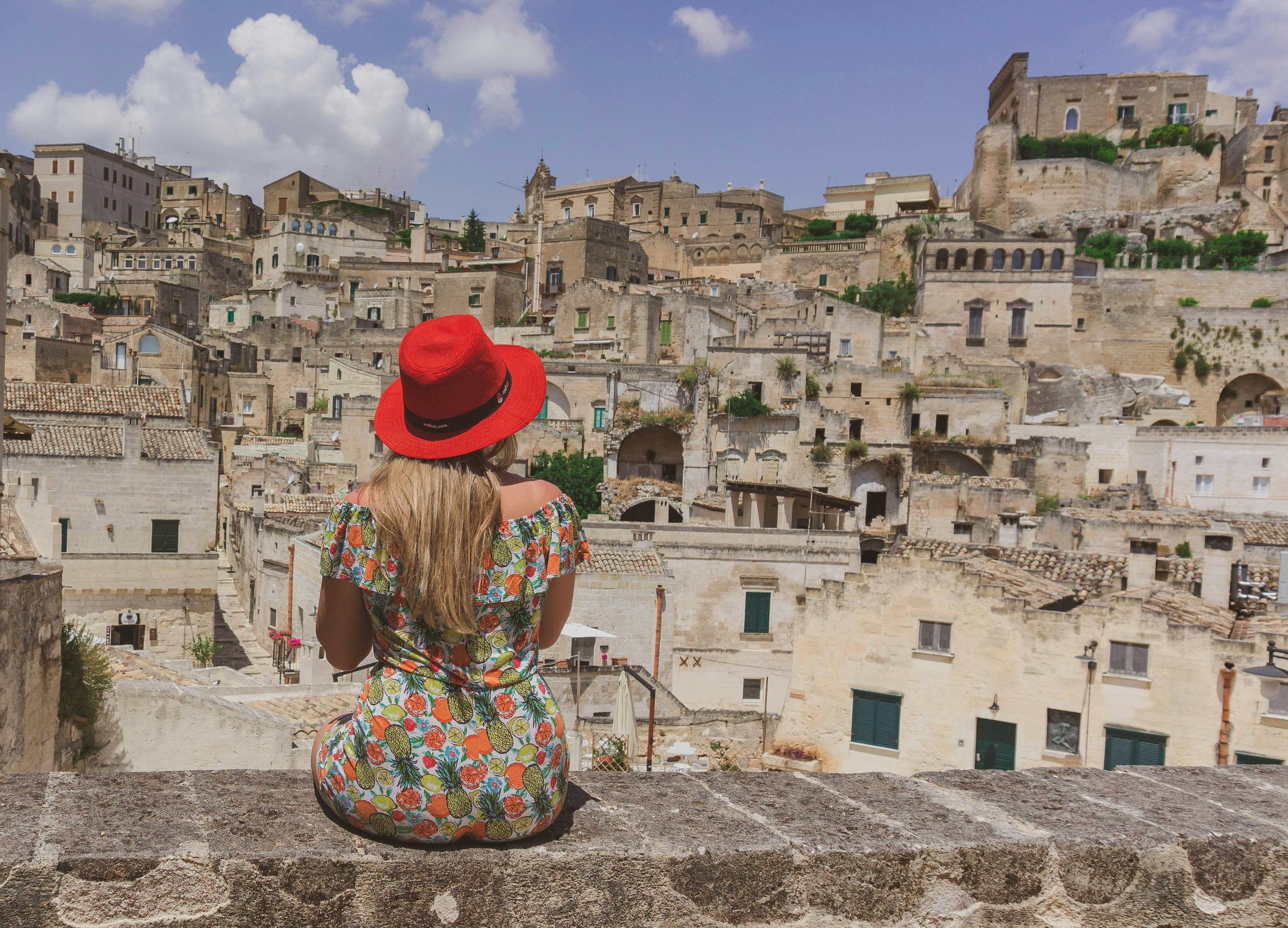
When Dialogue Needs a Stage, Matera Steps In
Named Mediterranean Capital of Culture and Dialogue 2026, the city becomes more than a destination — it becomes a meeting point. And for nomads, that matters.
There is always a good reason to visit Matera. The light on the stone at sunset. The silence that lingers between the Sassi at dawn. The sense that time is layered there, not linear. But in 2026, there will be another reason and perhaps a more urgent one.
As reported by our partner publication ITS Journal, Matera has been officially designated Mediterranean Capital of Culture and Dialogue 2026. It is a title promoted within the Euro-Mediterranean framework that aims to strengthen cultural cooperation across Southern Europe, North Africa and the Middle East. On paper, it sounds institutional. In practice, it might be exactly what this moment requires.
Because dialogue, right now, is not the easiest word in the Mediterranean vocabulary.
From migration tensions to political fractures, from economic uncertainty to cultural polarisation, the region that once symbolised exchange and coexistence often feels strained. The Mediterranean has always been a sea of encounters — traders, philosophers, artists, exiles, dreamers. But it has also been a sea of conflict. The question is not whether tension exists. It always has. The question is whether we choose to build spaces where conversation is still possible.
Matera in 2026 will be one of those spaces.
The designation implies a year-long programme of cultural initiatives, international collaborations, artistic residencies and civic participation. But beyond events and festivals, it signals something subtler: the decision to position a Southern Italian city as a bridge rather than a postcard. Not just a backdrop for Instagram, but a platform for exchange.
For digital nomads, remote professionals and global citizens, this matters more than we might think.
We often move through places lightly. We land, we work, we explore, we leave. We are good at connecting Wi-Fi networks, less trained at connecting narratives. Yet the mobility that defines our lifestyle gives us a quiet responsibility. We are carriers of stories. We translate impressions from one city to another. We shape perceptions simply by sharing what we see and whom we meet.
A Mediterranean Capital of Dialogue is not only for diplomats and curators. It is an invitation to anyone who believes that cultural exchange is not an abstract policy but a lived practice.
Spending time in Matera in 2026 will not solve geopolitical tensions. But it can expose us to conversations we might not otherwise have. It can place us in rooms where artists from different shores collaborate. It can remind us that complexity is richer than simplification. And when we move on - to Lisbon, Athens, Marrakech, Barcelona or beyond - we carry that layered understanding with us.
Matera has already reinvented itself once. From a symbol of poverty to a European Capital of Culture in 2019, it demonstrated that narratives can change. The 2026 title is not a repeat performance. It is a continuation, this time with a wider Mediterranean lens.
In a season when algorithms amplify division and headlines reward outrage, choosing to visit a city that positions dialogue at its core feels almost radical. It is slower. Less spectacular. More demanding. It requires listening.
For nomads, that might be the most meaningful journey of all.
So yes, there will be exhibitions, performances, and international gatherings. There will be reasons to book a ticket and extend your stay. But perhaps the deeper reason to go is simpler: to witness how a small Southern city chooses to stand for connection when fragmentation feels easier.
Sometimes travel is escapism. Sometimes it is participation.
In 2026, in Matera, it can be both.