

When the hubs go dark
Wars, drones and detours: why the global flight map is suddenly a mess for digital nomads

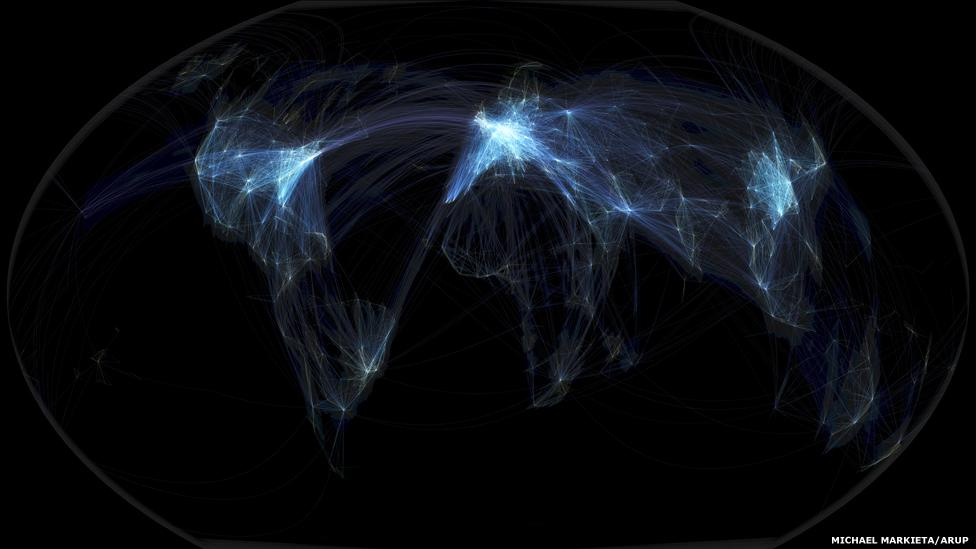
For years the invisible architecture of global travel worked almost perfectly.
You could leave Barcelona in the morning, change planes in Dubai or Doha, and wake up somewhere between Bali, Bangkok or Sydney without thinking too much about the logistics behind it. The system functioned because aviation had built a handful of mega-hubs that stitched the world together.
Dubai. Doha. Abu Dhabi.
Those cities became the great crossroads of long-haul travel between Europe, Asia and Oceania. Billions were invested to turn them into frictionless machines of global mobility. For digital nomads, remote workers and long-distance travellers, they were more than airports. They were shortcuts to the planet.
Right now, that architecture is under pressure.
Not just because fuel prices have climbed again. But because the geography of global aviation is being shaken by geopolitics.
When geopolitics enters the flight plan
In recent months, tensions in the Middle East have forced airlines to rethink routes that, until recently, were considered routine.
Iranian drone and missile threats in the region have raised security concerns around parts of Gulf airspace, forcing airlines to divert flights away from certain corridors and reconsider stopovers in major hubs. When airspace becomes unstable, the aviation industry reacts very quickly: insurers raise premiums, regulators issue warnings, and airlines start avoiding the region altogether.
It’s not theoretical.
Several carriers have already rerouted flights away from risky areas of Middle Eastern airspace, increasing flight times and fuel consumption in the process. Airlines regularly adjust routes during geopolitical crises to avoid potential threats, even when the airports themselves remain open. The result is simple: longer routes and higher operating costs.
And once routes get longer, tickets rarely get cheaper.
The domino effect of a broken hub system
The real issue, however, is structural.
Dubai, Doha and Abu Dhabi didn’t become mega-hubs by accident. They occupy a geographic sweet spot between Europe and Asia. Roughly eight hours from almost everywhere.
That allowed airlines like Emirates, Qatar Airways and Etihad to build a model based on massive passenger flows connecting continents through a single stop.
Take those hubs partially out of the equation — even temporarily — and the entire network begins to stretch.
Flights between Europe and Asia suddenly have fewer efficient connection points. Aircraft must take alternative routes or rely on secondary hubs that are not designed to absorb that level of traffic. Low-cost long-haul carriers that relied on Gulf connectivity find their economics squeezed.
Even airlines that never touched the Gulf feel the consequences, because the system is global. Aircraft rotate across networks, crews reposition through hub airports, and passenger demand shifts unpredictably.
It’s a bit like closing a major highway interchange in the middle of a continent.
Traffic doesn’t disappear.
It spills everywhere else.
And then there’s fuel
All of this would already be complicated if fuel prices were stable. They are not.
Jet fuel remains one of the largest costs for airlines, often representing 20–30% of total operating expenses depending on the carrier and the market. When oil prices spike during geopolitical crises, the pressure arrives immediately.
Recent tensions in the Middle East have pushed oil markets upward again, driving jet fuel prices significantly higher compared with pre-conflict levels. Analysts warn that sustained increases in fuel costs could translate into double-digit increases in airline operating expenses, something carriers inevitably pass on to passengers through higher fares and surcharges.
In simple terms: longer routes mean more fuel burned, and more expensive fuel means higher ticket prices.
Put the two together and the economics of flying change very quickly.
The quiet disappearance of cheap routes
If you travel occasionally, you may not notice immediately. But if you fly frequently — as many digital nomads do — the shift is already visible.
Some routes that used to rely on Gulf stopovers are becoming harder to find. Others are still available but with awkward detours, longer layovers or significantly higher prices.
Budget long-haul carriers that once experimented with connections through Gulf hubs are quietly stepping back, focusing instead on regional routes or stronger domestic markets.
Airlines rarely announce these changes dramatically. They simply adjust schedules, cut frequencies or shift aircraft elsewhere.
From the outside it looks like normal fluctuation.
But the map of global aviation is subtly being redrawn.
The digital nomad reality check
For the past decade, the digital nomad narrative has often assumed that the world is effortlessly connected. Cheap flights, global hubs, easy connections.
That assumption depended on a fragile balance: stable geopolitics, open airspace and relatively predictable fuel prices.
When that balance breaks, the nomad equation changes.
Flights between continents become more expensive.
Connections get longer.
The pool of cheap routes shrinks.
Suddenly that €350 ticket to Southeast Asia turns into €700 or €900, and the “one-stop easy connection” becomes a two-stop marathon through unfamiliar airports.
The lifestyle still works, but it requires more planning.
And sometimes a little patience.
A new era of travel flexibility
The good news is that aviation is resilient. Airlines adapt quickly, routes evolve, and new hubs emerge over time.
We’ve seen it before.
After the pandemic, entire networks had to be rebuilt. After the war in Ukraine closed Russian airspace, airlines rerouted flights between Europe and Asia across the Middle East or Central Asia.
The system bends, but it rarely breaks.
What changes is how travellers approach it.
The next generation of frequent travellers — digital nomads included — will probably rely more on flexibility: alternative hubs, different seasons, slower travel rhythms and longer stays in fewer places.
In other words, the future of global mobility may look less like a constant hop across continents and more like a series of longer chapters.
Final thought
The modern travel economy was built on the idea that distance had become almost irrelevant.
Cheap fuel, stable air corridors and hyper-efficient hubs made the world feel smaller than ever.
But aviation has always been sensitive to geopolitics. Every conflict redraws the map of the sky a little.
Right now that map is shifting again.
Not enough to stop people from travelling — but enough to remind us that the global nomad lifestyle doesn’t float above politics.
It flies straight through it.