

When the Sky Closes: Nomads, Expats and the Gulf War Detours
Flights cancelled, airspace shut, and thousands of expats packing their bags. For digital nomads, the Middle East crisis is a brutal reminder that geopolitics still controls the map

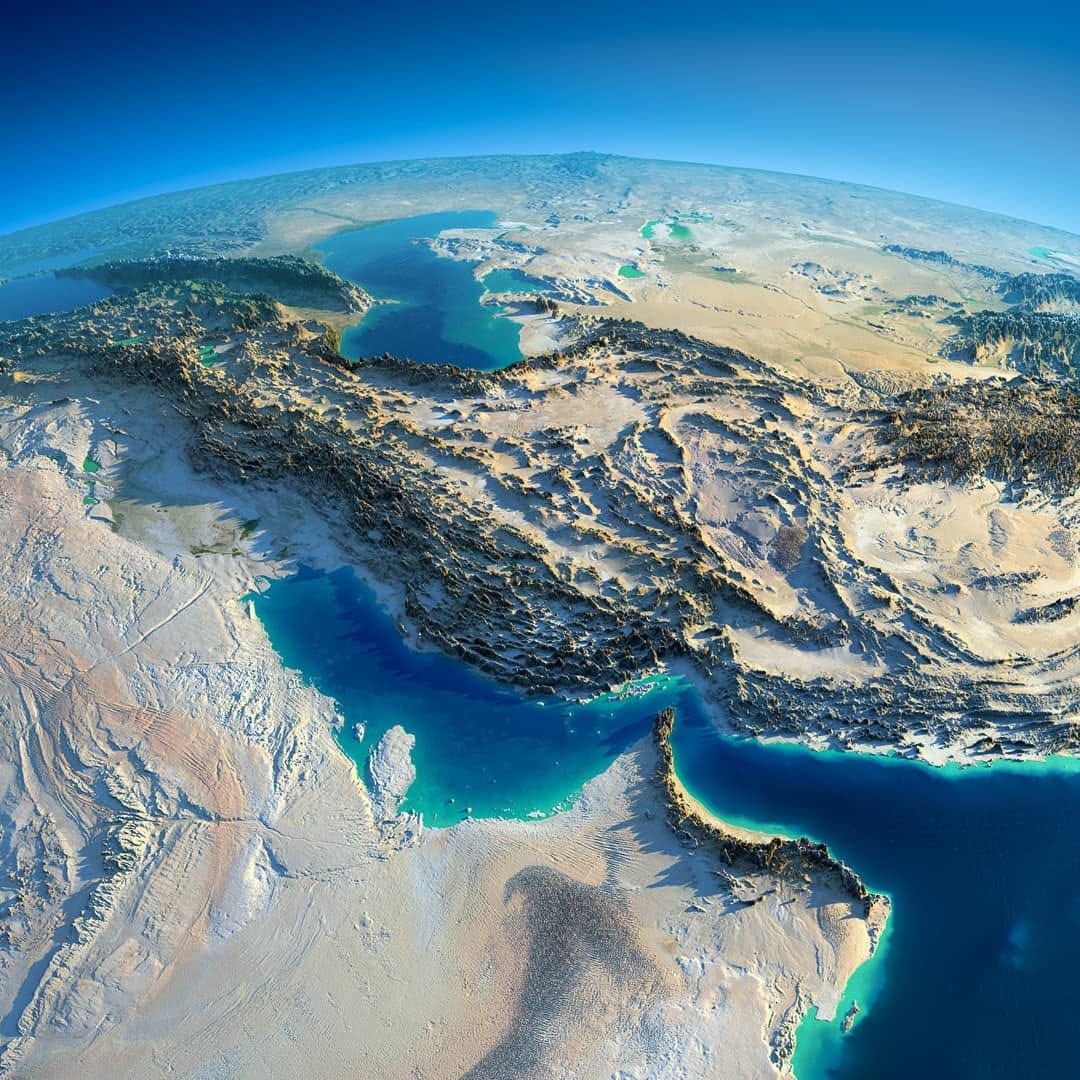
For anyone watching the news over the past few days, the images are grim: missile interceptions over Gulf cities, ships burning in the Strait of Hormuz, and governments scrambling to evacuate citizens. The conflict that erupted at the end of February has rapidly escalated into a wider regional crisis involving Iran, Israel and the United States, with thousands already dead and major infrastructure across the region affected.
Air travel — the invisible infrastructure of global mobility — has been one of the first casualties.
And when the sky closes over the Gulf, the effects are felt everywhere.
The world’s crossroads suddenly becomes a bottleneck
For years the Gulf has functioned as the planet’s aviation crossroads. Dubai, Doha and Abu Dhabi connect Europe to Asia, Africa to Australia, and the Americas to South-East Asia. Millions of travellers — tourists, workers, students, and digital nomads — pass through these hubs every month.
Now many of those routes are suddenly unstable.
Several airlines have cancelled or rerouted flights as regional airspace closes or becomes unsafe. Governments have organised repatriation flights while thousands of travellers have found themselves stranded in airports across the region.
Some carriers have suspended services entirely. KLM, for example, cancelled all flights to Dubai until at least the end of March because of the geopolitical situation.
At the same time, temporary airspace closures in countries such as Qatar, Bahrain and Kuwait have forced airlines to redesign flight paths that normally pass through the Gulf corridor.
For global aviation, this is not a small inconvenience. It’s like temporarily closing a major motorway intersection that connects half the world.
Flights between Europe and Asia are now longer, more expensive, and often delayed.
The expat exodus
The Gulf has long been home to one of the largest expatriate populations on the planet. In cities like Dubai or Doha, foreigners are not a minority — they are the majority.
When missiles and drones begin appearing in the news cycle, many of those residents start making contingency plans.
Some companies have begun evacuating staff. Governments have issued warnings urging citizens to leave the region where possible. Thousands of people have attempted to secure seats on limited flights out.
In the early days of the crisis, even private jets reportedly became a desperate escape route, with prices reaching hundreds of thousands of dollars for a single evacuation flight.
Others are staying, watching the situation carefully. Life in Dubai, Abu Dhabi and other Gulf cities has not stopped entirely. But the sense of certainty that usually surrounds these hyper-modern hubs has clearly been shaken.
And then there are the nomads
Compared to the human tragedy unfolding in the region, the problems of digital nomads are — obviously — trivial.
A delayed flight, a cancelled visa run, a coworking space suddenly half empty: these are inconveniences, not catastrophes.
Still, the nomad ecosystem reacts quickly when the map changes.
Within hours of the first disruptions, Telegram groups and Slack channels started buzzing with questions:
“Is Doha airport still open?”
“Can you still transit through Dubai?”
“Anyone rerouting through Istanbul or Singapore?”
For many nomads travelling between Europe and Asia, the Gulf hubs are the default route. Remove that corridor and the logistics of a supposedly “borderless” lifestyle suddenly become much more complicated.
Some travellers have shifted routes via Turkey. Others are flying through Central Asia. A few — the truly patient ones — are simply waiting it out in places like Thailand, Bali or Lisbon until the skies stabilise again.
Nomads, after all, are very good at improvisation.
The quiet irony of global mobility
There is something quietly ironic about this moment.
For the past decade, digital nomads have built an identity around the idea that work — and life — can happen anywhere. That geography is flexible. That borders matter less.
And yet global mobility still depends on a handful of fragile systems: aviation corridors, geopolitical stability, and safe airspace over a few key regions.
The Gulf happens to sit right in the middle of one of those corridors.
When conflict disrupts it, the ripple spreads from Tehran to Bali, from Berlin to Bangkok.
Perspective, always
It’s tempting, especially in the nomad bubble, to frame travel disruptions as a dramatic inconvenience. Cancelled flights. Longer routes. Higher prices.
But compared to what many people in the region are experiencing — displacement, danger, loss — these frustrations barely register.
Thousands of families are evacuating cities. Foreign workers are leaving homes they built over years. Entire communities are living with the uncertainty of war.
Against that backdrop, a delayed connection in Dubai or a rerouted flight to Singapore is, frankly, nothing.
Still, it does serve as a reminder of something the nomad world occasionally forgets.
You can move your office anywhere.
But the world itself is never as stable as the Wi-Fi connection in your favourite coworking space.
And sometimes, the map redraws itself overnight.
We feel incredibly fortunate that we are currently in the US and not flying through Dubai or somewhere else in the Middle East. One online acquaintance had to go on Facebook and ask for money to pay for a shockingly expensive flight back home after his original one canceled. Other friends hired a driver to take them from Dubai to Oman where they hoped to get to Turkey and then points onward.
It's shocking how quickly the world turned upside down for so many -- especially those much more directly impacted by this idiotic war.