Why are we so scared to have a better quality of life?
I have lost count of the amounts of friends and acquaintances that complain how expensive life is, how stressed they are and how much they spend their time thinking about and planning their chances to escape that life a few times a year (aka holidays). They look at my wife and my lifestyle and tell us how envious they are (let’s leave aside that the grass is not always greener on the other side :-). And when I ask them what’s stopping them from pursuing it I get the usual raft of replies (categorised under “kids in school, job, mortgage on the apartment, social life, gym/sports, infrastructure, family, friends). As I am a big fan of seeing people living a happier and healthier life (and one that they can afford) I thought to share some perspectives. My official aim? To inform you. My secret aim? To force you to challenge your assumptions around your own life and start taking steps to a happier you!
I fully admit that I am an anomaly. Italian/German by nationality and having spent the better part of 34 years working and living in many places around the world I am naturally predisposed to perhaps accepting more change in my life. However, one change I have made—somewhat accidentally I must admit - has increased my quality of life (both qualitatively and financially): moving my residential status to small towns. I have lived in Hong Kong, Dubai, Johannesburg, London, Boston, Frankfurt, Milan, Luxembourg, Rome etc. but I also lived in countless smaller towns and villages across many countries and I would choose small towns over any larger metropolis anytime, not for some romantic notion of village life (there are some amazing articles in this publication for you to read what life is really like in small towns), but for some really very selfish reasons.
A bit of context... I am not a ultra high income earner by any stretch of the imagination. I can pay my bills, have a bit of money saved aside and no debts and own a few businesses that do reasonably well financially but really amazing in terms of impact. I love working on things that make a real difference in people’s lives (I suppose you could call me an impact entrepreneur, but I believe impact without a sustainable business model is actually dangerous so I am an entrepreneur first and impact enabler second). For 14.5 years I have worked for large multinationals (Goldman Sachs, etc) and enjoyed it even if the working hours and career commitments meant I ended up spending very little time with those I loved (my parents), seeing them 2 times a year. When my father passed away (cancer) I decided to take the plunge, hand in my resignation, and design the professional life I wanted and not live the one others want me to live. So I became an entrepreneur. I started 11 businesses in the first 3 years, 9 of which failed within 9 months (the one that became a case study used at Harvard to show how to do business in Africa was the one I had the least faith in that it would succeed... so best not to ask my opinion if something is a good idea of not!)
I gave you the personal context above not to show off any specific path but to highlight the point that I am - like many out there - not a human with ungodly abilities and unlimited resources (inheritance etc) but rather just a person that goes through life and screws up regularly. I don’t sit down and plan things 10 years in advance. If that’s you, great. I am not that person. I pretty much follow my gut feeling and then try to turn that gut feeling into reality, trying to reduce the friction as much as possible as well as minimising financial impacts.
A few years ago (I think 4 years now?) my wife and I decided that we wanted a less routinised lifestyle... We were then living in Johannesburg (South Africa). We wanted a life that isn’t just based on home, work, gym, sports (squash for me, but now padel) and friends in big cities which we knew how to navigate and where we had good networks of people (this helps in terms of getting business of course). We wanted a more chilled life surrounded by nature and fewer shops (how many restaurants do you really need around you? we came to the conclusion that a village with 5 restaurants is more than enough!). But we were scared of making the leap plus we owned a few businesses including a safari lodge (was rated 7th best on Tripadvisor out of 322 lodges) as well as some real estate that kind of kept us there.
So we started thinking and slowly realising that if we want the life we want we need to start selling the stuff that doesn’t fit into that vision. We tried to do it intelligently (took forever to sell some assets!) and also started - subconsciously at first - to say no to work opportunities that forced us to come to an office regularly or required us to be present: think lecturing, workshops, in house advisory, etc). This then turned into something we did consciously and noticed that we started working less but earning the same as before (I suspect when people hear you decline opportunities they actually get more interested in having you and start to think of other ways to have you involved... This however worked for us but it isn’t a guarantee so say “no” with caution :-) )
Slowly slowly we found ourselves working from home more. And we were loving it. To be clear: we were working hard, but actually less as we now didn’t have travel time etc to deal with. Any in person meeting requests were moved to virtual first (covid helped change people’s acceptance of that). We save - I’d guesstimate - 3 hours a day. This process took 1.5 years just to give you a sense. It isn’t an overnight thing.
Then we started testing our ability to work remotely (there’s a difference between having a nice setup at home and working from cafes and other places...). We took a 3 month road trip with our modest Toyota Corolla car, camping a lot, sometime an small airbnb. That was a challenge (try sitting in a tent trying to look elegant and professional in a serious meeting while you see the battery on your laptop start to die off)! But oh my goodness did we have fun. We forced ourselves to not complain and rather see this time as an opportunity to grow. As our friend Jonti Searl likes to say, real growth is never easy or pleasant. The first month was chaos (but wonderful in terms of sightseeing). I think we managed barely 3 hours of real work a day. Income oddly stayed the same making us realise that when you have limited time you actually become much more efficient! Eg. our replies would be much more on point, actionable and short. People actually like that (vs verbose let’s have tons of meeting communications). This drove up efficiency and productivity almost by accident. I even changed my “calendly” (a free tool for people to pick a date and time to schedule a meeting) to 15 mins meetings and only 3 times a week in the mornings. It worked wonders and I am personally surprised how many 1 hour meetings can be cut to 15 mins of getting to the point without all the fluff (today I do 30 mins meetings as 15 was really too short in some cases, coming across as a little rude).
I mention all this to make the point that transitioning to a new lifestyle took time and tinkering. We learned what we liked and what worked for us by trying out different things. This is something I suggest for you too... Don’t just sell your kids overnight and go... experiment, try, test things, go on extended road trips, etc. Figure out what works for you. Get comfortable with the feeling of being a little out of place, out of your comfort zone. A little scared even. At first it will feel frightening. Then it gets easier. After a few months you are totally comfortable. Think of it like you were starting a new job... exciting at first, then scary and then as you learn the new company better you start changing gears and start (hopefully) loving it.
That’s for releasing the handbrake of routine.
Now for deciding where to live. This is a biggie.
We are lucky that we have passports that make moving relatively easy. If you are blessed with one that is a bit more restrictive, there are always solutions just realise they might require a bit more investment or effort. But a way there is always.
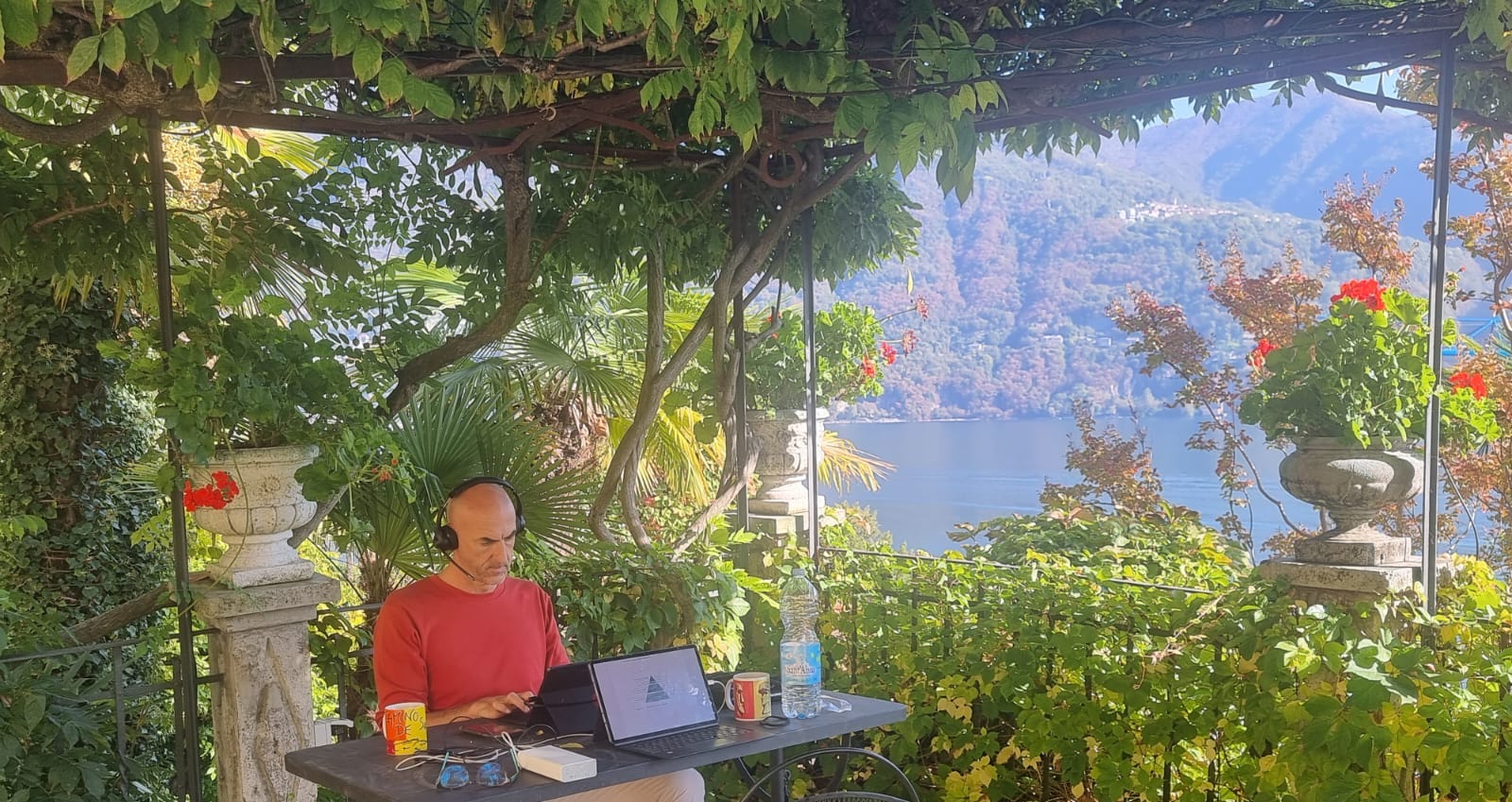
We actually started doing housesitting for people with dogs in Italy. We didn’t know Italy that well actually (I am Italian but left Italy at the tender age of 14). So my wife and I found 2 website where dog owners advertise they need people for a month or two. We lived like this for almost 2 years and absolutely and utterly LOVED it. I think we stayed in 10-12 different places. We saw parts of the country we didn’t know anything about - from the stunning Puglia region to Lake Como to Abruzzo to Rome. Learned to discover tons of small villages across Italy and totally fell in love with Italy... As many articles on this platform remind us: there is NO one Italy. It is a incredible diverse range of lifestyles and for each of you will be a better or less better fit. You need to try it to see if you like it. We learned so much from this: what we like, don’t like, what we need (infrastructure etc), nature, mountains, lakes or ocean, etc. We learned what is the right size of town that works for us and what we need within 40 mins drive. We did it this way as wanted to save the costs of airbb. Disadvantage of dog sitting? You need to be home each evening to feed the cuties so it limits your freedom. But you get free accommodation in some really cool places! You can see our photo diary here (sorry... we don’t do social media so no instagram to follow or facebook to like). We also learned what didn’t work for us.
To be honest, what actually happened was that we started becoming a little more confused at first. We fell in love with so many small villages and towns and didn’t actually know what we want... and still don’t. One of the reasons we are not buying properties yet (and there’s TONS of amazing deals to be had in small villages) is because we have decided we are not ready yet to settle down and commit to one place. Assume if you buy in a small town/village you will own that thing for a long time: small villages don’t have a huge market for buyers... and certainly no buyers if you overinvest in your property. That’s totally fine if you decided on one place and that’s it. Not fine if you are like us who have become essentially poli-village-amorous :-). ... so we tend prefer renting for now. One day I think we will buy as well.
What about the costs you say?
Ah... well... having lived in big cities and small towns across Italy and actually tracking what we spend I can give you real time data that is also recent. As always, this is our personal experience and lifestyle so take these numbers as a little biased. What worked for us may not work for you.
Big cities - our total expenses (food, transport, accommodation, electricity, internet, shopping, going out to eat, etc) - EUR 4.700-5.800 per month (for us both, on average).
Small villages - EUR 2.400 to 3.100 per month (for both of us on average).
Why the big difference? Various factors but suspect the following are the main drivers:
1. Rent is dramatically cheaper (not just direct rent but also rates and taxes etc). Rome centre for example is EUR 1.000-1.500 a month. Rome outskirts (small villages ca. 35-45 mins drive) rent is EUR 450-650 a month. Sometime you get better deals sometime not.
2. Retail shopping costs drop dramatically. As much as I like to think I have self control, if I walk past 50 shops each day who have mastered the art of temptation, I will end up buying more shit. In small towns we saw we spend dramatically less on stuff.
3. Going out costs drop. Small towns charge EUR 1 to EUR 1.10 for a cafe in a bar (a bar in Italy is what you know as a cafe). In Rome centre EUR 1.50-160 for the same coffee (airport is now EUR 2.50 for a coffee). That ratio also works generally for food too... A pizza in Milan centre (non touristy) is EUR 10-12. Small villages EUR 5-7. Those small things add up.
4. Services costs drop dramatically. We bought a (second hand) Fiat Panda for EUR 6.000 in amazing condition. A service in Rome city is EUR 130-180. The same service in our little town is EUR 30-40. Nails in Rome is EUR 70. Nails here are 30-40. Why? Many factors... but mostly rents are lower, waves are lower plus people don’t overpay. The mechanic also told me that he charges those prices because just about all his customers come back for life and not just once off. That means you build relationships and not just commercial ripping off transactions. Life in small villages are just much cheaper from many aspects (even if you do need to have a little patience... so don’t expect the plumber to arrive in 15 mins like in a major city). Gym membership is the same cost (we pay EUR 23 a month for full membership of a great local gym with daily spinning classes but keep in mind gyms might not be available where you decide to live). I now play padel as there are no squash courts around us (cost: EUR 10 per game vs EUR 12-15 per game in big cities). Local (amazing high tech) dentist visit is EUR 50 (vs big cities EUR 100).
5. We do more in nature. MUCH more. Hiking, cycling (bought 2nd hand amazing bikes for 400 euros a pop). Picnick by the lake (30 mins drive from us) or by the ocean (15 mins drive). Those things cost less and fill your happiness tank enormously. I do many catch up calls with business partners and clients now while walking in nature (non strenuous walks to be clear... nothing shouts unprofessionalism like being out of breath... :-)
Downsides?
You lose a few friends you had made in other places... that’s part of the deal. You need to rebuild your networks. You need to invest more time on virtual connections to stay top of mind for potential opportunities. Sometime you feel a bit alone (for us it works brilliantly as we love each other’s company)... but if your relationship was a bit wobbly before keep in mind you will be “forced” to confront each other much more.
Things you do not need to worry about?
Local help... in finding mechanics, plumbers, accountants, etc. Use services like IT’s Italy or ask the local bar owner... they know everyone. If you treat people kindly you will get tons of mammas reaching out to support you. People in local villages are incredibly helpful and friendly if you are nice and respectful. Many municipalities and also the Italian govt are embracing digitilisation: in the last 1.5 years the govt apps have gotten amazing (e.g. today I don’t carry my driving licence anymore as the digital version on the app works fine. plus you get all invoices, fines etc to your official email and you can pay everything digitally).
Language barrier?
Italians are a disaster with other languages, especially in small towns. I am Italian but my wife isn’t. But she’s bubbly, outgoing and fun and people love with with her vs grumpy Italian old me. So she is quickly being welcomed even if sometime - at first - it was a bit of a challenge to get things done. Luckily in Italy hand gestures work wonders to explain things. And Italian is easy to learn the basics to survive (repeat after me: caffe’, cappuccino, pizza. That’s all you need). And Italians LOVE it when you make a little effort. As always, if you are pleasant, respectful and easy going you will thrive in Italy. If you are arrogant, expecting always and pushy life will be more challenging (frankly this is anywhere, but in large cities that behaviour is more tolerated while they charge you).
Logistics
Getting around in, to and from small villages you need a car in Italy. There are busses but they are stretched in terms of regularity. Trains in Italy for long distance are world class (ignore what you think you know) but small villages are often not connected brilliantly by public transport. That’s part why they are so cheap. Keep in in mind. So budget maybe a long term rental for a while and then buy second hand (a good second hand car for Italy will cost you EUR 4.500-9000 (again what do you need a car for? In our case it is short distances so we got a car that’s perfect for 2-3 hour drives max). At 10.000 euros you can find new cars. Electric cars are everywhere now just expect to pay a fortune for them currently. For normal cars get a small engine please so that your taxes and insurance is low.
Outcome of our new lifestyle?
To be fair we have always been the happy types. I am more used to moving around than my wife was and she was a little more hesitant about this lifestyle so we took it easy, not rushing it, and never forcing ourselves to extremes. But the difference now is extraordinary. We are spending less (saving more), life is far less complicated (less traffic, etc), the connections with people and nature more genuine (though we had amazing connections also in big cities so not sure if it really that big a change as I think about it). Our relationship went from great to amazing. We live with doors and windows open. Car is parked outside without being locked many times (though not recommended no matter where you live).
We walk much more. You “waste” much more time chatting to people in the streets or cafe’. You feel more part of a community than just a tax payer in a big city. Yes: you have less options (cinema, theatre, etc) but those are 30-40 mins easy drive if we absolutely need it. We have a train station 15 mins drive. Rome airport 25 mins drive. That’s us. The village you pick might be different... but different and good for you. Go out and try different places. Rent an airbnb for 3 months in each place (3 months rentals are ridiculously cheaper than daily rate... we once rented a place that daily would cost EUR 50 so EUR 1.500 a month but when bought per month worked to EUR 600 a month once we negotiated with the owner). Do not rush to settle in one place... taste the life in different locations until you find the one that after a few months you still love (there are some places that are amazing for a day or two and incredibly impractical after a few months of living there).
In the end it’s up to you. Its your life. You can keep reading the amazing articles in It’s and nomag and dream or start taking the first steps towards a new life. Maybe it won’t work out but then you go back home (hence why I advocate not to sell everything immediately) richer with experiences and perspectives. Sometime you need to taste the menu and then go home and think about it and let it simmer before making the jump. There’s no rush. You are not under any pressure. But don’t let life pass you by.
As the old saying goes, we regret more the things that we didn’t do than the things we did.
Ball in your court. I am off to play padel.