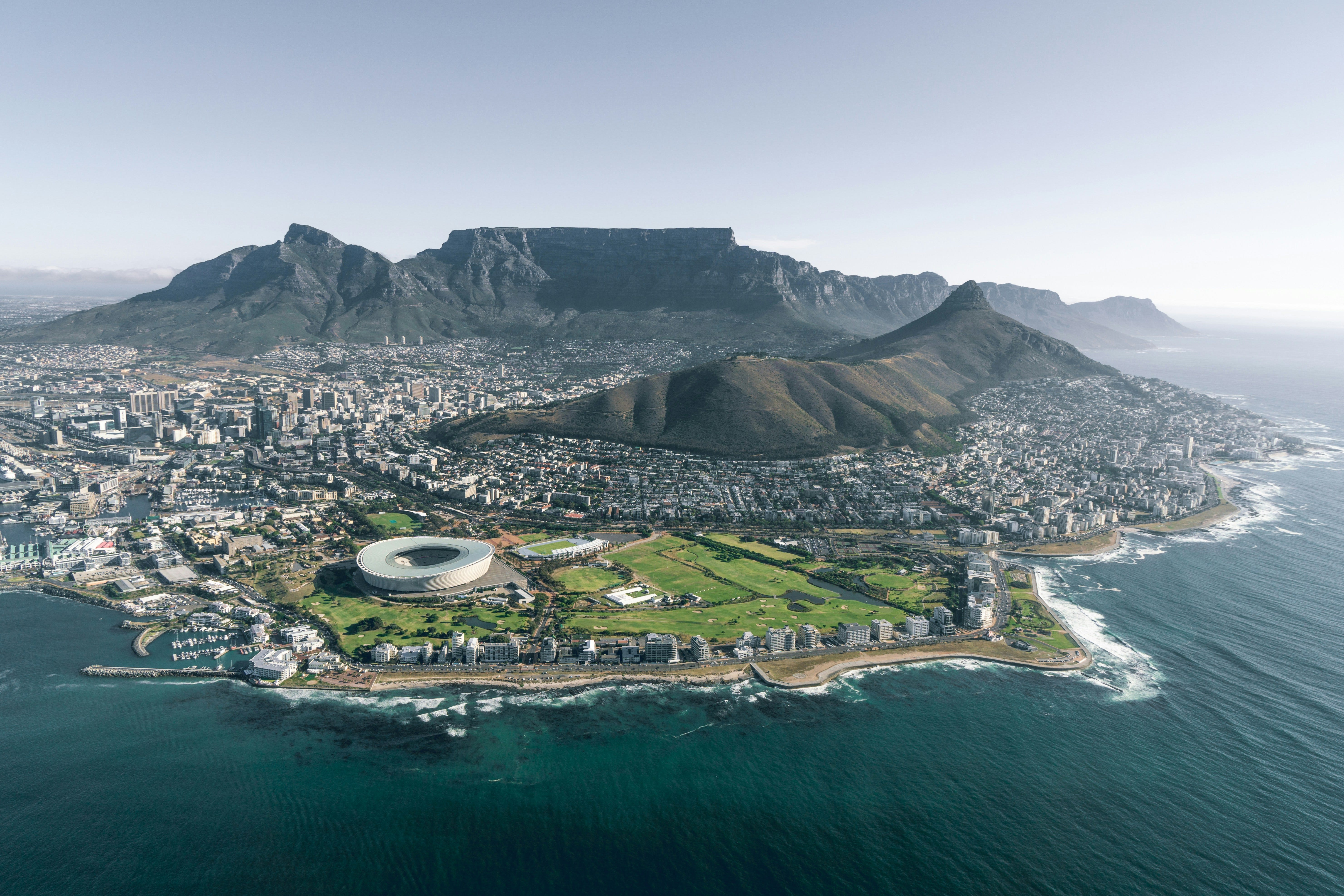
Work From Table Mountain: Is South Africa the New Remote Office?
There’s a new phrase doing the rounds in South Africa. It’s not “load shedding” (thankfully), and it’s not “safari season.” It’s digital nomad.
As the country positions itself as a destination for global remote workers, especially in hotspots like Cape Town, the conversation has shifted. Not just about travel. Not just about visas. But about housing, inequality, lifestyle… and who exactly gets to enjoy the view.
Let’s unpack it.
First things first: remote worker ≠ digital nomad
A remote worker can be someone who works from home in Manchester. Or Milan. Or Miami. They might never leave their postcode.
A digital nomad, on the other hand, is a different breed. Location-independent. Laptop-powered. Professionally mobile. They don’t just work remotely, they work globally. Today Lisbon. Next month Bali. Then maybe a long stretch overlooking the Atlantic.
Digital nomadism is not a job. It’s a lifestyle built around mobility. Longer stays, deeper immersion, less “tourist”, more “temporary resident with strong Wi-Fi”.
And South Africa wants in.
Enter the Digital Nomad Visa
South Africa has officially joined the global race by introducing a dedicated digital nomad visa. The idea is simple: attract foreign professionals who earn abroad, spend locally, and (in theory) don’t compete for domestic jobs.
There’s a catch, of course.
To qualify, applicants must earn the equivalent of roughly R1 million per year (60k USD approx.). This isn’t backpacker territory. It’s aimed at high-income professionals: tech founders, consultants, creatives, executives - people who bring foreign income into the country and spend on rent, services, restaurants, transport, tourism.
From a policy perspective, it’s smart. Imported salaries, exported sunshine.
But what about tax?
Here’s where it gets slightly less instagrammable.
If the visa covers six months or less within a 36-month period, applicants may apply for exemption from registering with South African Revenue Service.
If the stay exceeds six months within that 36-month window, registration with SARS becomes mandatory, and potential South African tax obligations kick in - depending on residency status and income structure.
In short: the longer you stay, the less you can pretend you’re “just passing through.”
And yes, if activities extend beyond purely foreign-sourced remote work, local labour legislation may apply too.
Digital freedom still meets paperwork.
The Cape Town question
While supporters argue that digital nomads inject foreign currency into the economy, critics - particularly in Cape Town - are raising legitimate concerns.
Rental prices are rising. Short-term letting platforms are expanding. Housing affordability is under pressure. And when highly paid foreigners enter tight urban markets, friction is inevitable.
Is this new wave revitalising neighbourhoods? Or quietly pricing locals out?
That’s not a rhetorical flourish. It’s a real policy dilemma.
The balancing act
South Africa is not alone in this. Lisbon faced it. Barcelona debated it. Mexico City argued about it. The digital nomad story is rarely just about lifestyle - it’s about urban policy, housing supply, taxation, and fairness.
The real challenge isn’t whether digital nomads are “good” or “bad.”
It’s whether governments can design systems that capture economic upside without worsening inequality.
Sunsets are easy to market.
Urban equilibrium is harder to engineer.
South Africa’s experiment has just begun.
And the rest of the world is watching.