Your Flight Is Delayed. Good. There’s a Sauna Waiting.
From instant noodle libraries to Michelin-level dining, airport lounges are quietly becoming the real destination.
Airports used to be the necessary evil of travel. The fluorescent purgatory between where you are and where you want to be. Overpriced sandwiches, plastic chairs, the low-level anxiety of gate changes and boarding calls pronounced like moral judgments.
Now? Airports are having an identity crisis — and lounges are winning.
In the race to become “the best airport in the world,” terminals are no longer satisfied with luxury boutiques and polite art installations. The real battleground is the lounge. And what used to mean free drinks and slightly better toilets has evolved into something closer to a lifestyle statement.
Take Helsinki. At Helsinki Airport, eligible Finnair passengers can step into a full sauna inside the Platinum Wing lounge. Not metaphorical warmth. Actual Nordic sweating before boarding. You detox, shower, cool down — and if you want to complete the cultural immersion, you can even order a reindeer burger. It’s less “waiting for your flight” and more “wellness retreat with runway access.”
Prefer your sweat to come from effort rather than steam? Bologna Airport decided business lounge guests might appreciate a gym. Treadmills, weights, machines — plus a buffet to refuel afterwards. It’s the only place where you can do cardio while watching planes taxi and then justify a second plate of pasta because, technically, it’s recovery nutrition.
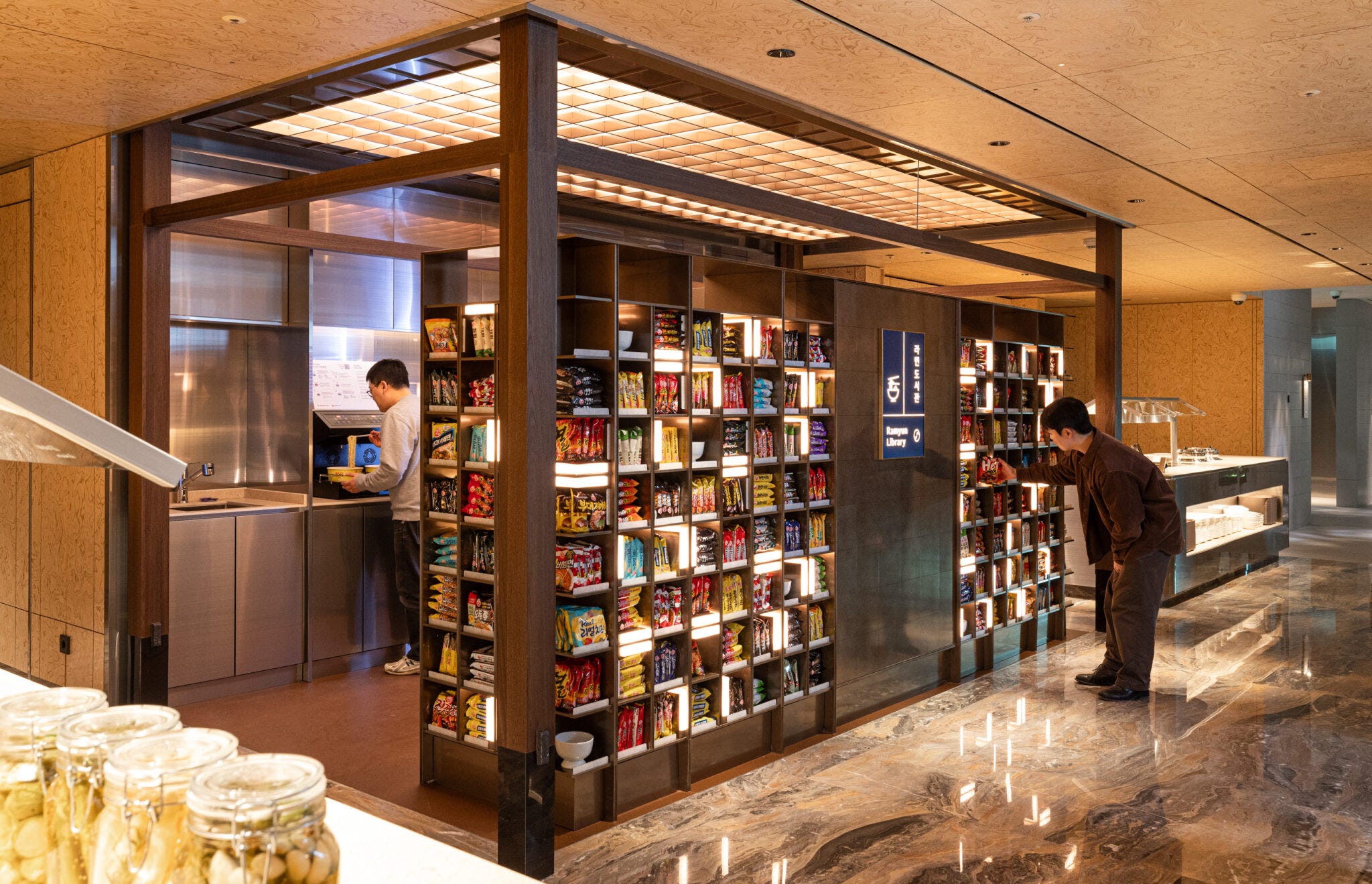
Then there’s Seoul’s Incheon Airport, where Korean Air has unveiled something that feels both ironic and genius: a self-service instant noodle library. Inspired by K-drama convenience store culture, passengers choose their ramyeon, add toppings, pour hot water, and create a moment of cinematic comfort before takeoff. It’s not haute cuisine. It’s storytelling in a bowl.
Meanwhile in Bengaluru, Gate Z has been designed with Gen Z energy in mind — less waiting area, more social playground. There’s a café-bar hybrid, a retro diner vibe, even an “amphizone” for screenings and pop-ups. No age checks at the door; apparently Gen Z is a mindset, not a birth year. Translation: if you still believe airports can be fun, you qualify.
And then there’s Doha’s Hamad International Airport, which casually decided to open the world’s first Louis Vuitton Lounge. Not a pop-up. Not a shop. A lounge. With an à la carte menu curated by Michelin-starred chef Yannick Alléno. French technique, local ingredients, international finesse — all before boarding. This isn’t airport food. It’s pre-flight gastronomy as performance art.
What’s happening here isn’t just about comfort. It’s strategic. Airports have realized something profound: travelers are no longer just passengers. They’re consumers of experiences. If you can turn waiting time into curated time, you’ve shifted the narrative.
For digital nomads and frequent flyers, this changes the psychology of movement. The airport becomes a third space — not home, not destination, but something in between. A place to work, train, detox, eat well, socialize, or simply feel temporarily upgraded.
Of course, access still follows hierarchy. Platinum cards. Business class tickets. Membership tiers. But the concept is spreading. Lounges are becoming microcosms of the cities they represent — compressed culture capsules behind frosted glass.
The irony? In trying to escape the airport faster, we may soon want to arrive earlier.
So the next time your flight is delayed, don’t panic immediately. Check what’s behind the lounge door. There might be a sauna. A gym. A bowl of nostalgic noodles. Or a Michelin chef waiting to plate your pre-boarding ritual.
Airports haven’t become better because we love flying more. They’ve become better because they’ve understood something essential about modern travel:
We don’t just want to get somewhere.
We want the in-between to feel intentional.